Nearbound Trends for 2024
Nearbound Weekend 01/27: Finally Explaining The Difference: Nearbound VS. Partnerships
Nearbound Ops: Leveraging Nearbound Data and Operations to Optimize Revenue
Nearbound Daily #588: 💰 High Versus Low ROI Partnering
Nearbound Daily #567: How Partner Pros Can Help Marketing Close the Content Gap
Nearbound Daily #558: How Apollo's Affiliate Program Saw A 576% Jump In Revenue
Nearbound Daily #552: Good Morning, Ecosystem ☀️
Nearbound Daily #547: 6 Ways AI Can Help You Keep Up
Nearbound Daily #551: Why Workday Is Expanding Its Partner Ecosystem
Nearbound Daily #542: 🤐 Nelson Wang's Tested Method For Presenting to CxOs
Nearbound Daily #540: $54 Billion In Revenue Analyzed 😱
Nearbound Daily #539: Your Secret Weapon 🤐
Nearbound Daily #530: What's the Big Deal with Nearbound Sales?
Nearbound Daily #519: A Sneak Peek Into The FIRST Ever Nearbound Book
Nearbound Daily #492: 3 Tips to Make Nearbound Work Internally
Nearbound Daily #483: The Art of Permissionless Partnering
Nearbound Daily #482: Your Path to Chief Partner Officer?!
Nearbound Daily #473: How To Do Integrations Right
Nearbound Daily #478: How Splash got 3x pipeline from events
Nearbound Daily #480: Unleash the Power of Your Ecosystem
Nearbound Daily #479: Pigment's Kobe Bryant Approach to Partnerships 🏀
Nearbound Daily #464: Pitch nearbound on easy-mode 🎮
Nearbound Daily #463: ⚡ Dave Gerhardt's nearbound marketing strategy
Nearbound Daily #461: The CRO: B2B's master code breaker 🕵️
Nearbound Daily #457: How this HubSpot partner taps into intel at scale 🏗️
Nearbound Daily #456: Why the outreach memo matters
Nearbound Daily #444: Nearbounders, mount up! 🤠
Nearbound Daily #455: Why "happy" customers aren't enough 👀
Nearbound Daily #451: How Databox builds faster, with higher margins 📈
Nearbound Daily #442: From spooky to inspiring 👻
Nearbound Daily #429: Weaving a nearbound fabric 🌐
Nearbound Daily #423: Siri, play "Wide Awake" by Katy Perry 🎶
Nearbound Daily #132: The first giver wins
Nearbound Daily #107: Help partners solve problems
Nearbound Daily #087: You've got to find the right fit
Nearbound Daily #080: Master the 4 stages of partnerships
Nearbound Daily #086: Partnerships takes a bit of string theory
Nearbound Daily #074: A one pager won't cut it
Nearbound Daily #062: Partner program Y1 = foundation, Y2 = victory
Nearbound Daily #050: Trust is the new data
Nearbound Daily #054: Crack the code
Nearbound Daily #042: Ask the Right Questions
Nearbound Daily #040: Play the Long Game
Nearbound Daily #039: Focus on What Matters
Nearbound Daily #035: An Excuse to Get Wild
Nearbound Daily #031: Partnerships Start with the Customer
Nearbound Daily #027: Don't hold back
Nearbound Daily #021: Will AI takeover partnerships?
Nearbound Daily #011: The promised land
Monetize Your Tech Partnerships in 2023 with The Digital Bridge GoToEco Referral Flywheel
Meet your new partnerships mentor
Kind Folks Finish First: An Anthem For A New Era of Business
Introducing the Partnering Reference Architecture
Influence is the New Inbound
In the Face of Recession Pain, Partnerships Are the Answer
Howdy Partners #20: Partner Certifications
Howdy Partners #2 - Why You Need (Or Don't Need) A Partner Program
How We Use Partner Data to Drive Conversions and Product-Led Growth
How to Roll Out an Integration the Right Way: the G2 and ZoomInfo Story
How to communicate effectively with your customer success team about partnerships
How to Make Your First Co-selling Motion a Success: SugarCRM’s Step-by-Step Guide
How to land your next strategic partnership and build your reputation in the market
How to Get Your Partners’ Teams Using Nearbound
Harnessing the Power of Partner Led Sales with Lisa Lawson of SaaSy Sales
GoToEco for Sales
Google No Longer King: We've Entered the "Who Economy"
From Pitch to Partner-Influenced Revenue: How to Build and Scale a Partner Program in One Year
Ford and Tesla Shock the World with a Supercharged Partnership
Exclusive: In Revenue Capital Announces Launch on Nearbound Podcast Podcast
First-Giver Advantage
ELG Insider Daily #634: Amplify MEDDIC with ELG
ELG Insider Daily #633: The Ecosystem-Led Growth is coming from inside the house
Driving Partner Activation with ABM
ELG Insider Daily #615: Give Your Sales Team Ecosystem Intelligence
EcoOps and Scaling Partner Ecosystems
Connecting your CRM to The Partnerverse
Collision 2023 – Authenticity Is More Important Than AI
Building a Nearbound Strategy at the Nearbound Summit
Become a World-Class Partner Ecosystem Leader - Todd Hussey of SEBS
Bitly Bets Big On Partnerships With New VP of Partnerships Kevin Raheja
B2B Ecosystem Collaboration with Hubspot's Scott Brinker
A model to guide you to partnership success
4 Ways Partner-Sourced Leads Outperform Cold Leads Every Time
14 Things We Learned at Supernode: A Conference for Those Who Grow and Scale Partner Ecosystems
3 Steps to Ensure Partnerships Outperforms Outbound Sales
The Rule of 99: Why Partnerships Get Complicated at the 100-Employee Mark
It’s Time for the Other CEO: Chief Ecosystem Officer
How Bombora discovered hidden pipeline and closed $100K in 2 months with Crossbeam
Build Affective and Cognitive Trust to Bond With Your Remote Team. Here’s How.
7 Questions to Ask Before Starting a B2B Partnership Program
Sales Leadership Pathway 4: 3 Tips for Starting
Sales Leadership Pathway 3: Cross-functional Alignment
Sales Leadership Pathway 2: Seller Adoption
Sales Leadership Pathway 1: Why This Matters To My Sales Org
How Crossbeam’s Ecosystem Revenue Platform Empowers Channel Teams
Leveraging
Technology for Success
How Sendoso Doubled Their Partner-Influenced Pipeline In Just 3 Months with Crossbeam
How LeanData Makes it Easy for Reps to Close Partner-Sourced Revenue
The Problem is Access
The Nearbound Mindset: Part One
ELG AI

AI at Crossbeam: Building a Data Team for your AI Agents

by
Matt Nicosia
SHARE THIS

Learn why workflows fall short, how semantic models limit agents, and how Zayer empowers them to deliver on-demand insights, power go-to-market strategies, support product teams, and accelerate revenue growth.
by
Matt Nicosia
SHARE THIS

In this article

Join the movement

Subscribe to ELG Insider to get the latest content delivered to your inbox weekly.

In our last “AI @ Crossbeam” installment, we talked about a few of the ways we started incorporating AI, and specifically ELG within AI, into our internal processes. The impact these workflows and agents have had is substantial, touching every function across the business and being used hundreds, even thousands of times each week.

The challenge: AI agents and data access

When we set out to build our first agent though, we ran into one particularly thorny problem where there wasn’t a clear solution — how do we let our agent get access to any of the data it could need in our data stack (usually stored in a data warehouse, like Snowflake or Databricks)?
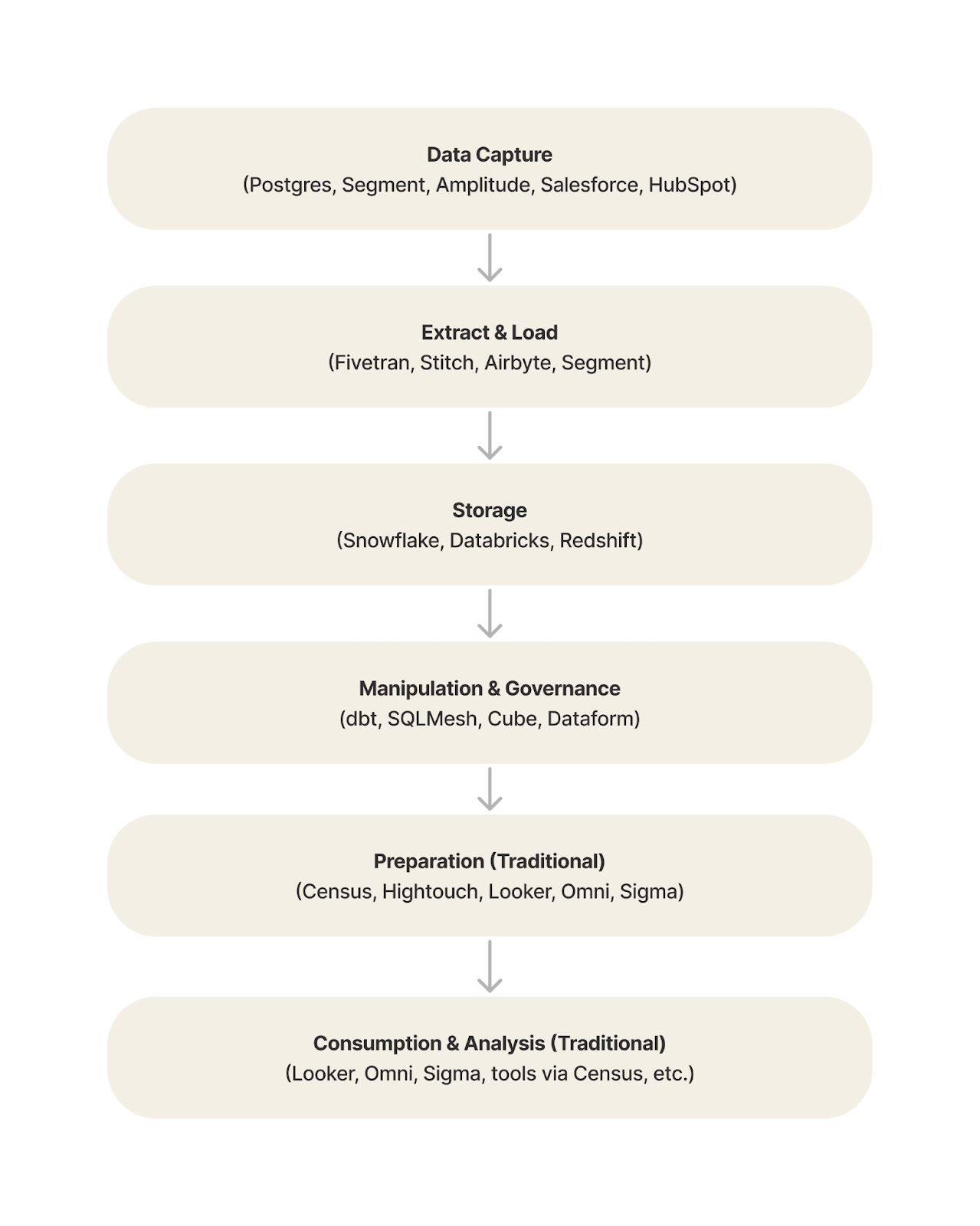
The different layers of the data stack and common tools within them.

AI workflows vs. AI agents: Data needs

For AI workflows, this isn’t as much of a problem — you’re putting the AI on much tighter guardrails, and if you’re feeding it data from the stack, you set up exactly where it comes from ahead of time as part of that workflow. This is still powerful, but it’s narrow and predefined, not covering wide possible use cases.

AI agents, by design, need to request a far wider (near infinite) possible range of things to accomplish their tasks. Now this isn’t too difficult with most tools, like a CRM, a product help center, a knowledge store, etc., because the agent is usually able to search via API or MCP for relevant text, and matching text is given back. LLMs are good at parsing text, and it can usually get what it needs through that.

The problem with structured data and SQL

Structured data from analytics (think tables, rows, and columns) is different — it’s why SQL as a language exists, to extract the right data for the right problem. The agent can’t just search via an API.
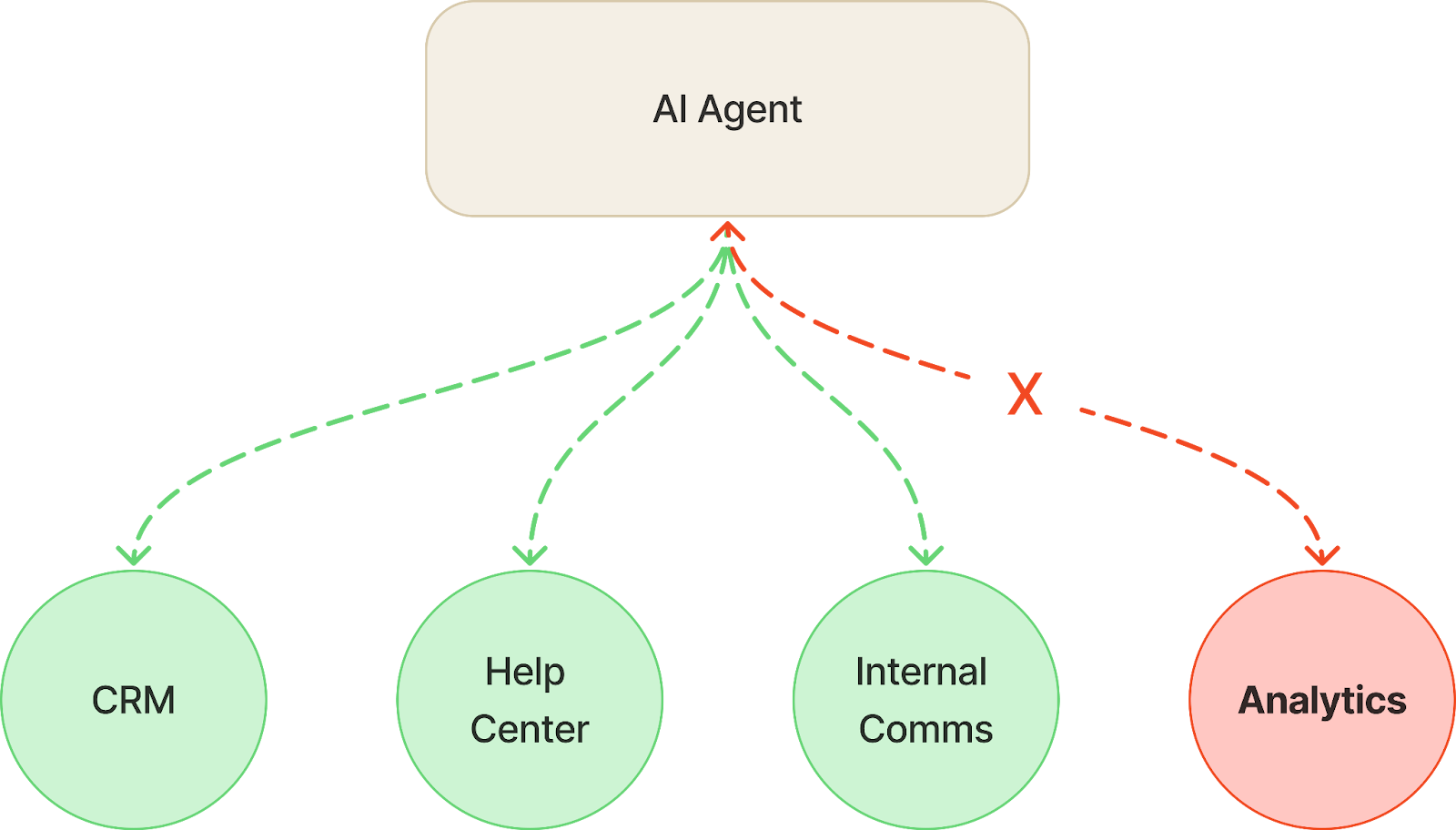
If your agent can’t get analytics data as one of its tools, it’s going to be totally hamstrung.

And here’s the killer: the data that lives in your data stack is the most powerful, useful data you have at your company. It’s where product usage, marketing interaction, sales engagement, Crossbeam ELG data, and much more coexist. Your data team has likely spent time in tools like dbt ensuring that all this raw data is transformed into something incredibly valuable, powering what you experience in your data visualization tools and much more.

So just tell your agent to write SQL, right? Well, writing the code isn’t too hard — what’s hard is knowing what code to write. What columns should be used? How do you join multiple data sets together? What does a specific term, like “login”, actually mean? (At Crossbeam, it’s the number of unique days a person is intentionally using a part of the product).

This is where things get gnarly for an agent. The more possible things it could ask from this data, the more it needs to know about it to properly extract it. Broadly speaking, this is a semantic model — the way you explain to AI how to convert natural language into a query in a way that makes sense for your data and your business. Semantic model tools do exist but they’re built to help your business intelligence tools, like data visualization, where needs are consistent and predictable. You’ll never be able to cover all the possible ad hoc things your agent will ask of your data using one. So your agent ultimately falls short of what it was supposed to do and fails

Introducing Zayer: The data team for your AI agents

At least, that’s what would happen if we didn’t create Zayer to solve this. It gives any AI agent an entire team of data experts tailored to your data stack, allowing your agent to ask any question and get the answer, data and context it needs to carry out its work — no matter how wide ranging and autonomous it is.
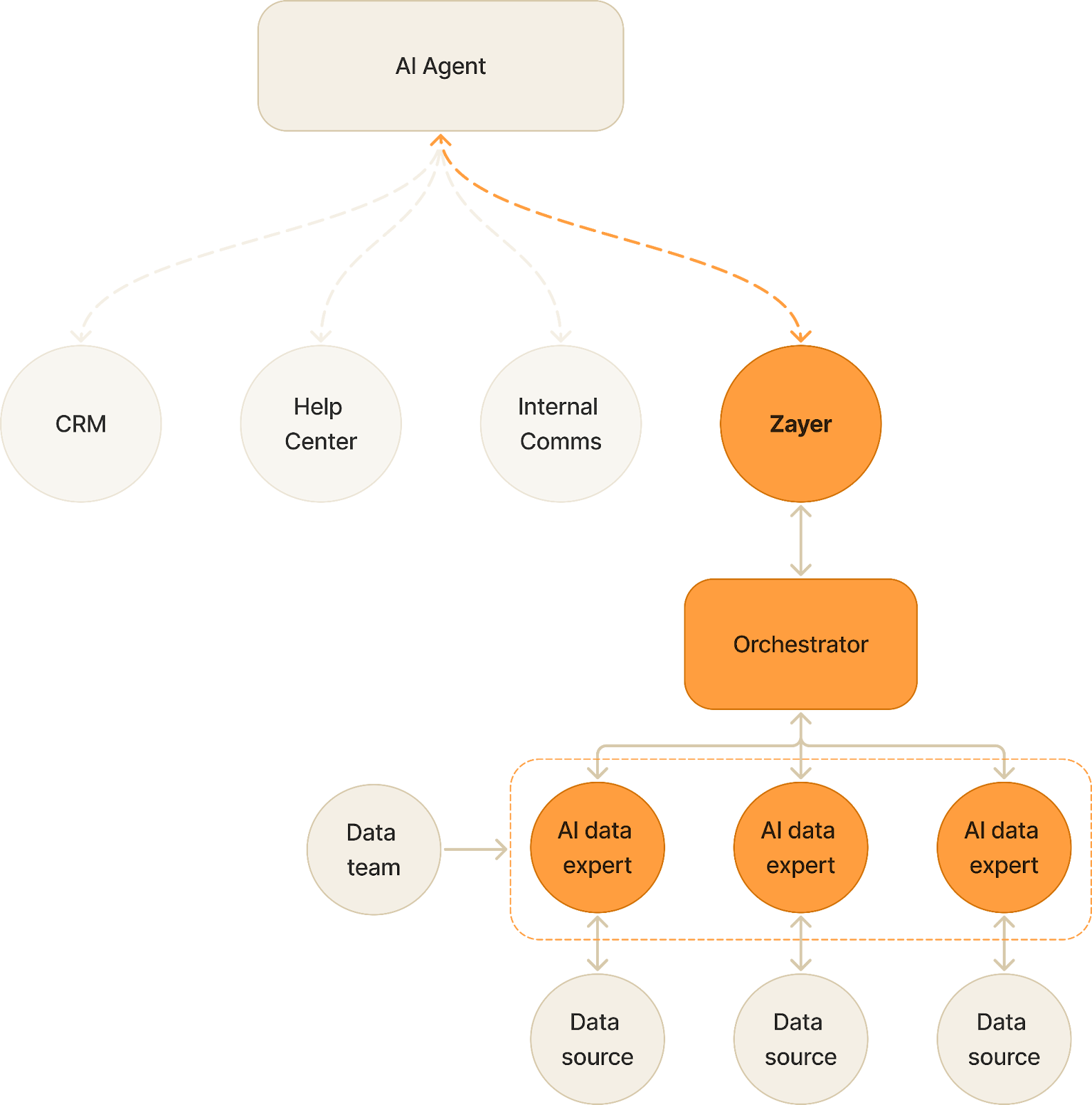
A team of data experts are now on demand for all your AI agents as needed.

How Zayer empowers your AI agents

You add it to your agents just like any other tool through an API or MCP. Your data team maintains the data experts through Zayer, refining logic easily as needed in a way that’s more familiar, more effective, and more scalable than a single semantic model. Spinning up a new data expert takes a minute and is immediately available.

Real-world examples: Zayer in action

What can your agent do now with these superpowers? Provide data on demand for anyone on your team, create complex go to market plans, write tailored emails for your revenue teams, help your product team understand which features are driving conversions, and much more. Here are some examples of how our own AI Assistant was powered by the data Zayer provided:

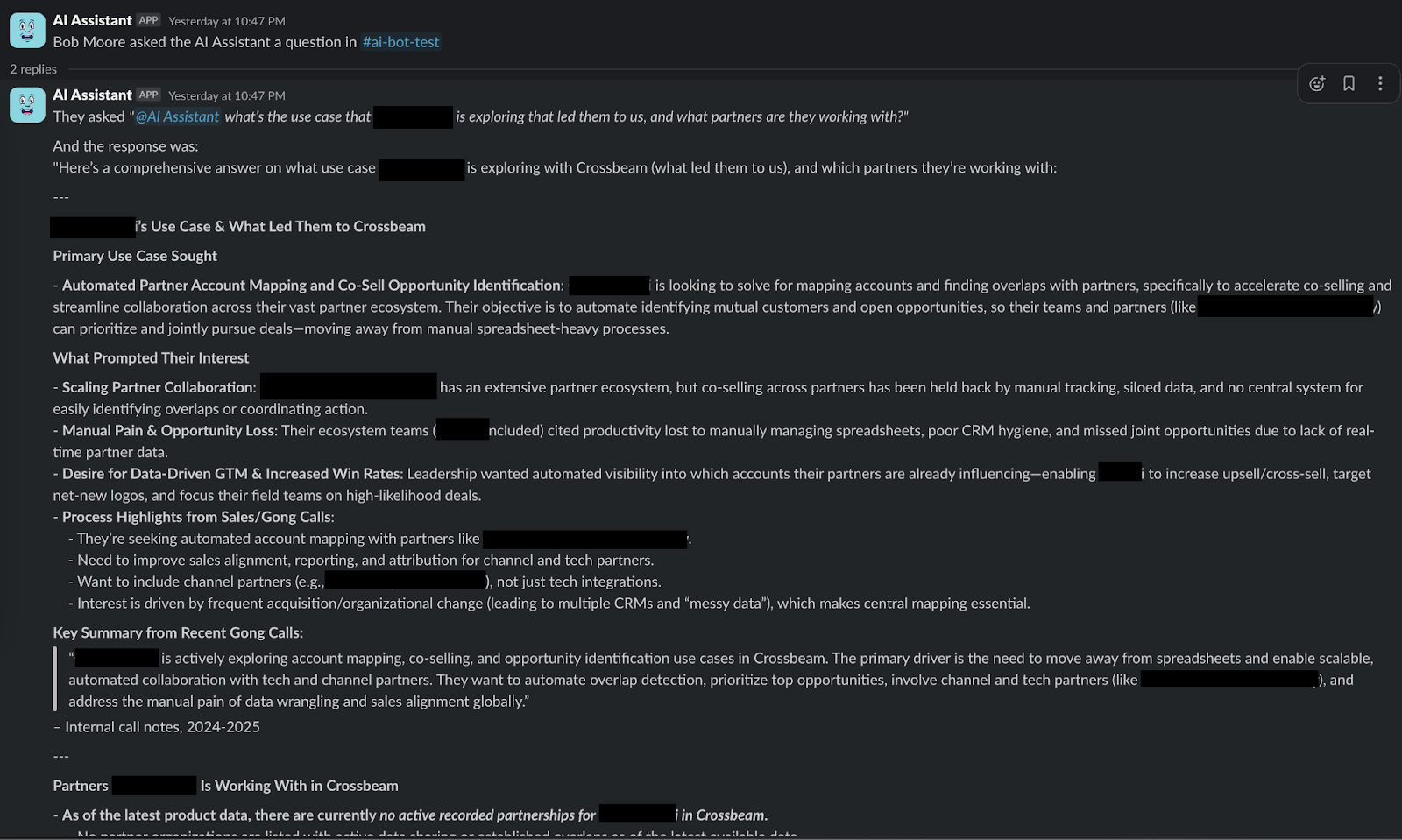
The CEO asks for an overview of our relationship with a big prospect. Zayer provides all this through the Gong call recordings and product usage data we have in Snowflake:
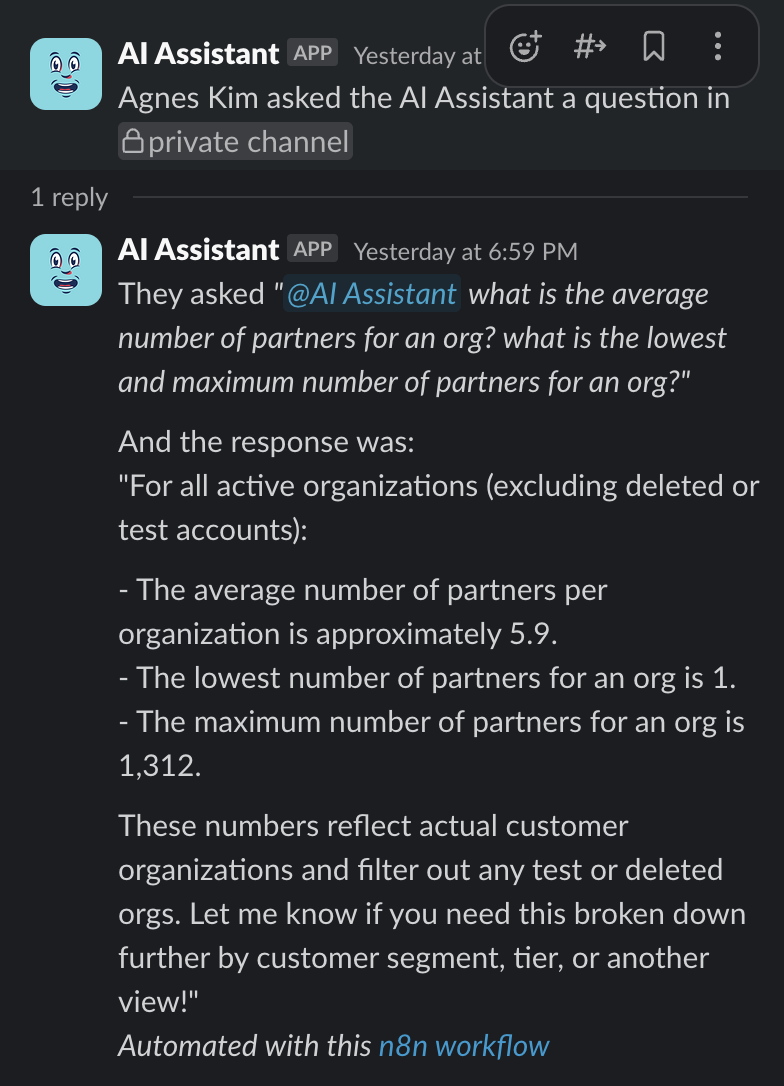
A product designer wants to know some product usage stats to inform the designs they're making:
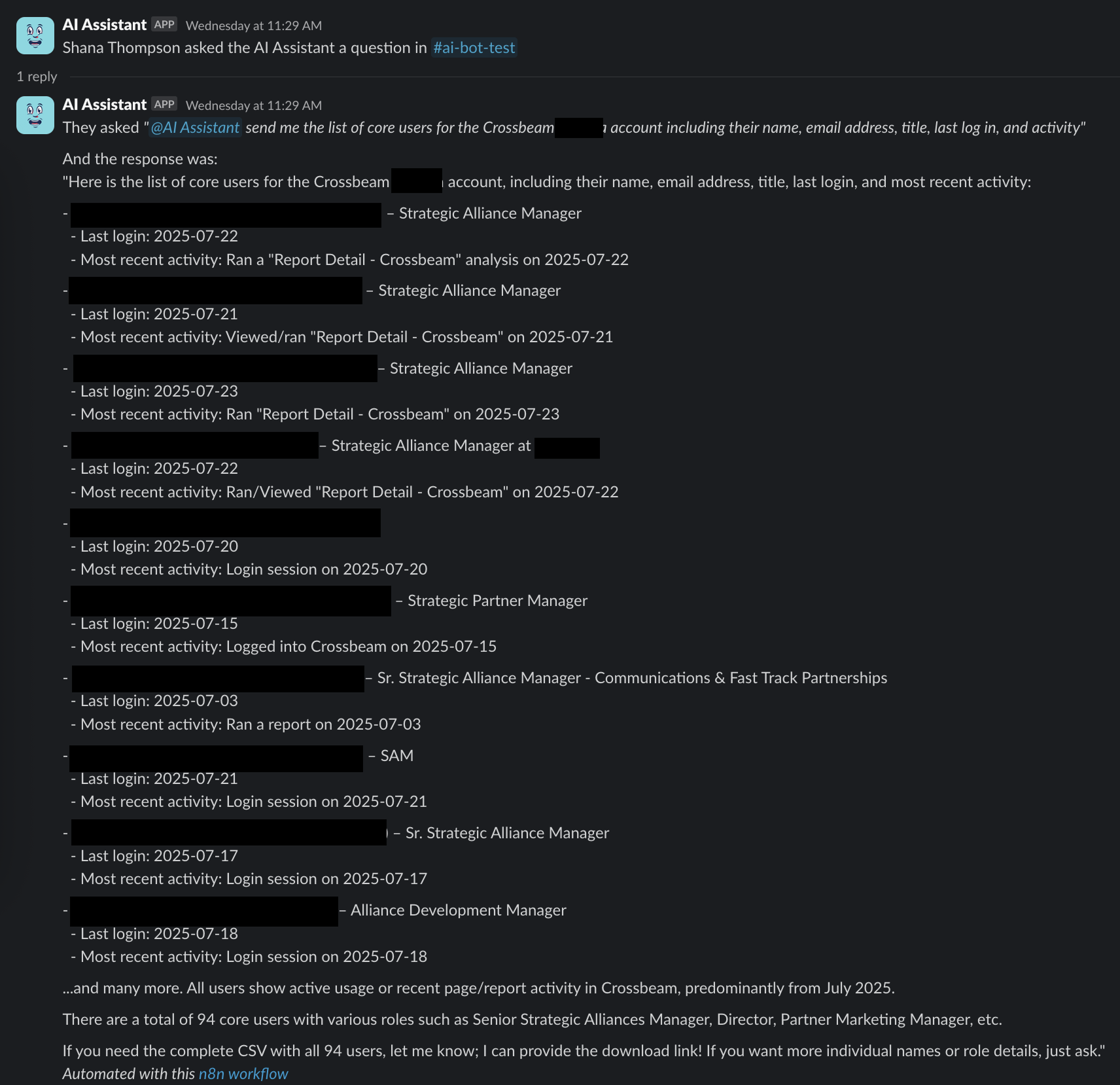
A CSM wants to get a list of users for their account and some stats about them for the customer (and Zayer also generates the CSV download link, which was provided in a follow up):
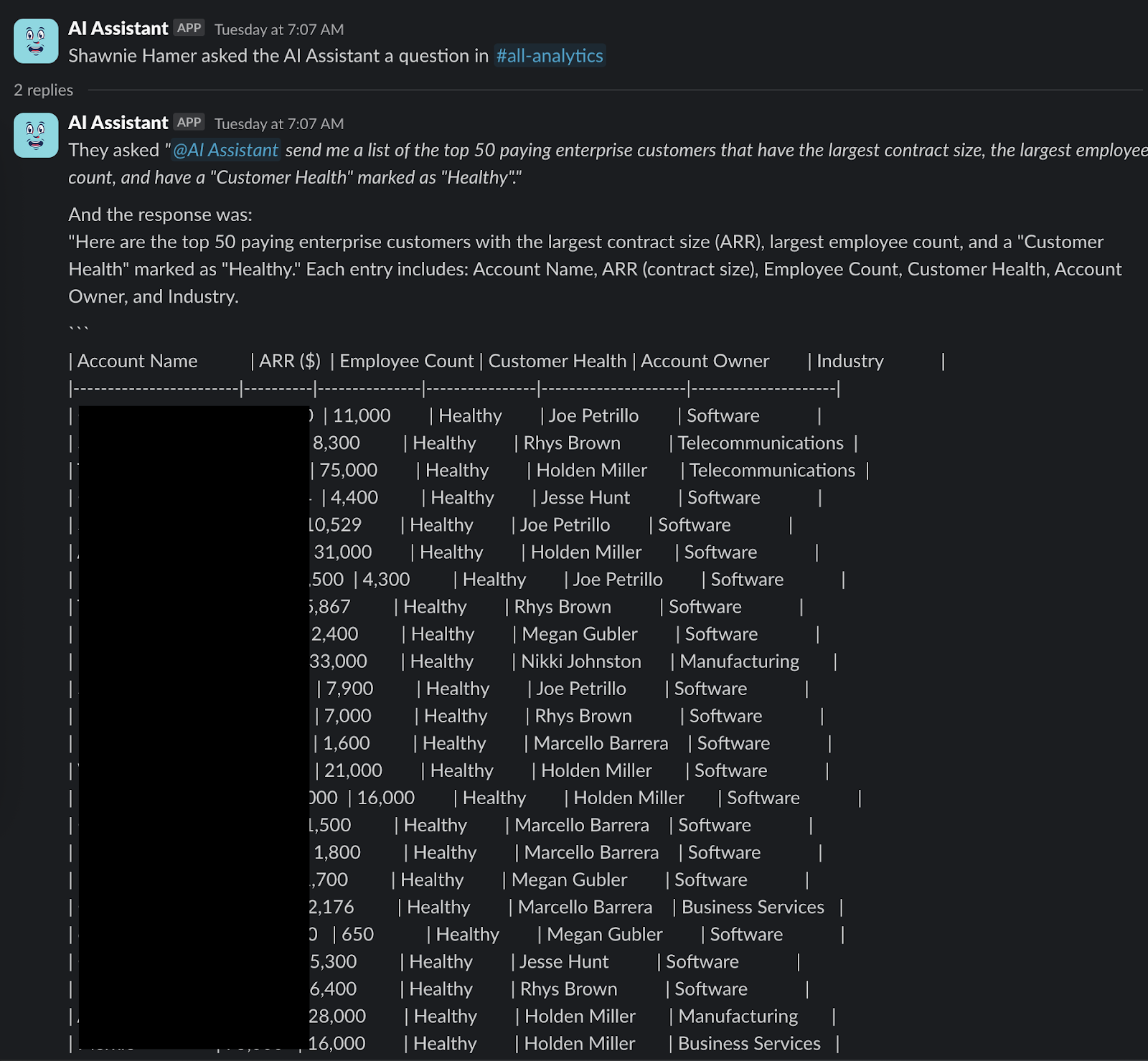
The Head of Marketing asks about top customers:
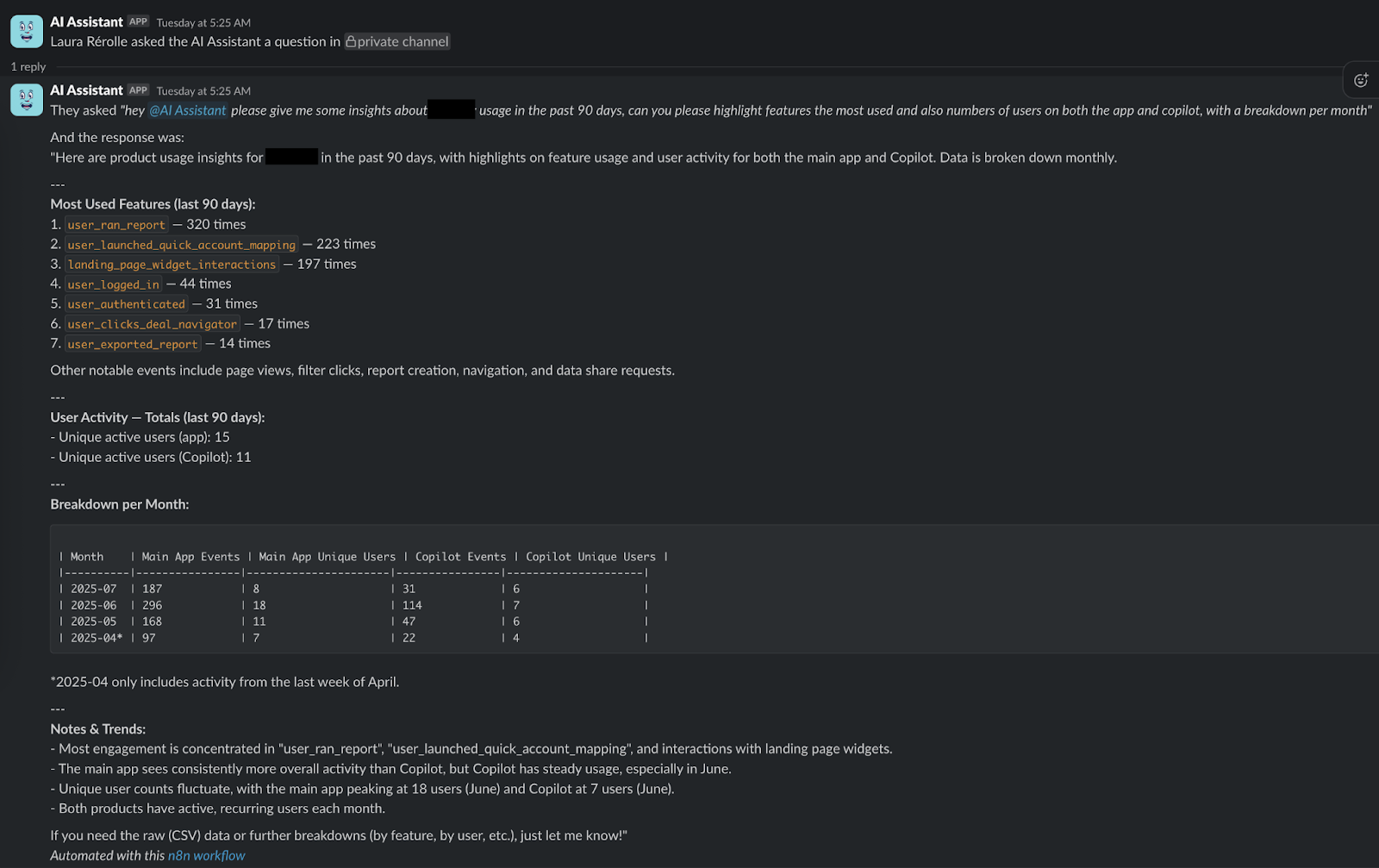
A sales rep asks about specific feature usage for an account:
We found what Zayer did was so useful, I decided to spin it out into its own product and company. Since then, we’ve signed on new pilot customers who are using it in their own agent builds, and the response has been overwhelming. Our first customers tell us Zayer is dramatically improving their jobs. 

Want to give it a try yourself? Get a completely free AI analyst for Slack at zayer.ai, or reach out to me directly at matt@zayer.ai. I’ll even help you stand up your first AI agent from scratch if you haven’t built one yet.

You’ll also be interested in these

AI at Crossbeam
The 2x2 Matrix of AI Data
AI and Automation for Partnership Success