Howdy Partners #70: Generating $5 Million Through Partnerships with Pedro Mattos
Nearbound Daily #605: Are You Utilizing All Four Channels For Intros?
Nearbound Daily #604: The #1 Lesson Every Partner Leader Should Learn From Walmart's Sam Walton
Nearbound Podcast #166: Pete Caputa’s Return: The Partner Led Startup Story
Nearbound Daily #603: Steal This Play to Engage Customers With Partners
Nearbound Daily #602: We Can Do Better With Partner Onboarding
Breaking News Roundup: Microsoft Exec Becomes CTO, HP's Business Model, and Cisco Investing $100 Million in Partners
Nearbound Daily #601: Doing Events The Nearbound Way
Nearbound Weekend 06/08: Use the ICE Framework to "Partner Pill" Every Department
Nearbound Daily #600: 5 Common Mistakes to Avoid When Starting Your Partner Program
The GTM Partners x Reveal partnership
Nearbound Daily #599: Steal This Partnership Value Model
A Deep Dive Into the Nearbound Book, With Mike Midgley
Nearbound Podcast #165: From Zero to $400M in Revenue - Finding Success in a Crowded SaaS Market with Jeff Cheal
Nearbound Daily #598: American Airlines' Recent Mistake Validates The Nearbound Era
Partnership Value Modeling
Nearbound Daily #597: Robert Cialdini On How To Influence Partners To Give You More
Nearbound Daily #596: How to Apply For a Job Like a Pro
How Bynder doubled the size of their tech ecosystem in just six months with ELG
Nearbound Weekend 06/01: How to Solve B2B Marketing with Nearbound
Your ELG buy-in playbook: How to bring your org’s key players on board
Nearbound Daily #593: Partners Are Not Your Glorified BDRs
Nearbound Daily #592: Tap Into Partners To Help Close a Deal In The Final Stages.
Nearbound Daily #591: Great Partners Are Like Diamonds
Top takeaways from the 2024 Ecosystem-Led Growth Conference
Nearbound Daily #590: How to Expand Into New Markets Through Partners
Nearbound Podcast #162: "I Built My Entire Business on Nearbound Principles" - with Tim Chermak
How Sales Teams Use Ecosystem-Led Sales to Hit Revenue Goals
Nearbound Daily #581: Partner Fleet Shares Their 9-Step Guide to Buy-In
Nearbound Daily #579: Metadata.io Kills Their CS Team (And Why It All Points To Nearbound)
The Era of Ecosystem Orchestration is Finally Here
Nearbound Daily #580: How Fullstory Increased Their Renewal Rate by 14%
How Fivetran Powers its Ecosystem-Led Sales with Data
Meet the RevOps-Turned-Partnerships Leader Who Transformed LeanData's Sales and Attribution Processes
Nearbound Weekend 04/27: My Key Takeaways from Goldenhour
Nearbound Daily #574: Steve Jobs On Buyer Preferences (And How It Relates to Nearbound)
Nearbound Daily #573: Meet NearBOT, Your Handy Nearbound Assistant
Nearbound Daily #571: Sapphire Ventures’ Guide to Building an Effective Partner Strategy Framework
Setting strategy and getting buy-in: Braze’s ELG Sales Tetrahedron
Nearbound Daily #570: Use Chris Lavoie's 2x2 Matrix To Prioritize Partners
Data Sharing Best Practices: How to Talk with your B2B Tech Partners
Chelsea Graham: The Unglamorous Art of Winning Your Sales Team’s Trust | Supernode 2022
Nearbound Daily #565: Here's How To Do Co-Marketed Events Better Using Nearbound Data (Step-By-Step)
Nearbound Daily #564: An Email Checklist to Make Better Impressions
Nearbound Podcast #161: 3 Things You Need to Know: Attribution Crisis, Early Majority, and the Consolidation of Tech with AI
Nearbound Daily #563: Every Stat to Help You Prove the Value of Partnerships
Nearbound Daily #562: How Oneflow Saw a 190% Surge in HubSpot-related Opportunities
Nearbound Daily #561: Get The Respect of Your Sales Team in 60 Days (Resources)
Nearbound Weekend 04/13: The Only Way To Create A Nearbound Culture
What’s an IPP—and (when) do you need one?
Nearbound Daily #560: How Pigment Increased Win Rates 5-10% with a Nearbound Overlay & Reveal
Nearbound Daily #559: Clari's CEO Complete Guide To Run The Best Meetings
Nearbound Podcast #160: How Open Source Unlocked Our Ecosystem - with Clint Oram
Unleashing the power of ELG The stats you need to know
Howdy Partners #68: Automating Revenue Generating Partnerships with Rob Rebholz
Nearbound Daily #557: Alexis Petrichos' Quick Start Guide To SaaS Partnerships
Partner Professionals Need to Pick a Career Path—It’s Either Partnering or Ecosystems
Nearbound Daily #556: The Circle-Back Play: How To Get Meetings With Top-Level Execs
How nearbound can help keep and win back customers
Nearbound Weekend 04/06: Revenue Leaders (Want To) Believe In You
Nearbound Daily #555: The Back-A$$ward Way To Do Community
A Deep Dive Into the Nearbound Book, With Mike Midgley, Part 3
Nearbound Daily #554: Inverta's Jessica Fewless On How to Fill Your Pipeline With Nearbound Leads
How to do co-marketing when you’re not a marketer
Follow the 'Customer Value' Rule in 2023 and You'll Win
Ecosystem-Led Growth: The Power of Your Partner Ecosystem
Nearbound Podcast #159: Meet Your Partnerships Mentor - Nelson Wang on First Principles
Nearbound Daily #553: The Convenient Age of SaaS Is Over
Insider Daily #682: Winning in the ELG era
Nearbound and the rhythm of business
Nearbound Weekend 03/30: A letter to founders and execs from Jill Rowley
Nearbound Daily #550: Three Reasons You Need PartnerOps This Year
The Role of Nearbound Partnerships for Customer Success
Nearbound Daily #549: Atlassian's Missed Ecosystem Opportunity
Nearbound Podcast #158: Why Agency Programs are the HARDEST. The Pirate Island Problem, with Max Traylor
Howdy Partners #67: Sales Insights Unleashed - Jakub Hon
Nearbound Daily #548: Learn to Say No. It'll Save You
Nearbound Daily #546: 9 Creative Ways to Showcase Your Champions
The 2024 ELG Index: Charting the Global Progress of Ecosystem-Led Growth in Tech
Nearbound Weekend 03/23: Our Response to Chris Walker's Provocative LinkedIn Post
Nearbound Daily #545: 2024, The Year of Partnerships
Nearbound Daily #544: 🤐 6 Top Revenue Leaders Told Us What They Really Think About Partnerships
Measure and Prove: How PartnerOps Drives SaaS Success
Key Trends Discussed at the Summit
What top revenue leaders really think of partnerships
Nearbound Daily #541: 😱 Renewals Aren't Automatic...Here's What To Do About It
Nearbound Weekend 03/16: Find Your Pot of Gold ☘️
How to Win Hearts and Minds in Partnerships
Nearbound Daily #537: The Rise of Nearbound Revenue Platforms with Canalys Experts
How Kolleno Reduced Their Time to Close by 50% with Ecosystem-Led Growth
Nearbound Daily #535: Every Partner Has Favorites, Become One
Friends with Benefits #34: The Power of Direct Mail and Building Genuine Relationships with Katie Penner
Nearbound Daily #534: From Lack of Buy-In to All-In
The Book that GTM Needs
Nearbound Daily #533: Inside Story: HubSpot Wasn't Always Partner-Centric
Nearbound Podcast #155: How Integrated and Partner Marketing Strategies Achieve Win-Win Scenarios with Calen Holbrooks
Nearbound Podcast #154: The Nearbound Book Launch with Jared Fuller and Isaac Morehouse
Nearbound Daily #532: Partner Emails Done Right
Realize the Full Value of Your Software and Service Partner Marketplace with Integrated Ecosystem Clusters
Nearbound Daily #531: Let’s Get to Know Your Buyer
ELG AI

AI at Crossbeam: Building a Data Team for your AI Agents
by
Matt Nicosia
SHARE THIS

Learn why workflows fall short, how semantic models limit agents, and how Zayer empowers them to deliver on-demand insights, power go-to-market strategies, support product teams, and accelerate revenue growth.
by
Matt Nicosia
SHARE THIS

In this article

Join the movement

Subscribe to ELG Insider to get the latest content delivered to your inbox weekly.

In our last “AI @ Crossbeam” installment, we talked about a few of the ways we started incorporating AI, and specifically ELG within AI, into our internal processes. The impact these workflows and agents have had is substantial, touching every function across the business and being used hundreds, even thousands of times each week.

The challenge: AI agents and data access

When we set out to build our first agent though, we ran into one particularly thorny problem where there wasn’t a clear solution — how do we let our agent get access to any of the data it could need in our data stack (usually stored in a data warehouse, like Snowflake or Databricks)?
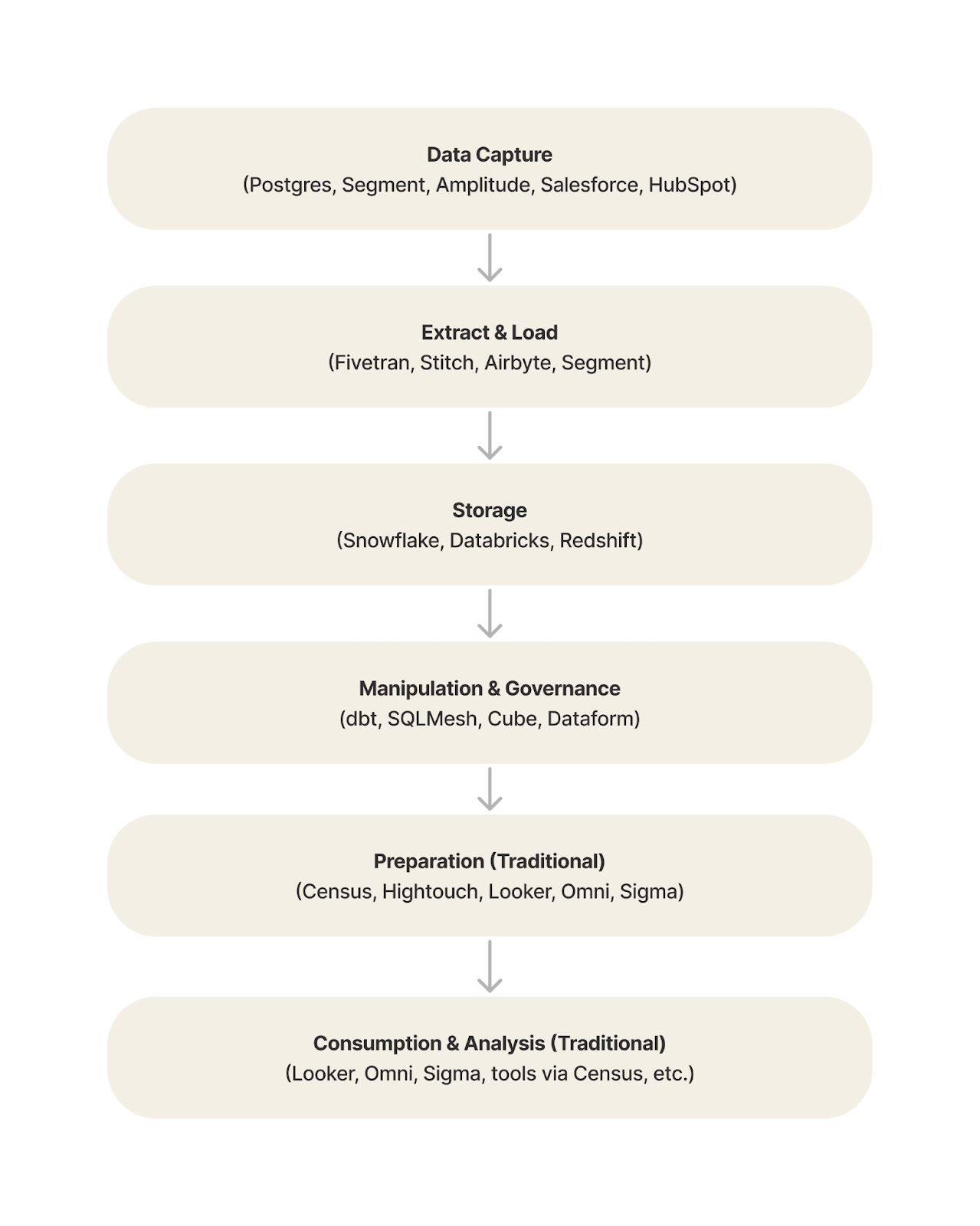
The different layers of the data stack and common tools within them.

AI workflows vs. AI agents: Data needs

For AI workflows, this isn’t as much of a problem — you’re putting the AI on much tighter guardrails, and if you’re feeding it data from the stack, you set up exactly where it comes from ahead of time as part of that workflow. This is still powerful, but it’s narrow and predefined, not covering wide possible use cases.

AI agents, by design, need to request a far wider (near infinite) possible range of things to accomplish their tasks. Now this isn’t too difficult with most tools, like a CRM, a product help center, a knowledge store, etc., because the agent is usually able to search via API or MCP for relevant text, and matching text is given back. LLMs are good at parsing text, and it can usually get what it needs through that.

The problem with structured data and SQL

Structured data from analytics (think tables, rows, and columns) is different — it’s why SQL as a language exists, to extract the right data for the right problem. The agent can’t just search via an API.
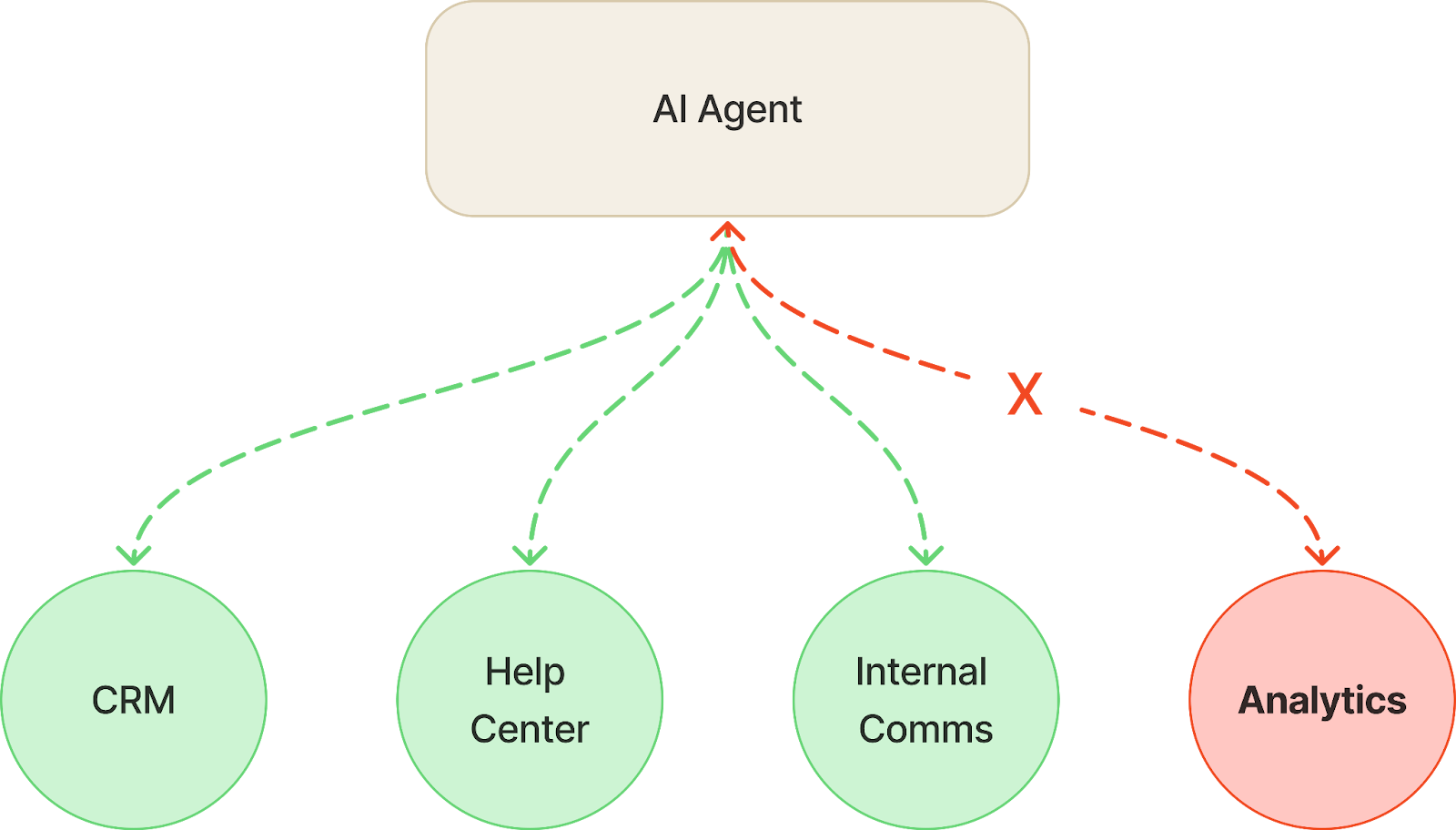
If your agent can’t get analytics data as one of its tools, it’s going to be totally hamstrung.

And here’s the killer: the data that lives in your data stack is the most powerful, useful data you have at your company. It’s where product usage, marketing interaction, sales engagement, Crossbeam ELG data, and much more coexist. Your data team has likely spent time in tools like dbt ensuring that all this raw data is transformed into something incredibly valuable, powering what you experience in your data visualization tools and much more.

So just tell your agent to write SQL, right? Well, writing the code isn’t too hard — what’s hard is knowing what code to write. What columns should be used? How do you join multiple data sets together? What does a specific term, like “login”, actually mean? (At Crossbeam, it’s the number of unique days a person is intentionally using a part of the product).

This is where things get gnarly for an agent. The more possible things it could ask from this data, the more it needs to know about it to properly extract it. Broadly speaking, this is a semantic model — the way you explain to AI how to convert natural language into a query in a way that makes sense for your data and your business. Semantic model tools do exist but they’re built to help your business intelligence tools, like data visualization, where needs are consistent and predictable. You’ll never be able to cover all the possible ad hoc things your agent will ask of your data using one. So your agent ultimately falls short of what it was supposed to do and fails

Introducing Zayer: The data team for your AI agents

At least, that’s what would happen if we didn’t create Zayer to solve this. It gives any AI agent an entire team of data experts tailored to your data stack, allowing your agent to ask any question and get the answer, data and context it needs to carry out its work — no matter how wide ranging and autonomous it is.
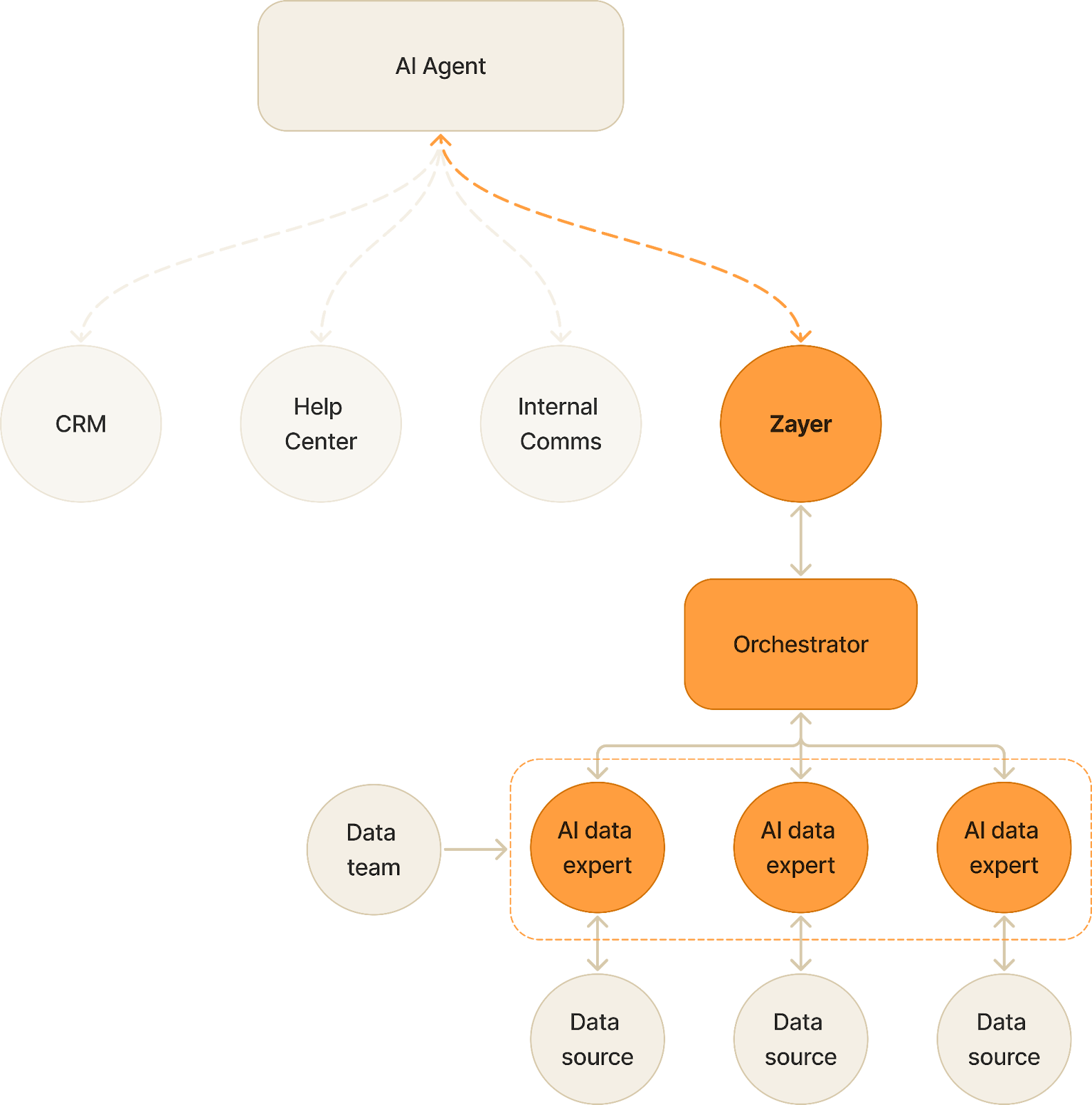
A team of data experts are now on demand for all your AI agents as needed.

How Zayer empowers your AI agents

You add it to your agents just like any other tool through an API or MCP. Your data team maintains the data experts through Zayer, refining logic easily as needed in a way that’s more familiar, more effective, and more scalable than a single semantic model. Spinning up a new data expert takes a minute and is immediately available.

Real-world examples: Zayer in action

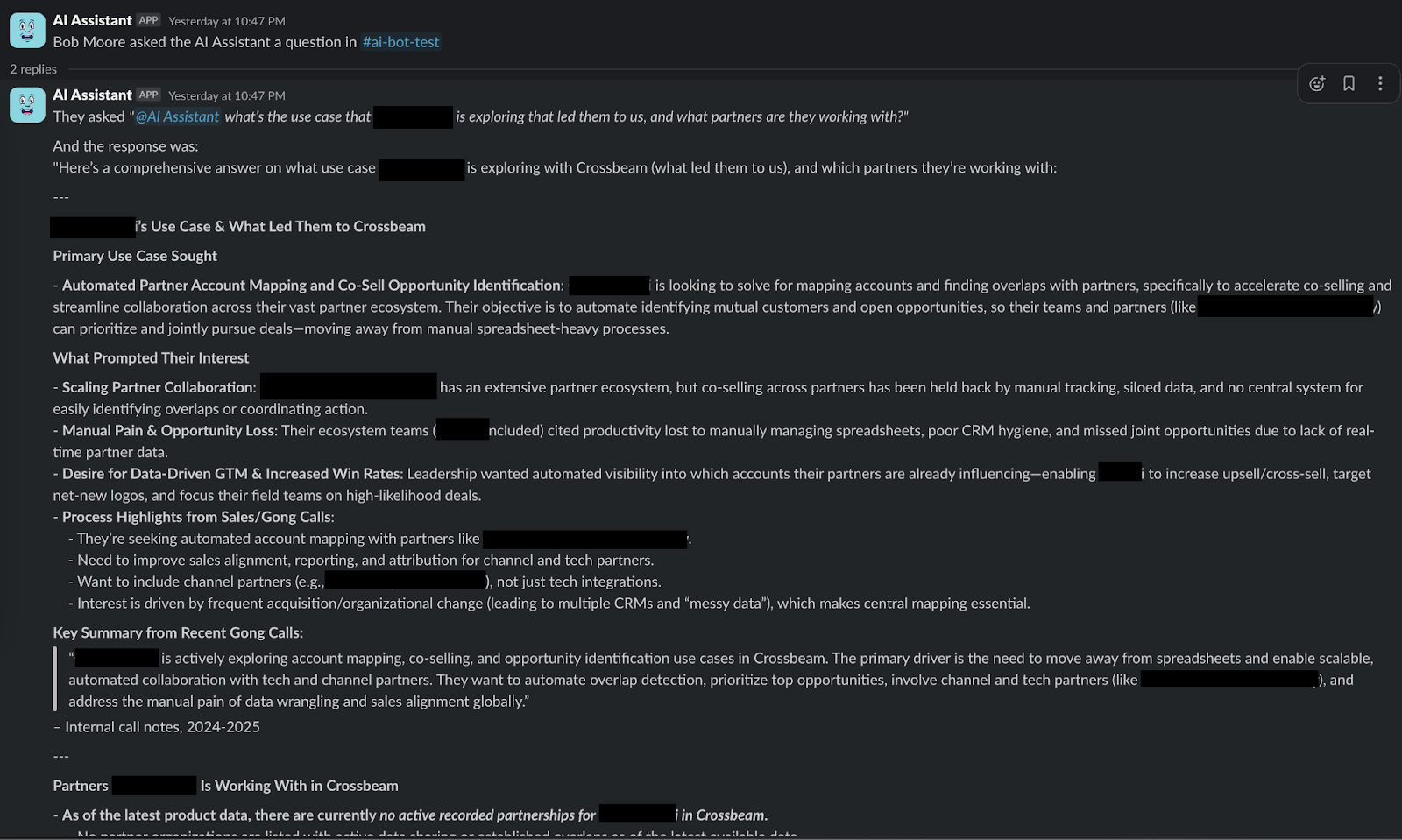
What can your agent do now with these superpowers? Provide data on demand for anyone on your team, create complex go to market plans, write tailored emails for your revenue teams, help your product team understand which features are driving conversions, and much more. Here are some examples of how our own AI Assistant was powered by the data Zayer provided:

The CEO asks for an overview of our relationship with a big prospect. Zayer provides all this through the Gong call recordings and product usage data we have in Snowflake:
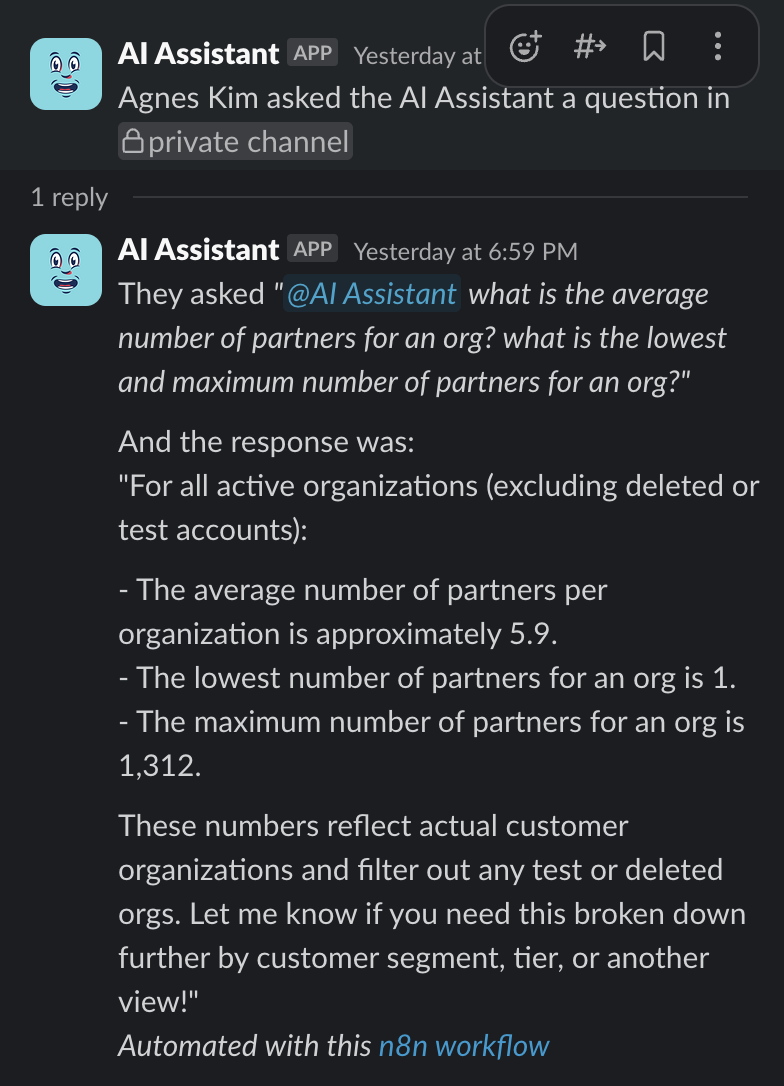
A product designer wants to know some product usage stats to inform the designs they're making:
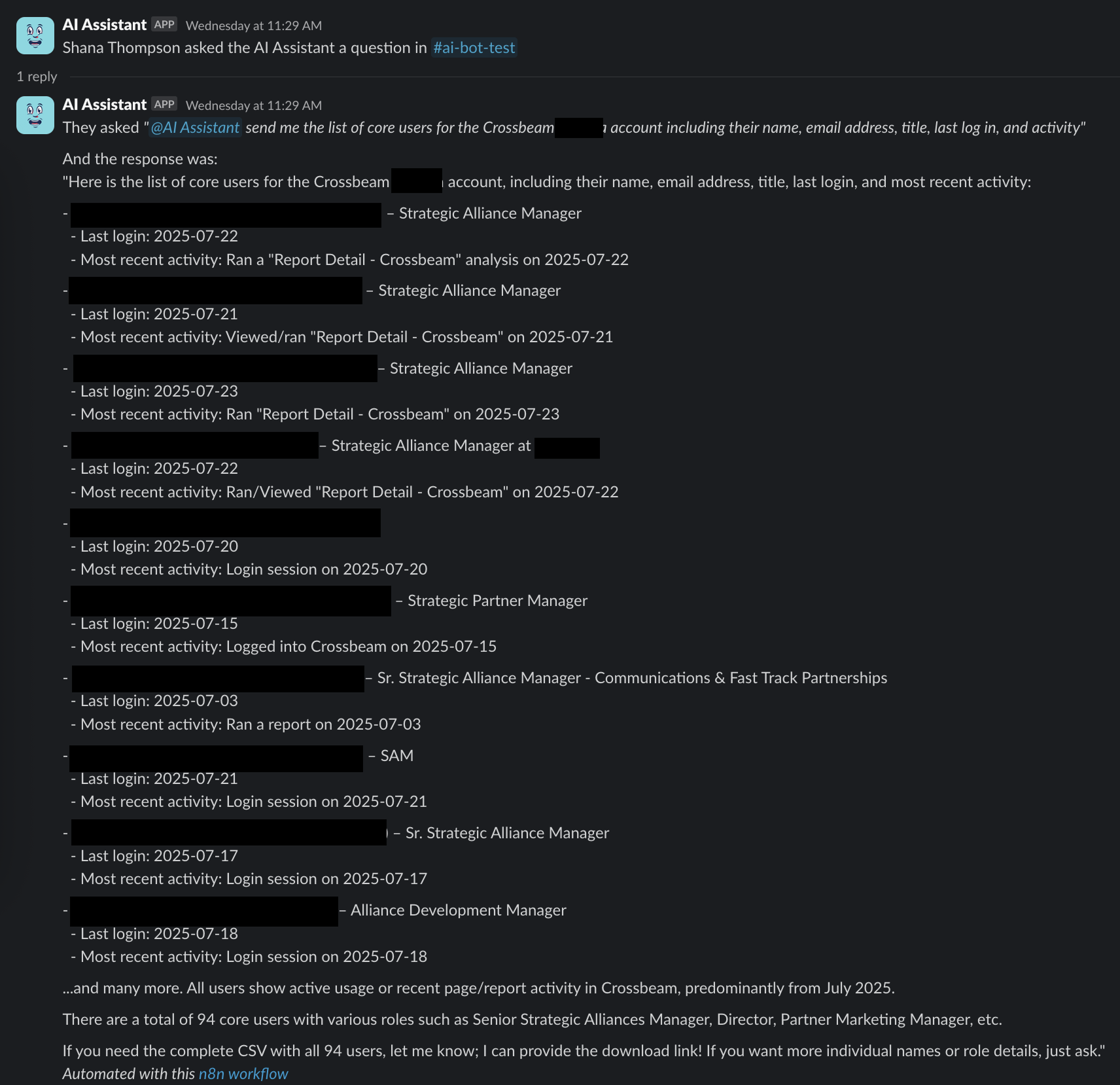
A CSM wants to get a list of users for their account and some stats about them for the customer (and Zayer also generates the CSV download link, which was provided in a follow up):
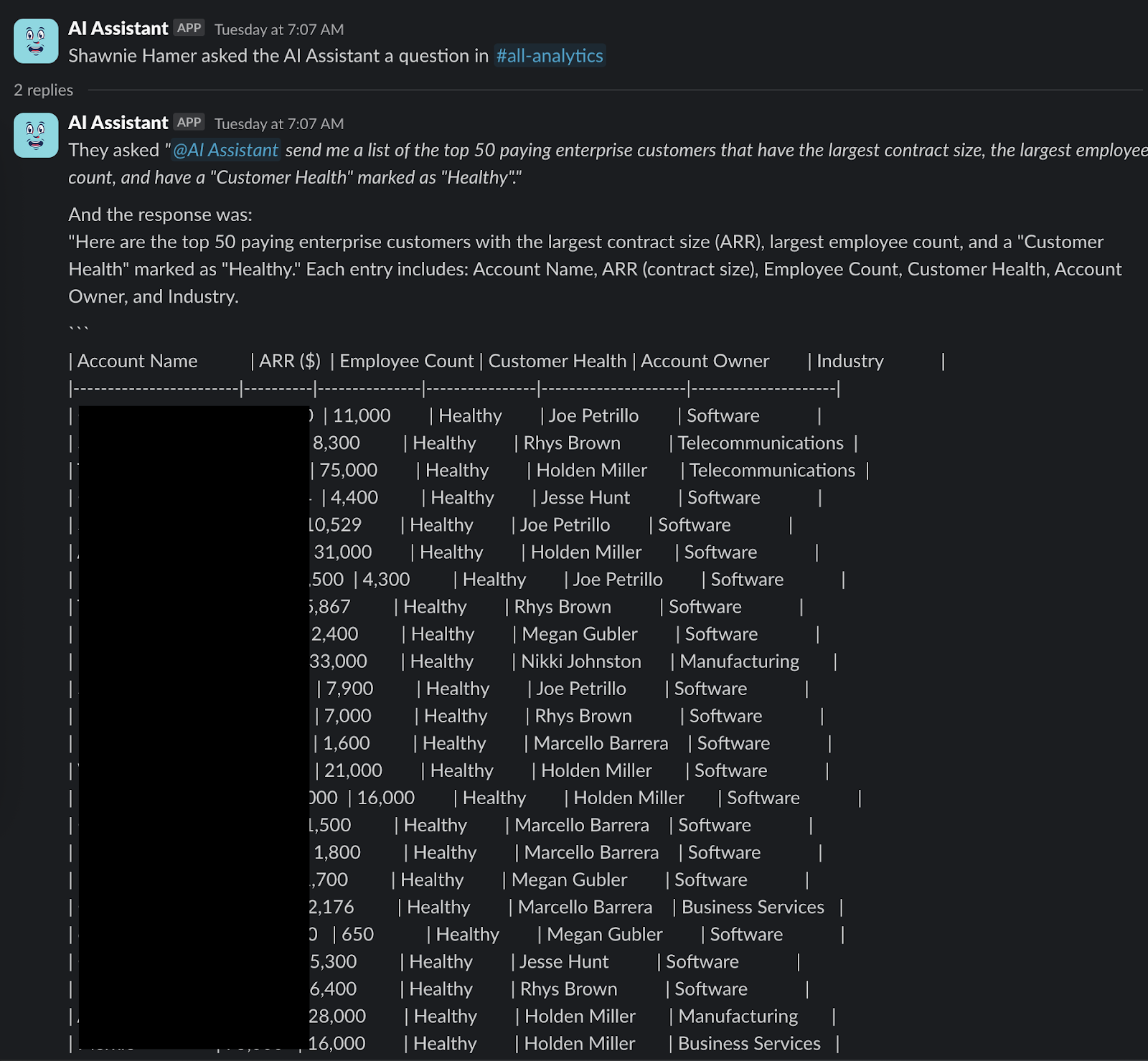
The Head of Marketing asks about top customers:
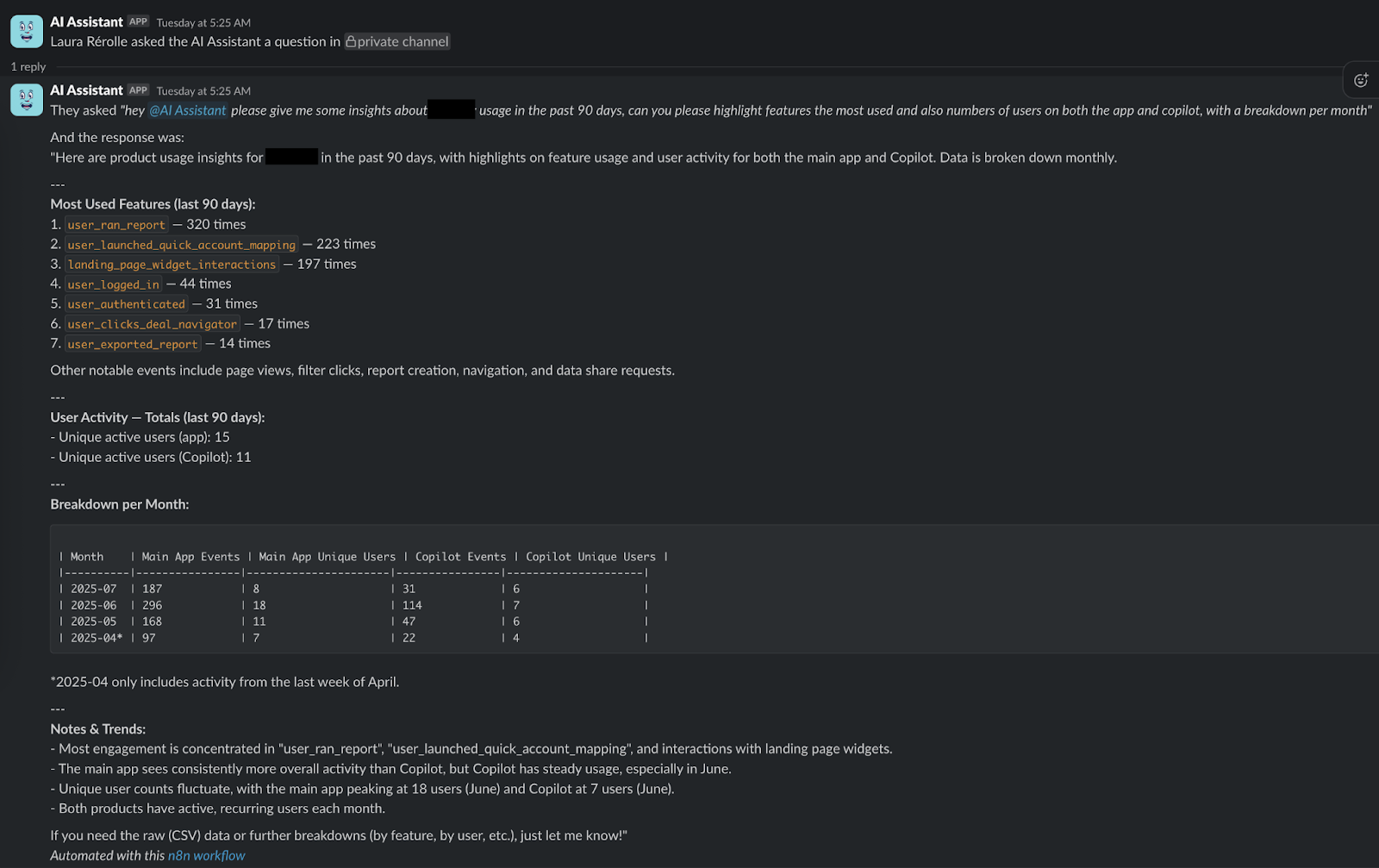
A sales rep asks about specific feature usage for an account:
We found what Zayer did was so useful, I decided to spin it out into its own product and company. Since then, we’ve signed on new pilot customers who are using it in their own agent builds, and the response has been overwhelming. Our first customers tell us Zayer is dramatically improving their jobs. 

Want to give it a try yourself? Get a completely free AI analyst for Slack at zayer.ai, or reach out to me directly at matt@zayer.ai. I’ll even help you stand up your first AI agent from scratch if you haven’t built one yet.

You’ll also be interested in these

AI at Crossbeam
The 2x2 Matrix of AI Data
AI and Automation for Partnership Success