

How ELG Drives Revenue: Metrics for Co-Selling Success



Discover how to prove the revenue impact of Ecosystem-Led Growth using metrics like partner-sourced pipeline, sales cycle acceleration, and ACV lift.
For years, partnerships were measured by activity.
How many partners joined the program?
How many integrations have been launched?
How many webinars have been run?
But when ELG leaders walk into an executive meeting, none of those numbers matter.
The only question that matters is:
How much revenue is the ecosystem actually driving?
The teams that are succeeding with Ecosystem-Led Growth have figured out how to answer that question clearly. They track three metrics that connect partnerships directly to revenue:
- Partner-sourced and partner-influenced pipeline
- Sales cycle acceleration
- Average contract value (ACV) lift
When those numbers start appearing in dashboards, partnerships stop being seen as relationship programs. They become sales infrastructure.
Once partnerships move from relationships to revenue motions, the next step is measurement. The strongest ELG teams focus on these three metrics that clearly show ecosystem impact.
What are the ELG metrics you need to track?
Metric #1: partner-influenced pipeline
The first sign that ELG is working is pipeline.
When companies map shared accounts with partners, they uncover opportunities already sitting inside their ecosystem.
This measures how often partners are involved in deals.
Typical categories include:
- Partner-sourced: The partner introduces the opportunity.
- Partner-influenced: The partner participates during the sales process.
Tracking these categories helps revenue teams understand how partnerships contribute across the full funnel, not just at lead generation.
After 10 months of leading the ELG charge, Chad Waite, a Senior Channel Manager at Document Crunch, and his team have achieved 100% of their yearly partner-attached pipeline quota.
That kind of visibility changes how sales teams operate.
Instead of starting deals from scratch, sellers can identify where partners already have trusted relationships inside target accounts.
As Crossbeam CEO Bob Moore explains: “Your next big deal is already in your ecosystem.”
When companies begin measuring partner-sourced and partner-influenced pipeline, the ecosystem quickly becomes one of the most reliable pipeline channels in the business.
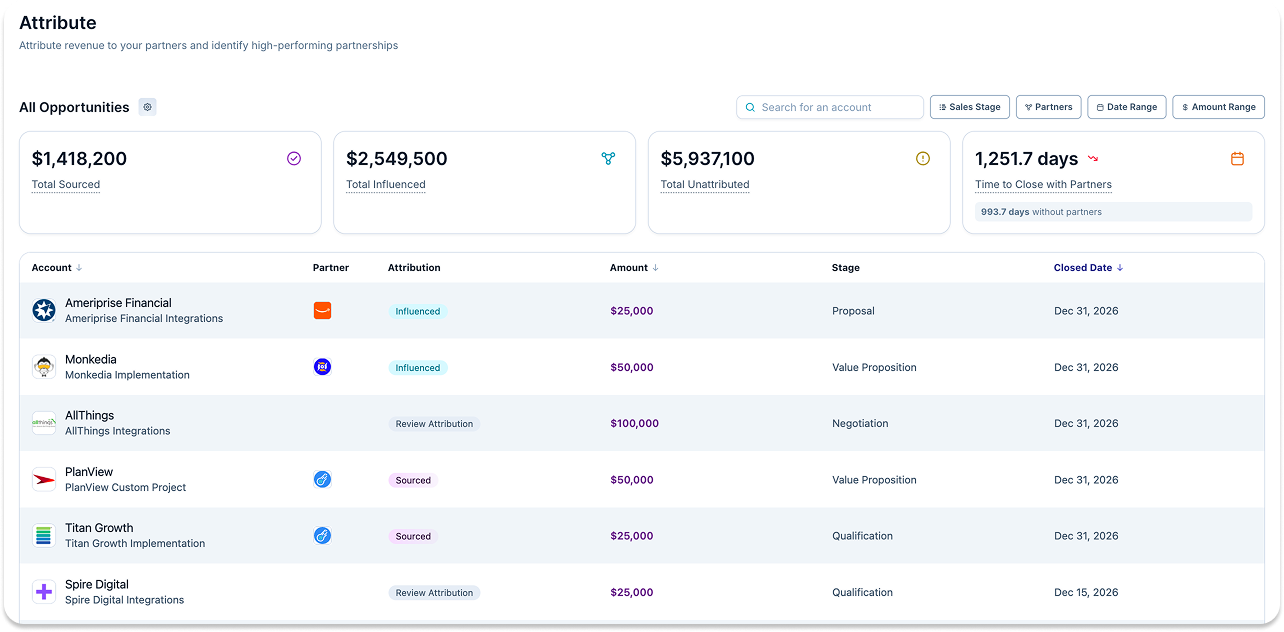
For example, a feature in Crossbeam that helps you understand how your partners contribute to your pipeline is Attribution. Whether a partner sourced an opportunity or influenced it, attribution provides visibility into those contributions so you can measure impact and optimize collaboration.
By combining ecosystem data with AI-driven prospecting, BEMO increased meetings by 900%, dramatically expanding top-of-funnel opportunities.
Metric #2: sales cycle acceleration
The second proof of ELG impact is deal velocity.
Partners often unlock deals because they already have credibility inside the customer organization.
When sellers bring partners into opportunities early, they often gain:
- warm introductions
- technical validation
- customer trust signals
Instead of cold outreach, sellers enter conversations through a trusted relationship.
This shortens the time to close.
Many ELG programs report deals closing significantly faster when partners are involved. In practice, sellers often rely on partners to unlock stalled deals or accelerate late-stage conversions.
Tracking this metric typically involves comparing:
- partner-influenced deal cycle length
- non-partner deal cycle length
For example, JustCall used Crossbeam to increase their average contract value (ACV) by 66%, and a 90% retention for customers with two or more active integrations, resulting in a 58%
drop in average time to convert.
This is why co-selling has become a critical tactic for modern sales teams. When sales teams know which partner has a relationship in a target account, deals move faster. And faster deals mean more revenue per quarter.
By streamlining co-selling, multi-threading, and late-stage approvals with trusted partners already in the customer’s stack, Crossbeam’s Deal Navigator helps reps cut days or weeks from the sales process.
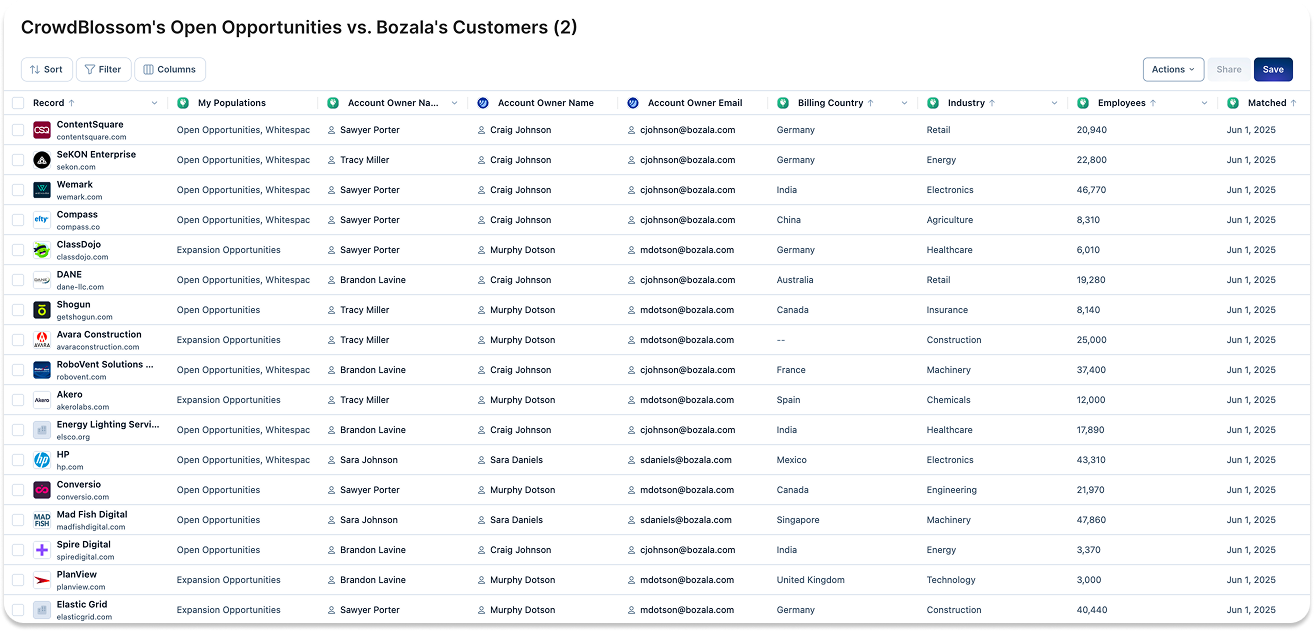
Deal Navigator is a tool designed to help sales teams focus on the most promising opportunities and prospects. It maps your open opportunities and prospects to your partners' customers, highlighting high-potential accounts and providing unique partner insights to move deals forward.
“As an early adopter of Deal Navigator, I just wanted to share the buzz around it and how, honestly, it opened up so much more than I could have ever kind of imagined.” — Martin Polash, Partner Development Manager at Stripe

Metric #3: ACV lift
The third signal of ELG impact is ACV uplift in partner-involved deals.
When customers adopt multiple complementary products together, deal sizes often increase, which increases contract value.
This is especially common in tech-partner ecosystems, where integrated solutions deliver stronger outcomes than standalone products.
Workday shifted to a partner-first, ecosystem-led GTM and tripled the share of partner-sourced ACV from 3% to 9% of all sales in just one year; a $600M annual run rate in partner ACV. With more than 500 new sales partners onboarded and partners driving more pipeline in Q1 FY26 than in all of FY24, Workday’s ecosystem strategy is directly tied to sustaining 15% annual revenue growth and unlocking “unprecedented pipeline and annual contract value.”
These numbers illustrate an important shift. Partnerships don’t just create more deals. They create better deals.
“Over the course of the last two years, we've made key investments across our leadership team, go-to-market and partner ecosystem, and our platform, positioning us to drive enduring growth in FY '25 and beyond,” said Carl Eschenbach, Strategic Advisor to the CEO of Workday.
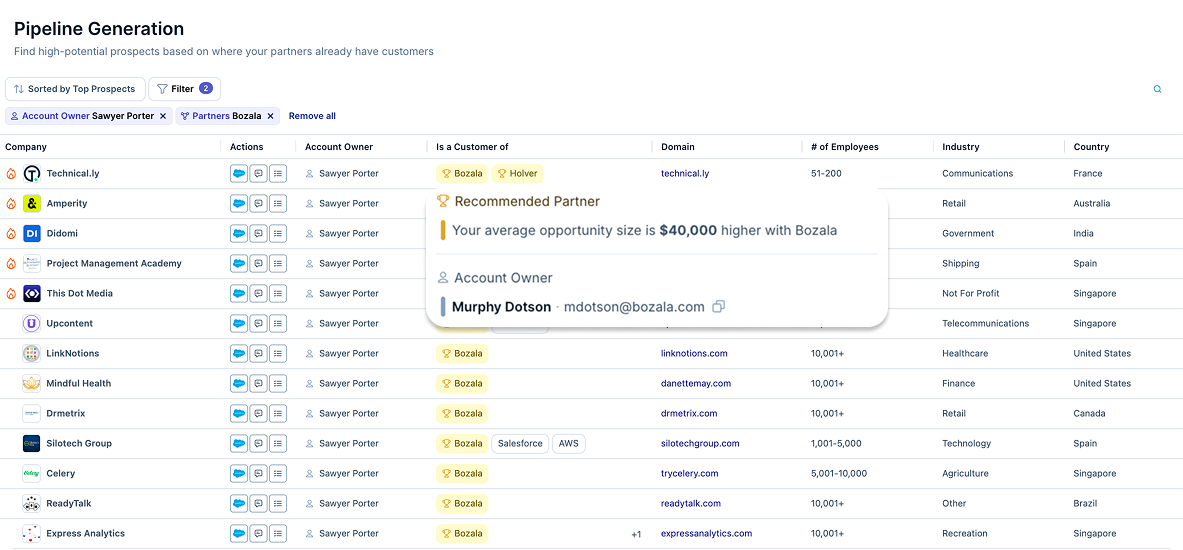
You can find partner-involved deals in Crossbeam’s Pipeline Generation. These deals frequently generate higher ACV and have expansion potential.
Pipeline Generation is a tool that helps you uncover warm, high-potential accounts based on your ecosystem connections. Instead of relying on cold outreach or generic lead lists, Pipeline Generation identifies Top Prospects, net-new accounts that overlap with your partners and match your Ideal Customer Profile (ICP).
This allows your team to prioritize leads with built-in trust and relevance.
What are the emerging patterns in ELG sales?
Looking across the sales landscape, four patterns appear again and again when companies successfully operationalize their ELG motions.
Pattern #1: integration → revenue motion
Many partnerships begin as integrations, but integrations alone don’t drive revenue.
In the Gong and NewEdge Growth ecosystem partnership, the teams moved beyond product integration and built a collaborative sales motion around shared customers, citing a 174% growth tied to their joint efforts.
“When we first partnered with NewEdge Growth, we weren’t just bringing in new business. We were also getting alerted when shared customers were at risk of churning, so we could step in quickly and help stabilize those accounts,” explains Patrick Burke, Senior Manager and GTM Partnerships at Gong.
The result: partnerships that once existed only in product documentation began producing real deals.

Pattern #2: dormant partnerships become pipeline engines
Another common pattern is activating partnerships that already exist but aren’t generating revenue.
Aircall’s HubSpot relationship is a perfect example.
For years, Aircall and HubSpot had a strong but informal, relationship-driven partnership that lacked the process, ownership, and enablement needed for reps to truly co-sell. In 2023, Aircall’s Mali Diez joined HubSpot’s co-selling pilot and, together with Sales Director Elizabeth Niemczyk, transformed that loosely defined relationship into a revenue-driving co-sell engine, delivering:
- a 55% close rate on HubSpot-referred leads
- 20% higher MRR per opportunity
- 30+ monthly collaboration requests
To this day, partnerships remain core to their go-to-market. “It’s impossible not to have partnerships as a core in our strategy,” says Mali. “They help us co-sell, co-plan, co-win, and sometimes we even uncover inbound leads who turn out to be HubSpot customers.”
For Elizabeth, partnerships aren’t just a network play; they’re a sales enabler. “Partners make the buying process smarter, shorter, and more personalized. The ecosystem is fundamental to how we sell at Aircall,” she explains.
Once the teams began mapping shared accounts and coordinating co-selling activity, the partnership quickly produced measurable pipeline and higher close rates.
Pattern #3: automation scales co-selling
As ELG programs mature, companies embed ecosystem signals directly into their sales workflows.
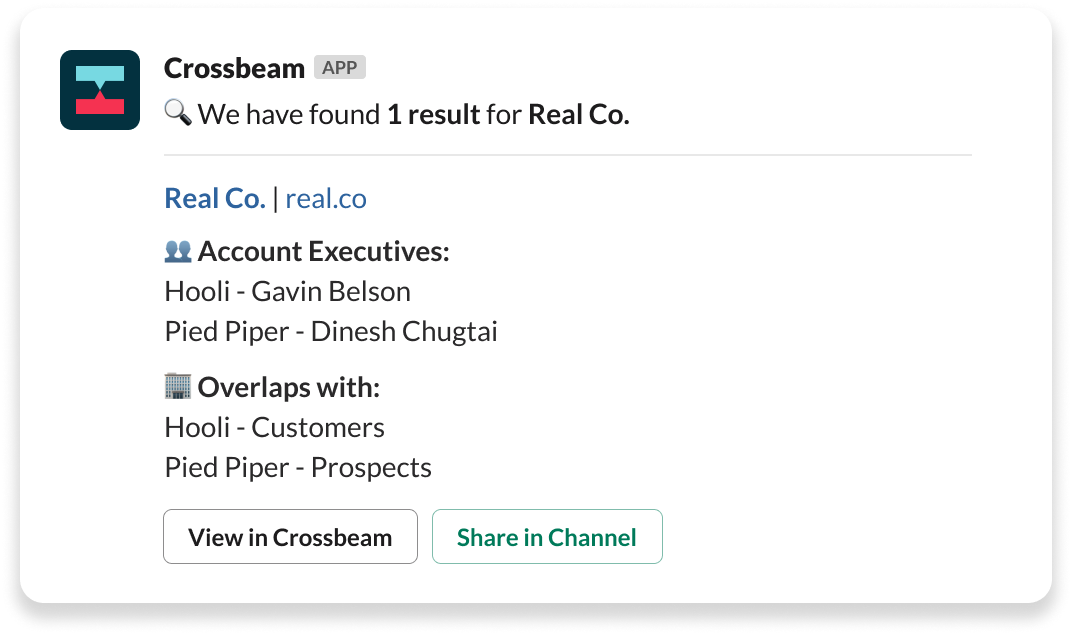
Instead of manually identifying opportunities, ecosystem data flows directly into CRM systems and prospecting tools.
“AI doesn’t approve deals; it prepares humans to approve faster. When a partner submits a registration, you can trigger an AI summary that validates fields, surfaces CRM matches, flags conflicts, and recommends next steps — saving 40–60 minutes of manual research per registration and turning co-selling into a scalable, repeatable motion instead of a one-off hero effort,” explains Aaron Howerton, RevOps Architect at Go Nimbly. “I’m tool agnostic, but right now, at Go Nimbly, we’re using Gong, Salesforce, Clay, HubSpot, and Crossbeam.”
That allows sellers to quickly see:
- which partners already know the account
- who can introduce them to decision makers
- where co-sell opportunities exist
Pattern #4: AI + Ecosystem Intelligence Turns Signals Into Revenue
The newest ELG pattern emerging across high-performing sales teams is the combination of AI and Ecosystem Intelligence.
In traditional sales motions, reps spend hours researching accounts, guessing which partners might help unlock a deal, and manually coordinating introductions.
But when ecosystem data feeds directly into AI workflows, that process changes dramatically.
Instead of guessing where opportunities exist, sales teams can use AI to analyze ecosystem signals — shared customers, partner relationships, and deal activity — to identify the highest-probability opportunities in real time.
This is the idea behind what Crossbeam calls AI-powered Ecosystem Intelligence.
As CEO Bob Moore explains, “Ecosystem data fuels your AI with the context it needs to generate pipeline and accelerate deals.”
When that context layer is applied across the sales funnel, AI becomes much more than an automation tool, it becomes a revenue accelerator for co-selling motions.
For example, Crossbeam uses Agentic Intelligence Signals and Webhooks to trigger real-time alerts when partners open or close deals in shared accounts. These signals automatically update CRM records and trigger outreach workflows, allowing sales reps to engage prospects at the exact moment a partner interaction occurs.
Instead of using AI in isolation, you can feed it second-party ecosystem data from partners to power prospecting, co-selling recommendations, and revenue forecasting.
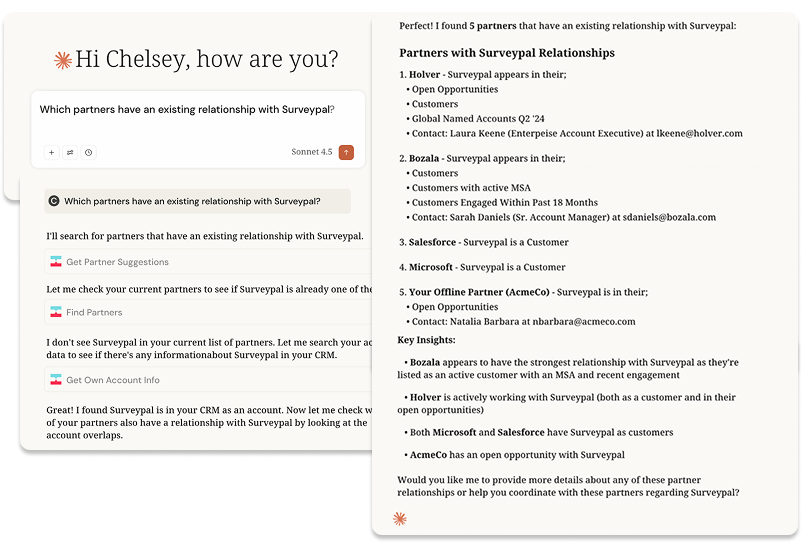
Crossbeam MCP (Model Context Protocol) enables ecosystem data to connect securely with tools like:
- ChatGPT
- Claude
- Microsoft Copilot
- Glean
- Internal AI agents
In other words, AI doesn’t replace partnerships. It amplifies them.
And when AI and Ecosystem Intelligence work together, the result is an amplified layer of intelligence that can help you drive more pipeline, faster deals, and higher-quality revenue.
Check out our AI Ecosystem Intelligence Guide to learn more about how to turn partner insights into faster decisions, stronger collaboration, and measurable business impact.
The ELG dashboard
Once you begin seeing these patterns emerge, your ELG teams can operationalize them through Crossbeam dashboards.
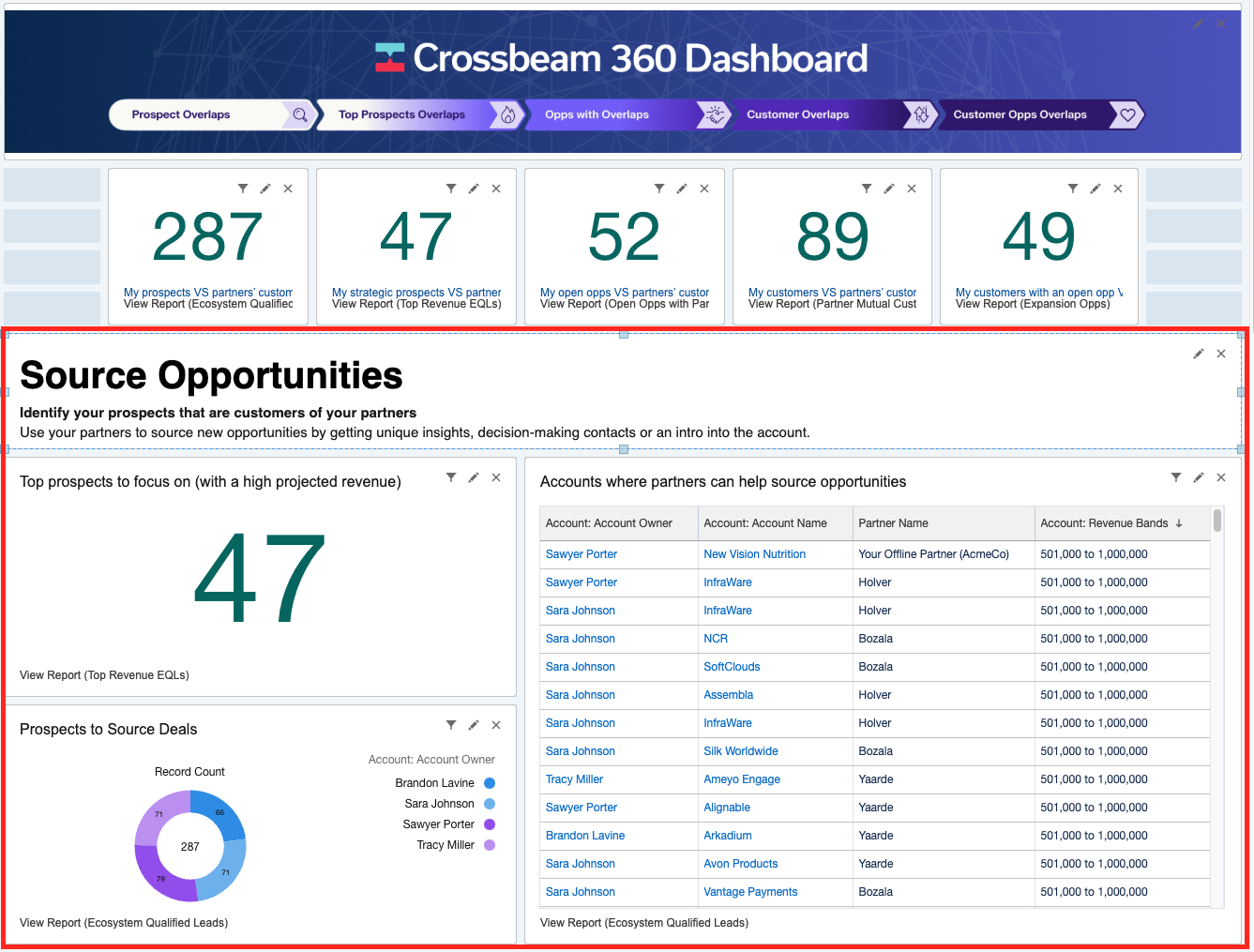
High-performing sales teams track:
- Partner-sourced pipeline
- Partner-influenced opportunities
- Win rate with partners vs. without
- Sales cycle length
- Average contract value
- Expansion revenue from ecosystem deals
These metrics answer the question every CRO cares about:
Is the ecosystem driving revenue?
And once the data says yes, the conversation changes. Partnerships stop being measured by activity and become one of the most powerful sales engines in modern GTM.
Ecosystem Intelligence enables revenue teams to uncover shared accounts, prioritize the right partners, and activate co-selling opportunities that accelerate deals and increase contract value.
If you’re ready to move from partner activity to measurable revenue impact, see how Crossbeam can power your ecosystem strategy.
Start measuring ELG success today, create a free Crossbeam account, and sign up here.
FAQ
How do you measure the revenue impact of Ecosystem-Led Growth?
The most effective ELG teams track three core metrics: partner-sourced and partner-influenced pipeline, sales cycle time, and average contract value (ACV). These metrics reveal how partnerships contribute to pipeline creation, accelerate deals, and increase deal size compared to traditional sales motions.
What’s the difference between partner-sourced and partner-influenced revenue?
Partner-sourced revenue refers to deals introduced directly by a partner. Partner-influenced revenue refers to deals where a partner participates in the sales process—such as providing introductions, technical validation, or joint selling support—even if the opportunity originated internally.
How does Crossbeam help teams prove ELG revenue impact?
Crossbeam provides Ecosystem Intelligence by securely mapping account overlap between companies and their partners. This allows revenue teams to identify shared customers and prospects, prioritize the most valuable partners, and activate co-selling opportunities that generate measurable pipeline and revenue.