


How ServiceNow and 360insights Are Rewiring Partner GTM for the Agentic Era: Insights From the ELG Summit


Discover how ServiceNow, 360insights, and Crossbeam modernize partner marketing with ecosystem orchestration, AI-led workflows, and a unified Learn–Build–Activate model.
Most partner programs don’t break because of strategy; they break because of noise:
Too many emails.
Too many tools.
Too many disconnected systems that partners and sellers don’t actually use.
As ServiceNow’s Director of Global Partner Marketing - Demand Strategy, Maisa Fernandez puts it, her team was suffering from “death by a thousand emails”, and partners were stuck in a fragmented maze of portals, processes, and guesswork.
To fix this, Maisa partnered with James Hodgkinson (SVP Ecosystems) and the team at 360insights and Crossbeam to take a radically different approach: unify the partner experience under a single “front door,” orchestrate partner motions across best-of-breed tools, and replace noise with data-driven personalization, composability, and measurable outcomes.
And with ecosystem insight from platforms like Crossbeam, they’re now able to identify the right partners, surface the right signals, and drive the right plays at scale.
During the ELG Summit 2025, Maisa and James walked through their playbook: how they’re building an AI-first, ecosystem-led GTM motion, what orchestration really looks like inside a global enterprise, and why this operating model will define the next decade of partner-led growth.
Let’s dive in.
Why ecosystem orchestration matters now?
You can’t have your partners in one system, your sellers in another, and your marketers in a third. Silos don’t work in a modern GTM strategy. In fact, according to the Future of Revenue Report 2025 by Pavilion and Crossbeam, misaligned GTM teams are 70% times more likely to experience extended sales cycles.
For decades, partner technology focused on features: portals, modules, checklists. But features don’t drive outcomes; alignment does. And alignment requires orchestration, bringing programs, partners, personas, channels, and processes together inside one connected motion.
James described ecosystem orchestration as: “Getting every person, every program, every partner aligned with the motions, so direct sellers, partners, and even multiple partners can execute seamlessly.”
The shift is happening because the old channels were never designed for what modern ecosystem GTM demands:
- More partner types
- More cross-company collaboration
- Faster sales plays
- AI-assisted workflows
- Better attribution
- Higher customer expectations
The answer: one orchestrated system, built on a composable architecture, powered by Ecosystem Intelligence, and tailored to each user.
So, what’s the best way to start orchestrating your ecosystem? By building the front door.
The ServiceNow ecosystem orchestration example
The best example of ecosystem orchestration is ServiceNow. The team led by Maisa included automation, AI, incentives, and Market Development Funds (MDF) to design the experience.
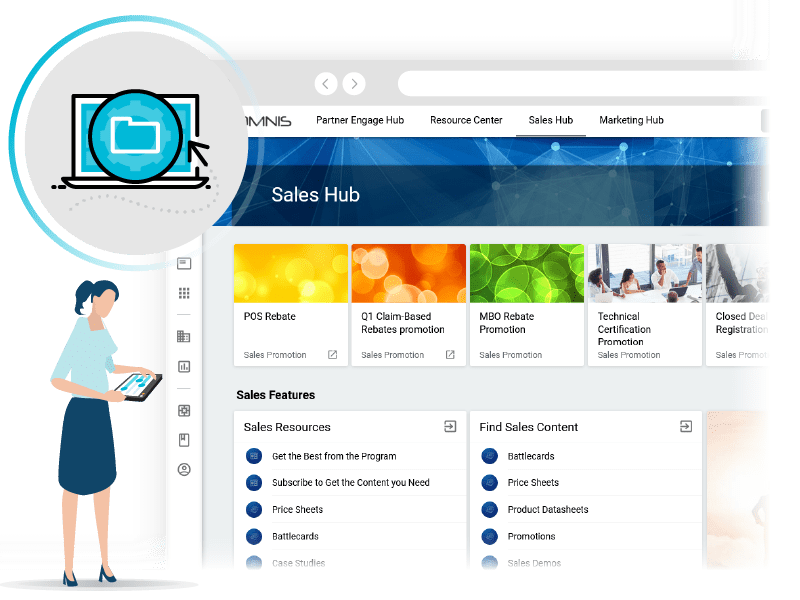
Maisa’s team needed a single front door that every partner could enter and immediately know:
- What to do next
- Which programs apply to them
- Which assets matter
- Which campaigns to activate
- Which incentives have they earned
“We wanted a system that was our front door to everything in partner marketing,” said Maisa.
Not a portal. Not a resource library. A workflow engine that routes each partner to their personalized experience based on:
- Partner type
- Role
- Region
- Maturity
- Past engagement
- Current plays
This wasn’t possible with a typical PRM. It required new architecture: one platform, infinite paths.
360insights became the orchestration layer.
ServiceNow became the workflow engine.
Crossbeam became the connective tissue for Ecosystem Intelligence.
The framework
At the center of ServiceNow’s orchestration model is a deceptively simple, but incredibly powerful framework: Learn, Build, and Activate. It’s the backbone of how partners move from awareness to execution without friction.
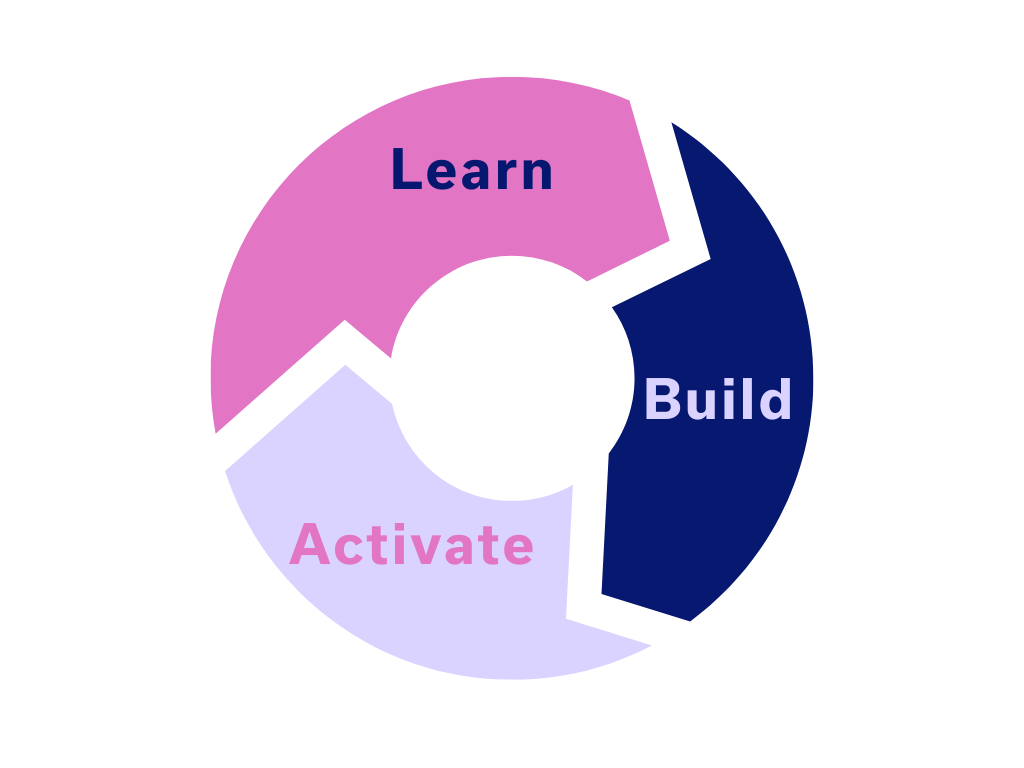
Maisa didn’t want a partner enablement program. She wanted a guided journey. One where partners, whether sophisticated Global System Integrators (GSIs) or first-time Independent Software Vendors (ISVs), always know exactly what to do next. Here’s how the framework works:
1. Learn: Lay the foundation across every type of partner
ServiceNow has wildly diverse partners. Some employ mature marketing teams; others are developers with zero marketing background. The Learn stage bridges that gap. “We have partners who have never done any marketing,” said Maisa. “We have others who only need fine-tuning. We need to learn and have to meet every partner where they are.”
Partners enter the system and see a personalized learning path based on:
- Partner type (ISV, reseller, GSI, etc.)
- Job role
- Region
- Market maturity
- Solution focus
- Past engagements
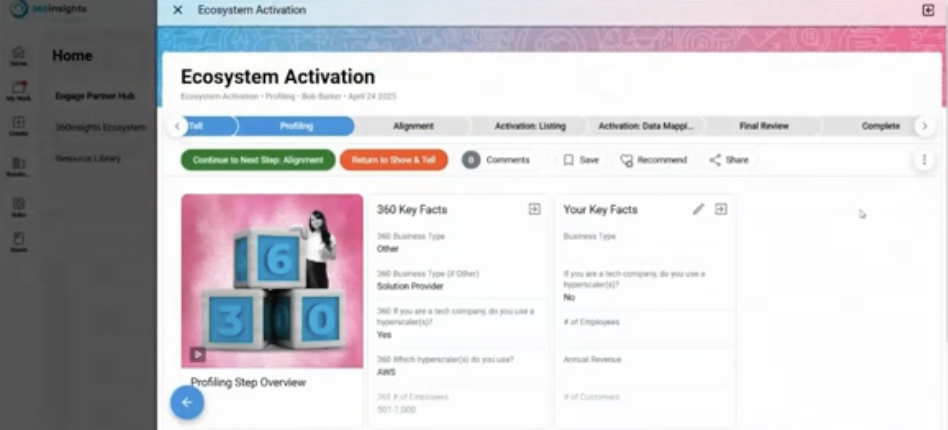
The learning content itself is designed to answer two questions:
- How do I do partner marketing at all?
- How do I market with ServiceNow successfully?
Each module introduces programs, campaigns, co-marketing options, incentives, and best practices, all grounded in the real plays ServiceNow wants partners to run.
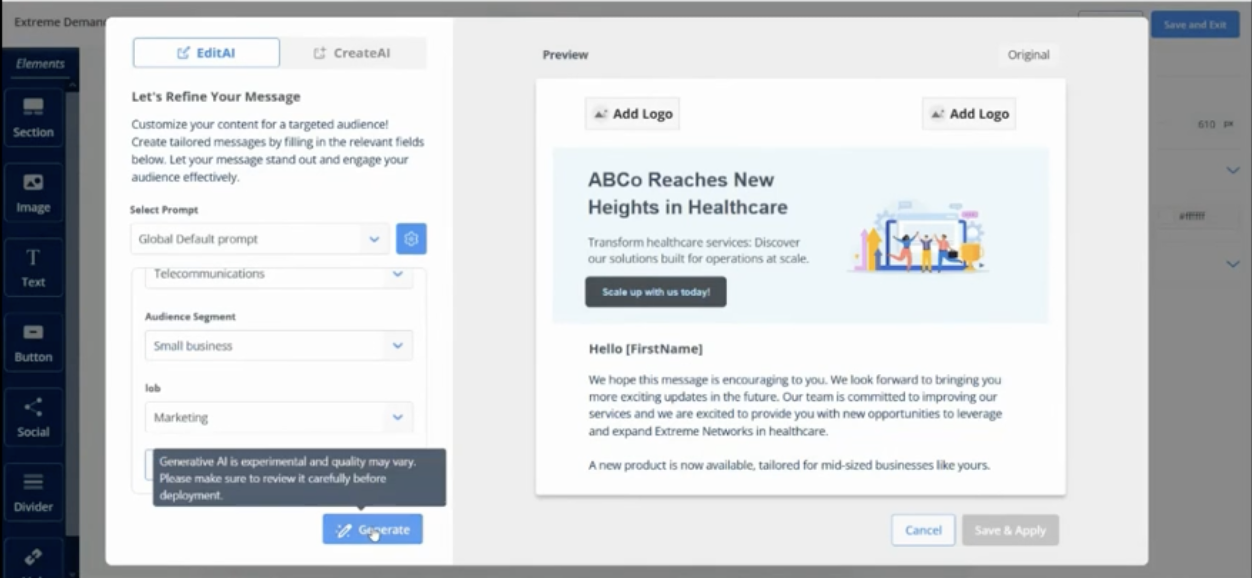
2. Build: Turn learning into assets and real campaigns
The moment a partner completes a learning module, they’re routed into orchestration-powered build workflows, driven by best-of-breed tools like Structured and wrapped inside 360insights’ personalized experience.
This is where partners:
- Build campaign assets
- Localize materials
- Personalize messaging
- Configure audiences
- Align with the appropriate ServiceNow solution
- Prepare for activation (funding, targeting, sequencing)
Everything is templatized but customizable. Everything is visible in one interface. Everything is connected to the right next step. The moment they learn something, they apply it.
“Build is where hyper-personalization meets repeatability,” said James. “One experience, infinite paths based on who you are and what motion you’re running.”
3. Activate: Put campaigns in the market and measure outcomes
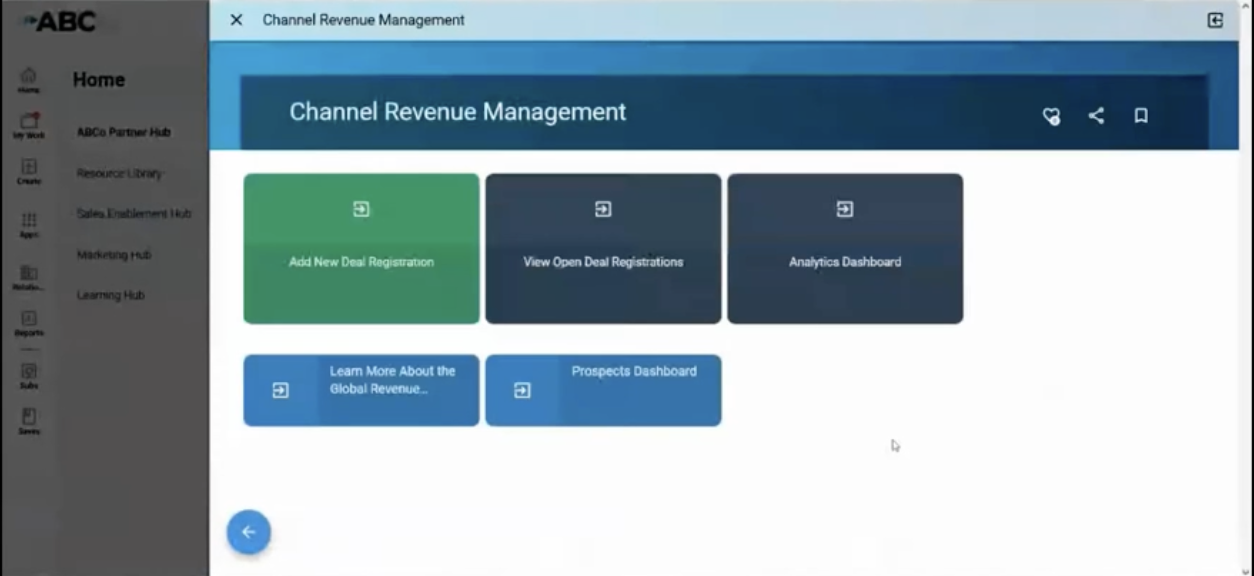
Activation is where the pipeline happens.
Partners take the campaigns they’ve built and launch them into the market, backed by MDF and clear incentives. In this case, activation is guided, measured, and connected to real revenue data.
Activation workflows:
- Ensure the campaign is aligned with a ServiceNow sales play
- Validate readiness for MDF
- Help partners submit funding requests inside the portal
- Connect leads generated back into the orchestrated experience
- Keep CRM clean via church-and-state separation
- Tie marketing actions directly to sourced or influenced opportunities
“We’re not just teaching partners. We’re enabling them, then tying every action to outcomes,” said Maisa. “It’s the first time we can show proof of ROI across the entire motion.”
The key to making Activation work is developing a strong incentive strategy. Here are some examples of what ServiceNow includes in its incentive strategy:
- Sellers get clear visibility
- Partners understand what drives rewards
- ServiceNow sees which plays actually work
- MDF becomes a growth engine instead of a black hole
“We’re not rewarding activity, we’re rewarding outcomes,” said Maisa. “Thanks to this framework, now we can prove where leads came from and where deals came from.”
This closes the loop of the flywheel and pushes partners right back into Learn with context, experience, and momentum.
How to scale your ecosystem motion?
The next logical step would be to scale, and that’s something that ServiceNow does really well. They support tens of thousands of partners across dozens of partner types. That level of scale is impossible without deep integrations. “Real scale comes from best-of-breed solutions combined with hyper-personalization,” said James.
That’s why they had the best tools in their tech stack:
- Structured for campaign creation
- 360insights for incentives, MDF, and orchestration
- ServiceNow workflows for UX and partner routing
- Crossbeam for ecosystem intelligence
- CRM, LMS, and content systems for enterprise data
The result: One login, one user identity, one record of truth… Ecosystem orchestration.
The role of Ecosystem Intelligence in Ecosystem Orchestration
This is where Ecosystem Intelligence comes to life. At the beginning of their motion, ServiceNow struggled to answer questions like:
- Which partner is best for this account?
- Who has the right certifications?
- Who is already active inside this buying center?
- Who touched this account in the last 90 days?
- Where are warm paths already open?
With Crossbeam integrated into the orchestration layer, ServiceNow can now identify:
- Partner overlap is segmented by partner type
- Sellers see which partners have engaged key personas recently
- Partners see available opportunities without channel conflict
- Target account lists for campaigns and sales plays become data-driven
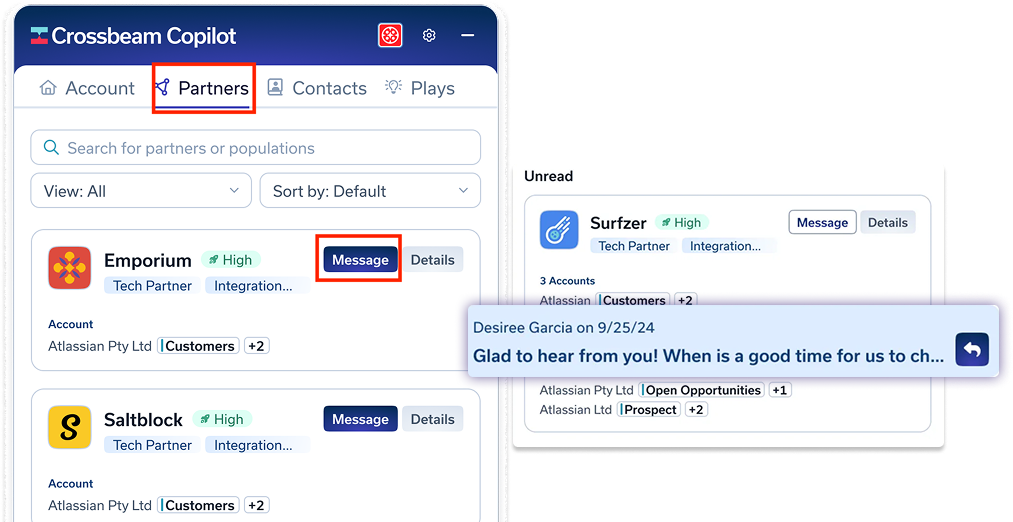
“Crossbeam is helping us identify the right partners with the right certifications, the right engagements, and the right people in the buying center,” said Maisa.
Instead of a giant data dump, Crossbeam becomes a contextual signal layer, embedded directly into the motions ServiceNow and partners already follow. “Crossbeam is the CRM for the new sales funnel,” said James.
The future of ecosystem orchestration
The future of ecosystem-led GTM won’t be defined by more tools; it will be defined by intelligence, automation, and alignment. ServiceNow is already architecting for that future as an AI-first, rapidly moving toward an AI-only enterprise. As Maisa put it, “We have one platform, one data model, and thousands of workflows. This is a treasure trove for the agentic era.”
But agentic systems can’t operate on fragmented data or disconnected motions. They require a unified, orchestrated foundation, exactly what this model provides. With a single front door, clean data, composable integrations, and Ecosystem Intelligence from partners like Crossbeam, the groundwork is set for what’s next:
- AI-generated campaign variants
- AI-recommended partner plays
- AI-created target account lists
- AI-measured MDF ROI
- AI-orchestrated partner motions at scale
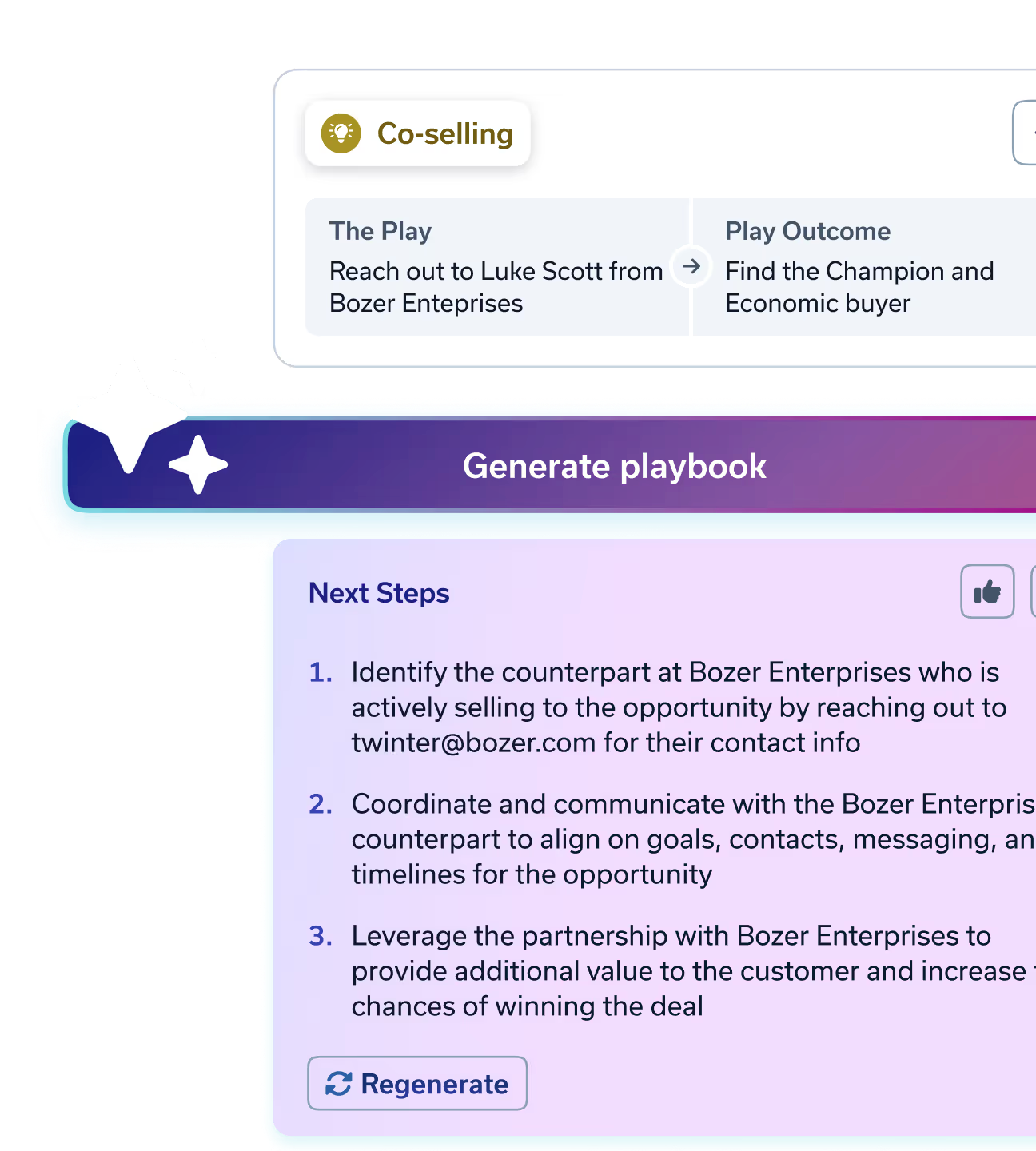
ServiceNow’s direct-sales roots once created distance between sellers and partners. Sellers saw partners as a complexity. Instead of asking sellers to “attach a partner,” ServiceNow can surface insights where its sellers already live:
- Who engaged the account recently?
- Which partner has the right certifications?
- Who influenced key personas in the buying center?
- Which partner aligns best with the sales play?
… And the proof behind every recommendation.
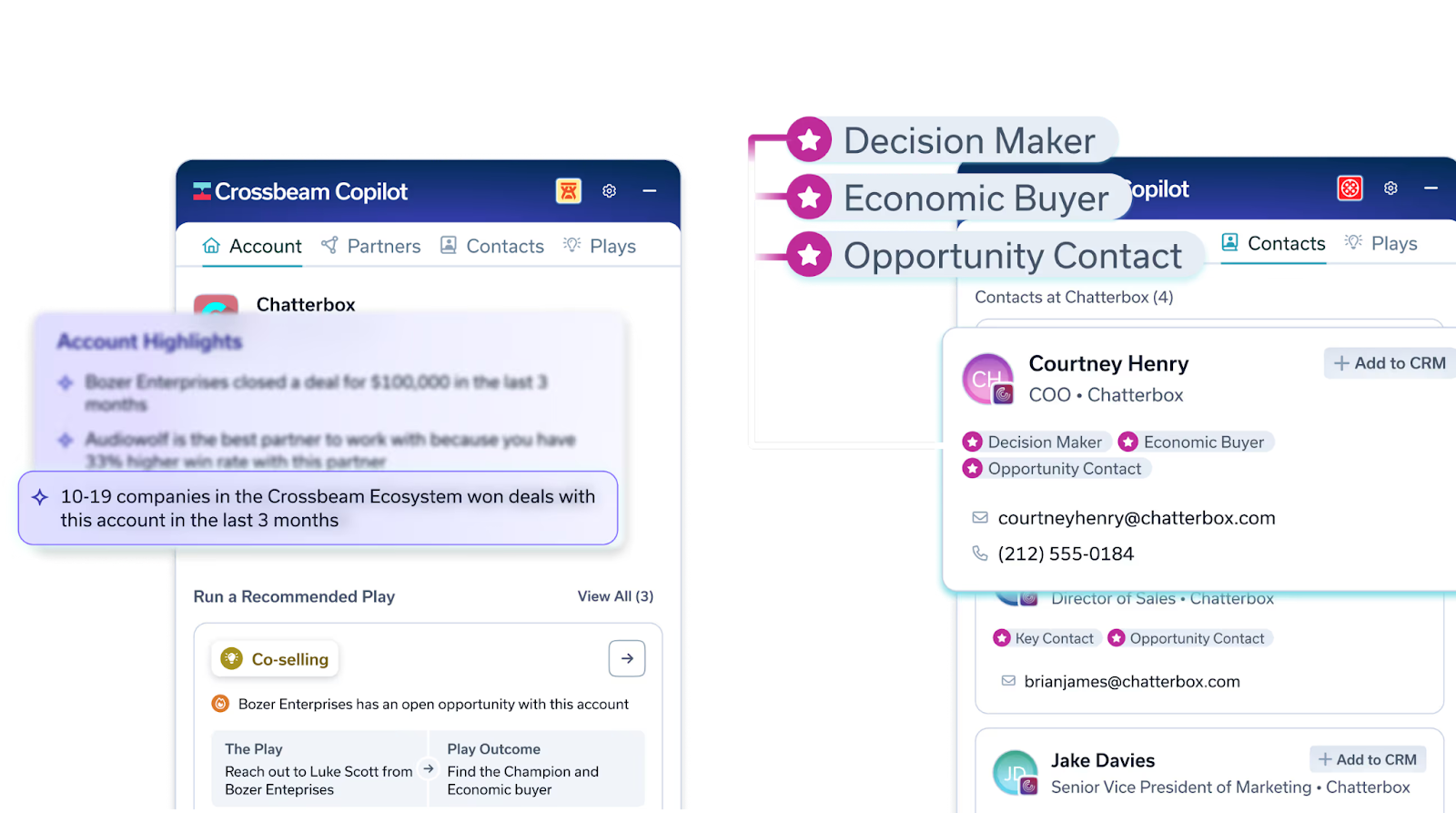
In Maisa’s words, “We’re giving sellers the insights they need to act. For the first time, they can clearly see which partners are best for each sales play.”
The bottom line: Ecosystem orchestration is the new GTM motion
ServiceNow and 360insights didn’t fix partner marketing. They rebuilt the operating system.
By eliminating noise, prioritizing composability, and embedding ecosystem intelligence from platforms like Crossbeam, they’ve created a model that scales across thousands of partners and sets the blueprint for the next era of partner-led, AI-powered growth.
This isn’t the future. It’s already working.
Ready to tap into the full power of partner marketing and Ecosystem Intelligence? Book an ELG strategy call, and let’s level up your GTM motion. And to hear the full conversation with Maisa Fernandes, James Hodgkinson, and Bob Moore, watch the “Ecosystem-Led Channel Panel discussion” here.
FAQ
1. What problem was ServiceNow trying to solve with ecosystem orchestration?
ServiceNow was drowning in complexity—too many tools, too many emails, too many disconnected partner experiences. Partners didn’t know what to do next, and sellers lacked clear visibility into which partners could help. Ecosystem orchestration centralizes these motions under one “front door,” creating clarity, consistency, and alignment across teams.
2. How does the Learn → Build → Activate framework work?
It’s a guided partner journey that eliminates friction.
- Learn provides personalized enablement based on partner type, role, and maturity.
- Build moves partners directly into campaign creation using templates and structured workflows.
- Activate helps partners launch campaigns, request MDF, and tie actions directly to sourced or influenced revenue.
The framework closes the loop and continuously feeds partners back into learning with new insights.
3. What role does Crossbeam play in ServiceNow’s orchestration model?
Crossbeam acts as the ecosystem intelligence layer. It identifies the right partners for each motion, surfaces overlap, reveals buyer engagement, and provides sellers with contextual insights inside the workflows they already use. As James put it, “Crossbeam is the CRM for the new sales funnel.”
4. Why is composability essential for scaling an ecosystem motion?
ServiceNow supports tens of thousands of partners across multiple partner types. A single monolithic system can’t manage that complexity. Composable architecture—using best-of-breed tools like Structured, 360insights, Crossbeam, and ServiceNow workflows—creates one unified experience with infinite personalized paths.
5. What does the future of ecosystem orchestration look like?
The future is AI-powered and agentic. With unified data and orchestrated workflows, companies can unlock AI-generated campaign variants, partner recommendations, automated playbooks, MDF ROI insights, and even AI-orchestrated partner motions. Every seller becomes ecosystem-enabled, and every GTM motion becomes ecosystem-led by design.


