


Inside the Ecosystem Era: Jay McBain on AI, Channels, Marketplaces, and the Road to 2026


Jay McBain explains how AI is transforming channels — unlocking partner signals, reshaping GTM, and powering the next era of ecosystem growth.

Jay McBain, Chief Analyst for Channels, Partnerships, and Ecosystems at Omdia, has spent more than 30 years analyzing the global channel landscape. A recent conversation during the ELG Summit’s Hot Ones–style session was one of his most candid and far-reaching explorations of where ecosystems, AI, and marketplaces are heading.
Between increasingly fiery sauces (yes, Jay and Bob Moore, our CEO, discussed the future of the channel while eating hot wings), Jay broke down the shifts redefining GTM models and why the next decade will reward companies that understand the new physics of partner-led growth.
By the end of the session, one lesson was unmistakably clear:
The next decade of growth belongs to companies that unify AI, marketplaces, and partner ecosystems into a single operating system.
So let’s get into it. Here’s what Jay had to say about the new ecosystem era and the road to 2026.
AI: overhyped, underestimated, and already reshaping the ecosystem
Few people have Jay’s historical lens on AI. His career began at IBM during the Deep Blue and Watson eras, and he sees clear parallels between past and present.
While many believe AI “arrived” with ChatGPT in 2023, Jay stresses that the underlying breakthroughs began decades earlier and that today’s expectations lack historical perspective.
His core thesis is simple: we overestimated AI’s first two years and are wildly underestimating the next ten.
Jay predicted that by the 2030s: “The people buying your products might not even be people.”
He’s also realistic about why many AI deployments struggled in 2024 and 2025. He points to an MIT study showing that 95% of AI projects failed. Jay says the problem isn’t the technology itself — it’s that most companies weren’t ready with the right data.
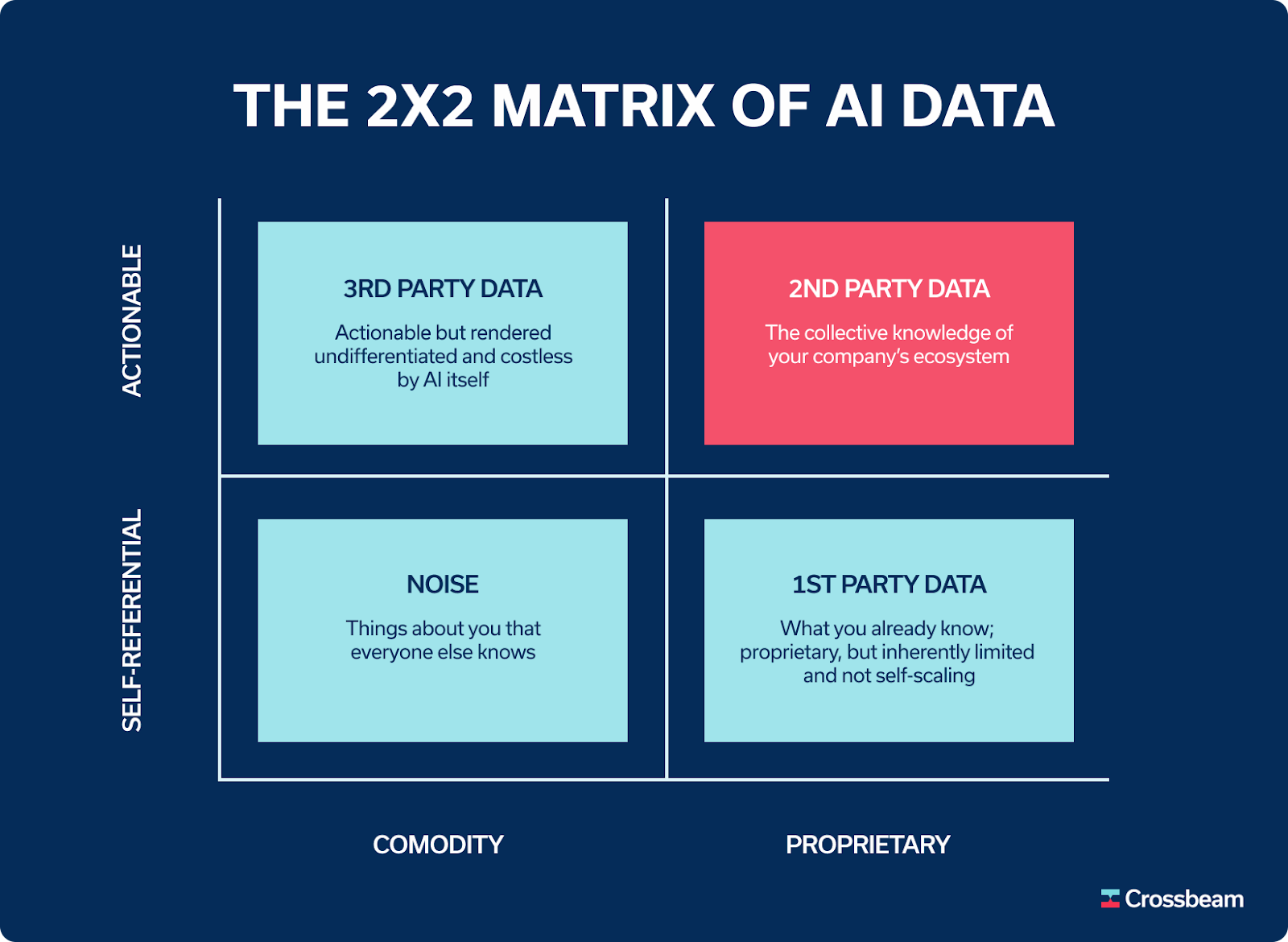
The study also notes that many teams relied on generic AI tools that look great in demos but break down in real workflows. Instead of embedding GenAI into high-value processes and building tools that learn over time, many companies attempted quick bolt-on fixes, and those approaches didn’t hold up.
The most important insight, especially for partner ecosystems, is this:
AI becomes valuable not when it summarizes static data, but when it interprets change.
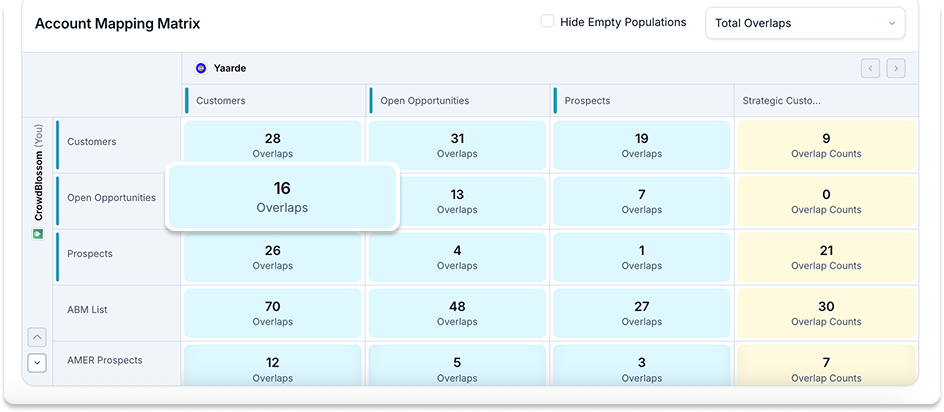
One clear example is Crossbeam. Jay shared that Crossbeam’s early “stateful” account mapping pages showed huge amounts of partner and customer history, but GTM leaders rarely used them. The breakthrough came from identifying time-series changes: new overlaps, deal-stage movement, and partners winning deals before vendors even knew the opportunity existed.
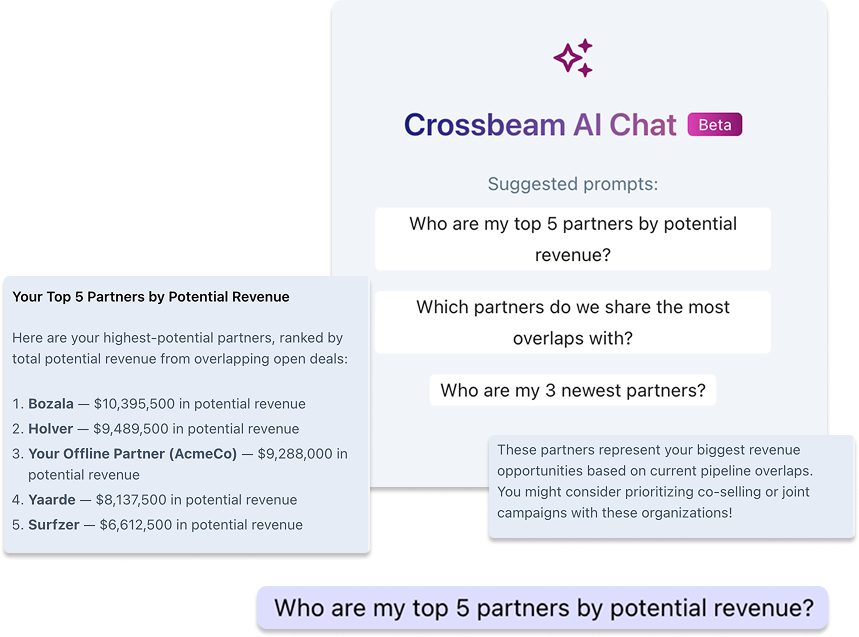
“Those changes are the signal, that’s where the real value is,” said Jay. This insight underpins the future of partner-led AI across GTM.
The 28 moments: Why visibility is the new battleground
Since 2023, Jay has described a modern buyer journey defined by 28 critical touchpoints that occur before a vendor ever sees an MQL or sales engagement.
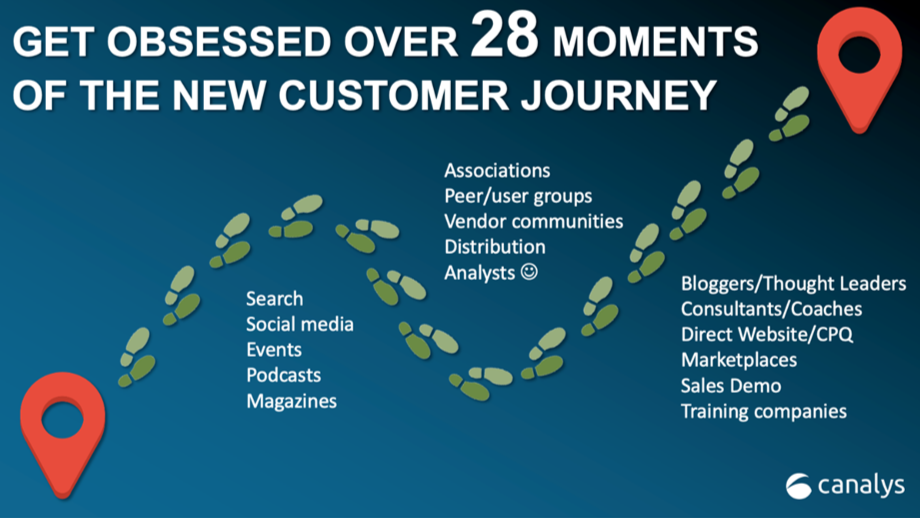
These moments can include:
- A podcast listened to
- A webinar attended
- A partner’s advisory session
- Services scoping or architecture work
- Legal and contracting completed before vendor involvement
“Most of the 28 moments happen without you,” Jay said. “You never see them.”
This is the foundational challenge: vendors lose deals not because they competed poorly, but because they never knew the deal existed.
Ecosystem Revenue Platforms like Crossbeam can help you reinsert yourself into these invisible moments through privacy-safe, double-blind partner data sharing. “No partner will hand over their customer list. No vendor will either,” said Jay. “The only way to make these connections is double-blind.”

This, for Jay, is why matching technology has become central in ecosystem GTM.
Sales and partnerships converge permanently
Despite common perception, sellers are embracing partners faster than in previous years.
Referencing Salesforce’s latest State of Sales research, Jay highlights:
- 89% of sellers now use partners every day
- Of sellers who hit quota, 84% say partners were the reason
- Partner-assisted selling is reaching 95–100% in many enterprise categories
What was once a source of friction — the old “sales vs. channel” dynamic — is collapsing. “Salespeople now recognize partners as the new sales hack,” said Jay.
Partners aren’t a nice-to-have; they’re essential for hitting numbers in increasingly complex, competitive cycles.
Marketplaces: The route-to-market of the next decade
Jay described hyperscaler marketplaces as one of the most accurate predictions his team has ever made:
- They forecasted massive growth years ago.
- The world laughed.
- And then the math proved them right.
He stated that route-to-market activity via cloud marketplaces will grow at an 82% compounded rate.
He added that by 2027, half of marketplace transactions will include partner-created private offers — a sign that marketplaces and ecosystems are collapsing into one integrated motion.
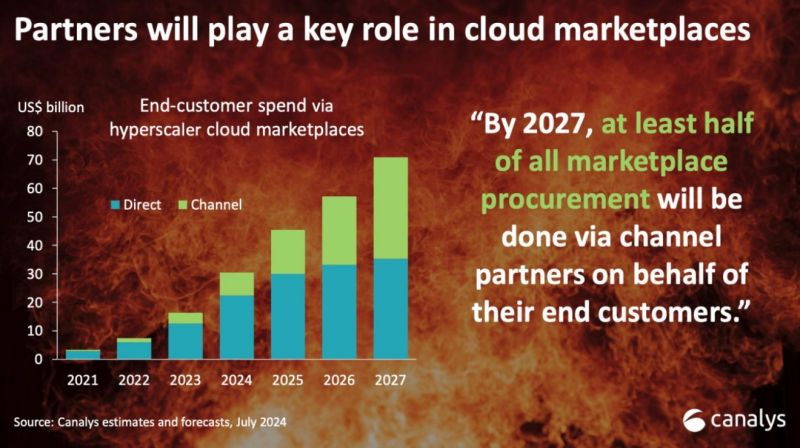
Two forces drive marketplace dominance:
- The demographic shift: Millennials (born 1982+) became the majority of global software buyers in 2025. “75% of their life is digital-first or digital-only,” said Jay.
- Deal complexity: With an average of seven partners involved (and rising), digital procurement is simply more efficient. “If you’re combining seven products and seven partners, it just makes sense you’ll buy digitally,” said Jay.
ROI in the channel: The four things your C-suite cares about
Jay made one thing very clear: there’s a channel historical obsession with internal metrics that won’t take you far. “We invented 50 metrics. None of them matter to the CMO or CRO,” said Jay.
If you want to get executive buy-in, you have to speak the language of your CRO, CMO, and CEO. To help you with that, Jay shared some metrics that do matter:
- Lower CAC
- Bigger deals (ACV lift)
- Faster cycles
- Higher retention and expansion (NRR)
He points to Microsoft’s commitment to maintaining 108% net revenue retention as the gold standard and argues ecosystem-led motions are becoming essential to achieving similar outcomes.
The future: more partners, more complexity, more AI
To help you prepare for 2026, Jay shared three predictions:
1. The number of partners per customer will rise dramatically. Today’s average of seven partners per account is only the beginning. “I think seven partners will become seventeen,” said Jay.
As products become more modular, AI becomes embedded across workflows, and compliance becomes more local, the constellation of required expertise expands.
2. Ecosystems will become too complex for human management. This is where AI becomes the indispensable orchestrator, the layer that translates ecosystem complexity into next-best actions.
3. 99% of the data that matters isn’t in your systems yet. The most impactful GTM data lives inside:
- partners
- marketplaces
- services teams
- customer systems
- interactions no vendor ever sees
- AI agents
The companies that win the ecosystem decade will be those that unlock these walled-garden signals through trusted, privacy-preserving frameworks. That’s why sharing Ecosystem intelligence safely and responsibly is so important.
Consumers and professionals will adopt AI for everyday decisions, moving from search to answer-first behavior almost overnight.
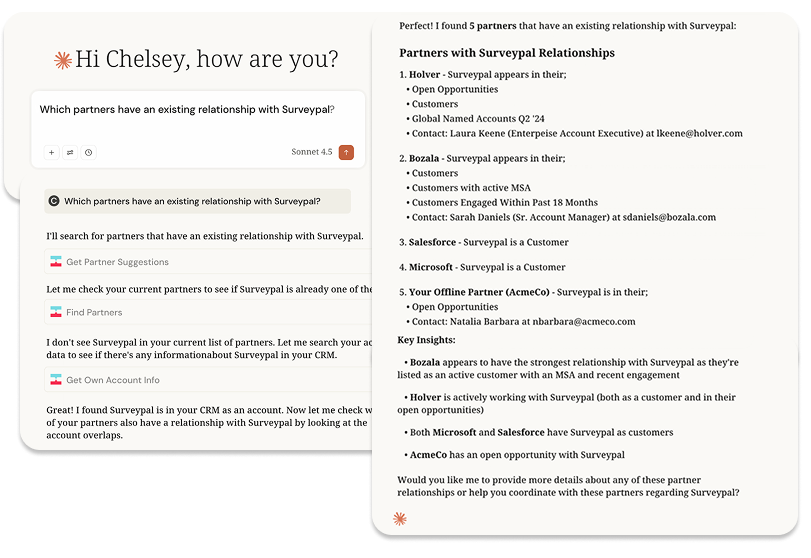
He predicts this shift will escalate rapidly:
Every device.
Every workflow.
Every buyer journey.
AI becomes ambient, a second brain.
And this second brain will be deeply intertwined with your ecosystem.
The ecosystem decade has officially begun
Jay McBain’s Hot Ones session — far beyond its entertainment factor — delivered a clear thesis:
The next decade of GTM will be defined by:
- AI that interprets partner signals and guide your teams to make smarter decisions
- Sales and partnerships merging into one function
- Marketplaces becoming the default buying path
- Buyers who trust partners more than vendors
- Compounding ecosystem complexity that only AI can manage
The companies that thrive will be those that accept this new reality and architect their GTM around it. As Jay put it: “Partnering gets more important every year for the next 20 years. Tools like Crossbeam become exponentially more important.”
The ecosystem era is here, and it's only just beginning.
To learn how Crossbeam can help you turn ecosystem signals into real revenue and operationalize AI across your channel motions, book an ELG Strategy Call with our team.
FAQs
1. Why is AI becoming so important in channel and ecosystem GTM?
AI is shifting from “summarizing information” to interpreting change — such as new partner overlaps, deal-stage movement, or unseen opportunities forming in your ecosystem. As Jay McBain noted, static data isn’t where the value lives. The power comes from understanding real-time signals across partners, marketplaces, and customer activity. This makes AI essential for visibility, prioritization, and next-best-action guidance.
2. What are the “28 moments,” and why do they matter?
The 28 moments describe the presales touchpoints a buyer moves through before a vendor ever sees an MQL or form-fill. These include podcasts, partner advisory sessions, architecture work, and early contracting — nearly all of which happen without the vendor present. Companies lose deals today not because they compete poorly, but because they never see them. Ecosystem Revenue Platforms like Crossbeam help uncover these invisible moments through privacy-safe partner data sharing.
3. Why are sales and partnerships merging into one unified motion?
The old “sales vs. channel” divide is disappearing. According to Salesforce research Jay referenced, 89% of sellers utilize partners daily, and 84% of quota-carrying reps attribute their success to partners. As deals become more complex and buyers involve more stakeholders, sellers rely on partner intelligence to hit numbers. Ecosystems are no longer adjacent to sales; they are sales.
4. What makes cloud marketplaces such a critical route-to-market for the future?
Jay highlighted two major forces:
- Buyer behavior is now digital-first: Millennials (the majority of software buyers) prefer a frictionless, no-meeting purchasing experience.
- Deal complexity is rising: With seven — soon seventeen — partners touching every deal, marketplaces are the simplest way to transact multi-product, multi-partner solutions.
Marketplaces are becoming the default commercial layer for how software is bought and sold.
5. What should GTM leaders focus on to prepare for the ecosystem decade?
Jay outlined four priorities that matter most to executives: lowering CAC, increasing ACV, shortening cycles, and improving NRR. To achieve these outcomes, teams must:
- Use AI to interpret partner-driven signals
- Build motions where sales and partnerships operate as one
- Leverage marketplaces for efficient procurement
- Share ecosystem intelligence safely and responsibly
Companies that unify AI, partners, and marketplaces into a single operating system will outperform in the decade ahead.