





Tech Ecosystem Maturity: How to Level Up Your Co-Marketing Motions


Improve your co-marketing efforts by establishing a timeline outlining what’s expected of all of your internal and external stakeholders.

This post is part of the “Tech Ecosystem Maturity” series, exploring the 30+ criteria of Crossbeam’s Tech Ecosystem Maturity Diagnostic. The diagnostic helps you understand how your partner program stacks up against others in the B2B SaaS industry, what you’re doing well, and how you can advance to the next level of maturity. To learn more and take the tech ecosystem maturity diagnostic, click here. Read the rest of the Tech Ecosystem Maturity series here.
–
Your co-marketing, or the contents you create to spread the word about your integration, contributes to your tech ecosystem maturity.
If your “better together” story is the language you use to communicate the value of your integrations, your co-marketing is the means for communicating that value. Will you promote your integrations through webinars? Joint case studies? Gifs? Maybe all of the above.
Our State of the Partner Ecosystem Report revealed that 85% of partnership professionals go to market with their tech partners using webinars. Take a look at the stats for all of the GTM activities in the chart below
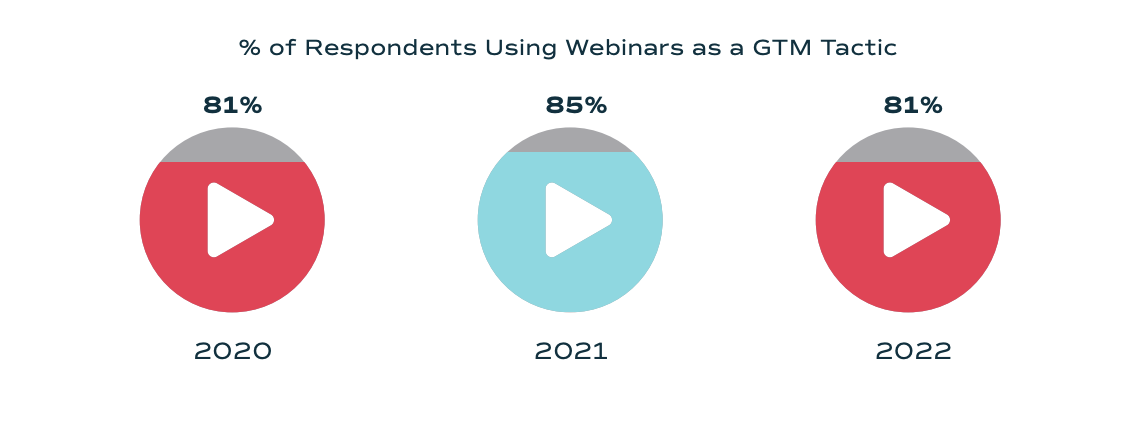
With so many moving parts that require accountability from your internal team and your partners’ teams, co-marketing can require a big investment on all fronts. With a handful of partners to team up with and limited headcount and resources, improving your co-marketing processes takes time and a thoughtful approach.
Below, we’ll discuss how you can level up your co-marketing gradually and efficiently to improve your tech ecosystem maturity. Soon, you’ll be directly responsible for generating ecosystem qualified leads (EQLs) and partner-sourced revenue through your co-marketing campaigns.

In general:
- For “Explorers”, the partner org is not aligned or coordinating with the marketing department.
- For “Producers”, coordination exists around co-marketing events (like webinars) but are not data driven.
- For “Connectors”, partner data is incorporated into marketing KPIs around attribution and lead gen.
- For “Supernodes”, your tech partner program is a key driver in helping marketing achieve its KPIs and growth goals.
Tech ecosystem maturity level #1: Explorer

“Explorers” are in a discovery phase. They’re learning what processes work for their internal marketing team, their partners’ marketing teams, and their partnerships team to drive the most success through co-marketing.
In the beginning, early success metrics will be your best friend for getting others bought in. Do your best to lay the foundation for bolstering your top tech partners. Identify who you’ll need to contribute to your co-marketing motions from your internal and external teams and what the deliverables look like from all contributors. Inform the stakeholders of their roles in advance, and ask them for feedback as you finetune your co-marketing process.
How to advance to the “producer” level
Get buy-in from your marketing team. Try co-designing your co-marketing efforts. Ask your marketing team what they envision your co-marketing collateral being like, and then put their vision to paper. Show your marketing team that their perspective is valuable and that you’re ready to deliver on your promises. You can use this co-designing philosophy with your partners and their marketing teams as well.
Define responsibilities ahead of time. Let your marketing team know what you need from them in advance so they can plan accordingly and keep themselves accountable. It’s likely that select members of your marketing team will support your co-marketing, and your marketing team will need to forecast who will work on various co-marketing projects and how in order to juggle partnerships with their own quarterly goals.
Adopt the right tools. Consider adopting a partner ecosystem platform (PEP) to vet your tech partners, identify early integration adopters (think: mutual customers with your tech partner) and to avoid duplicate outreach. The last thing you want is your sales and marketing teams getting frustrated because your prospects are getting too many marketing emails. Consider adopting an account-based marketing (ABM) tool to identify strategic accounts and run targeted advertising, webinars, and more for those accounts. Make sure you’re putting your best foot forward when it’s time to leverage the power of your marketing team.
Start small. Try the crawl-walk-run framework to invest minimal efforts in co-marketing with a partner in the beginning stages of the partner lifecycle and then get more strategic with your co-marketing efforts after you’ve observed some early successes. Early metrics are also a great way to get buy-in from your marketing team. Try micro co-marketing motions like linking to your partner in an upcoming blog post or inviting them to an adjacent webinar with another partner to see how many EQLs they attract to your content.

“I often start off by saying ‘Let’s swap some social media posts’,” says Brian Jambor, Head of Partnerships at Nacelle, in our Partner Playbook. “Juxtapose that with a webinar. Pulling that off is much more complicated. Who should you invite? How many marketing emails should you send? Who is running the ads? Are we doing retargeting? Who is creating the slide decks? What platform are we using? It’s such a heavy lift. We have to have someone that has a ton of prospect alignment with us to do that.”
Tech ecosystem maturity level #2: producer

As a “Producer,” you coordinate with your internal and external marketing teams to some extent, and maybe you’re starting to see some metrics of success. It’s still a work in progress, but you’re starting to understand which co-marketing motions are worth the lift.
In 2021, Workato’s partnerships team shifted their marketing efforts to prioritize the tech partners and co-marketing motions that had the best return.
“Now that we have more partners and more partner managers, we also have to put metrics around our marketing budget,” said Mary Vue, now the Head of Partnerships and Alliances at Syncari. “The question becomes, did this partner achieve the things they were supposed to achieve in comparison to other partners? And therefore the activity they’re requesting qualifies them for marketing development funds (MDF).”
How to advance to the “connector” level
Develop a “better together” story that resonates with all of your internal and external stakeholders.
Your “better together” messaging isn’t just for communicating the value of your integrations to customers. Your internal and external sales and marketing teams need to understand how the integrations can help them do their jobs better. How can your integrations solve pain points for your sales team during the sales cycle, thus helping them promote your integrations more effectively. How can your integrations solve pain points for your marketing team regarding lead gen?

Sync with your marketing team around your go-to-market (GTM) strategy.
Meet with your marketing team to discuss your GTM strategy with a given partner. Map out all of the collateral you’ll need before, during, and after the launch of your integration and which team members are responsible for each part. Facilitate intros between your marketing team and your partner’s marketing team if necessary.
Give your marketing team partnership-related KPIs.
Speak with your executive team and marketing leader to establish partnership-related KPIs and objectives and key results (OKRs) for the marketing team. These KPIs/OKRs can include:
- The number of webinars or events co-delivered with partners
- The number of EQLs from various webinars and events with partners
- Enablement materials in conjunction with the professional services team for various partners
Determine who gets credit.
Attribution is a common challenge for partnership professionals, and with good reason: a lead can interact with several teams and campaigns before deciding to buy. If a lead comes in through a webinar you co-host with a partner, is that lead a marketing qualified lead (MQL) or an ecosystem qualified lead (EQL)? Garrett Helmer, CMO at Ava Security, says that merging EQLs and MQLs can help prevent friction among your partnerships and marketing teams and can instead have both teams working towards a common goal.
Look to your early integration adopters as advocates.
Use your PEP to identify mutual customers with your tech partner who might be interested in adopting and beta testing your integration before your official launch. With the resulting list from your PEP, ask your customer success (CS) teams to weigh in on which customers would be the best fit and who could be your biggest advocates. Ask those customers if they’d be willing to contribute a quote to your upcoming press release or for your integration listing page.
Tech ecosystem maturity level #3: connector

As a “Connector,” you have a good idea of what works and what doesn’t, and you have the buy-in and resources to lead innovative co-marketing campaigns. Your co-marketing campaigns are backed by data, and you strategically choose which tech partners to launch co-marketing motions with. Your internal teams have partnership-related KPIs, and you have dedicated team members responsible for contributing to your co-marketing campaigns throughout the partner lifecycle.
You know which activities lead to a successful GTM launch with a given partner, can forecast the potential success of the partnership through revenue numbers, and have the ability to reward or “demote” partners according to their ability to deliver on their promise for creating deliverables, generating EQLs, and generating revenue.
How to advance to the “supernode” level
Put a co-marketing process and timeline behind every strategic partnership.
How long should you spend preparing collateral for your GTM launch? What happens after launch? Analyze your most successful co-marketing campaigns early on. Develop a standardized timeline for preparing future GTMs, and pinpoint when to activate each co-marketing activity along the timeline and who is responsible for the deliverables. Mike Stocker, VP of Strategic Partnerships at RollWorks, has developed a partnership maturity curve to put logic behind every move he and his partners make during their lifecycle.

Team up with your partner to target a shortlist of accounts. More isn’t always better. ActiveCampaign rose to the #1 spot for marketing automation apps in Salesforce’s AppExchange six months after their first co-marketing initiative by inviting strategic accounts to a series of big and small events (in addition to a lot of digital co-marketing).
Follow the “six months rule”. Flip your co-marketing from reactive (think: creating the integration one-sheets and listing pages required of any partnership) to proactive (getting creative with how you’ll show the value of your integration to prospects and customers) six to eight months into a partnership.
Understand the relationship between co-marketing and co-selling. Part of co-marketing your integration falls in the hands of your sales team. You’ll need to provide your sales team with the enablement sessions and collateral they need to communicate the value of your integrations effectively to all stakeholders. You and your marketing team may be responsible for creating those resources and making sure the information exists wherever your team needs it. For example:
- Point your sales team to relevant listings in your partner directory, like Sendoso does
- Create a resource hub, like Hero Digital did, to help your sales team understand your “better together” story
- Host enablement sessions for your internal and external teams to understand the benefit of and how to co-sell your integrations
(See our post on leveling up your co-selling maturity for more)
Put some of the weight on your partners.
Create partner tiers and incentive programs that influence your partner’s team to promote your integration to their prospects and customers without a heavy lift from your team. Twilio leverages tier documentation to incentivize its partners to promote their integration and unlock additional co-marketing efforts from Twilio’s team. Hatch incentivizes its partners to support their internal sales team throughout the sales cycle with a two-tiered monetary reward.
Host personalized enablement sessions.
Help your mutual customers understand use cases relevant to their business needs. Consider hosting:
- One-on-ones with your most strategic accounts to help them understand how to get the most value from your integrations (in addition to your customer success team getting existing customers up and running once they’re bought in).
- One to many meetings so you can cover a variety of use cases to help your customers understand the breadth of capabilities of your integration and think creatively about their own adoption strategy.
“Study halls”, like ActiveCampaign and Salesforce host, to walk your customers through specific challenges and solutions. This is a great way to get your customers together in person or virtually to help each other out and advocate for you as well.
Establish a checklist of co-marketing deliverables
Including pre-launch, day of launch, and post-launch collateral. The “Execute” section of our Partner Playbook includes a checklist for preparing your pre, during, and post-launch GTM strategy. A few examples:
- Pre-launch: Prepare the copy and images for your co-branded landing pages and integration listing pages.
- Launch day: Prepare the copy for your press release, blog, and social media announcements.
- Post-launch: Publish joint case studies and launch a series of webinars with your partner.
Tech ecosystem maturity level #4: Supernode

You’ve made it to the “Supernode” level. Your internal and external stakeholders know the roles they play in your co-marketing, and there’s no question that your co-marketing efforts directly impact every part of the business. You’ve got a good momentum going that’s proven itself time and time again. You’ve got the buy-in to invest in super strategic (and super fun) co-marketing campaigns that help you and your partners stand apart from your competitors, generate EQLs, and bring in partner-sourced and partner-influenced revenue.
You’re seeing results similar to Supernodes like:
- How ActiveCampaign got the #1 spot for automation apps in Salesforce’s AppExchange
- How Google and HubSpot led a 232% increase in feature adoption just five months after launching their Ads Optimization Events tool
—
Co-marketing is just one criteria of 23. Take the Tech Ecosystem Maturity Diagnostic, and you’ll find actionable tips for graduating from one maturity level to the next. Plus, you’ll receive custom-tailored content according to your answers in the months to come. What’s your level?


