Reseller programs can be complex. Learn more about how reseller programs function and how you can build your own.

Unfortunately, channel reseller programs aren't just about signing up partners. A well-structured program has several key components, each designed to attract, enable, and incentivize different types of reseller partners for long-term success.
Not all channel partners operate the same way, and understanding the different types can help you tailor your channel program to attract the right partners. Each type brings a unique value to your business, and knowing how they work will help you structure the right incentives, pricing, and enablement strategies.
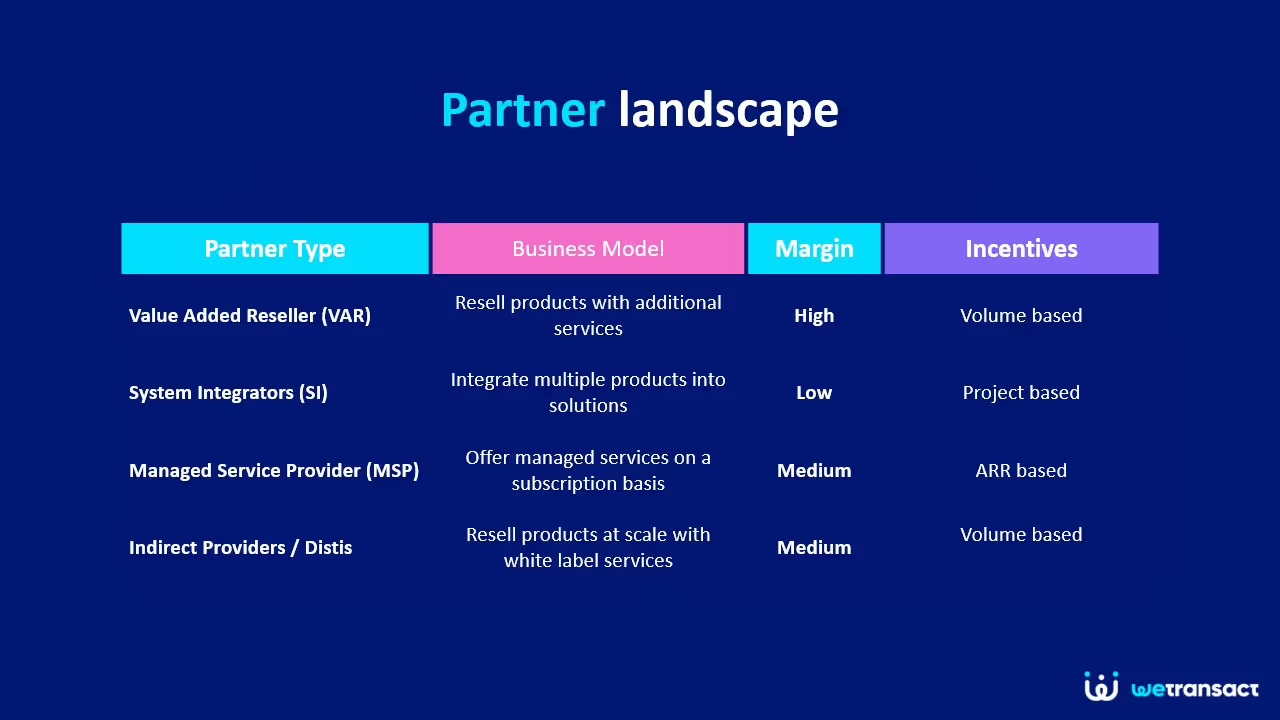
Understanding the different types of channel partners
Before building your program, you need to understand the types of channel partners you're designing it for. Each has unique value, motivations, and GTM models and they won’t respond to the same incentives or engagement tactics.
Indirect Providers (Distributors)
Distributors like Ingram Micro and TD Synnex act as intermediaries, giving you access to thousands of smaller resellers. They provide infrastructure, billing, and logistical scale — especially useful when you're expanding into new markets.
Think of them as the highway system: they don’t sell to customers directly, but they help others move your product faster and further.
Managed Service Providers (MSPs)
MSPs don’t just sell your software — they embed it in their managed offerings. Their focus is on long-term customer relationships, making them ideal for recurring-revenue SaaS models. Their success is your success.
Incentivize them with: ARR commissions, not one-time bonuses.
System Integrators (SIs)
SIs like Deloitte and Accenture handle large, complex integrations for enterprise clients. They prioritize products that complement existing tech stacks and drive value in implementation. SIs care less about discounts and more about how your product fits into a larger transformation story.
Value-Added Resellers (VARs)
VARs enhance your software with implementation, customization, or industry-specific solutions. They're great for niche verticals and justify higher pricing due to their consultative approach.
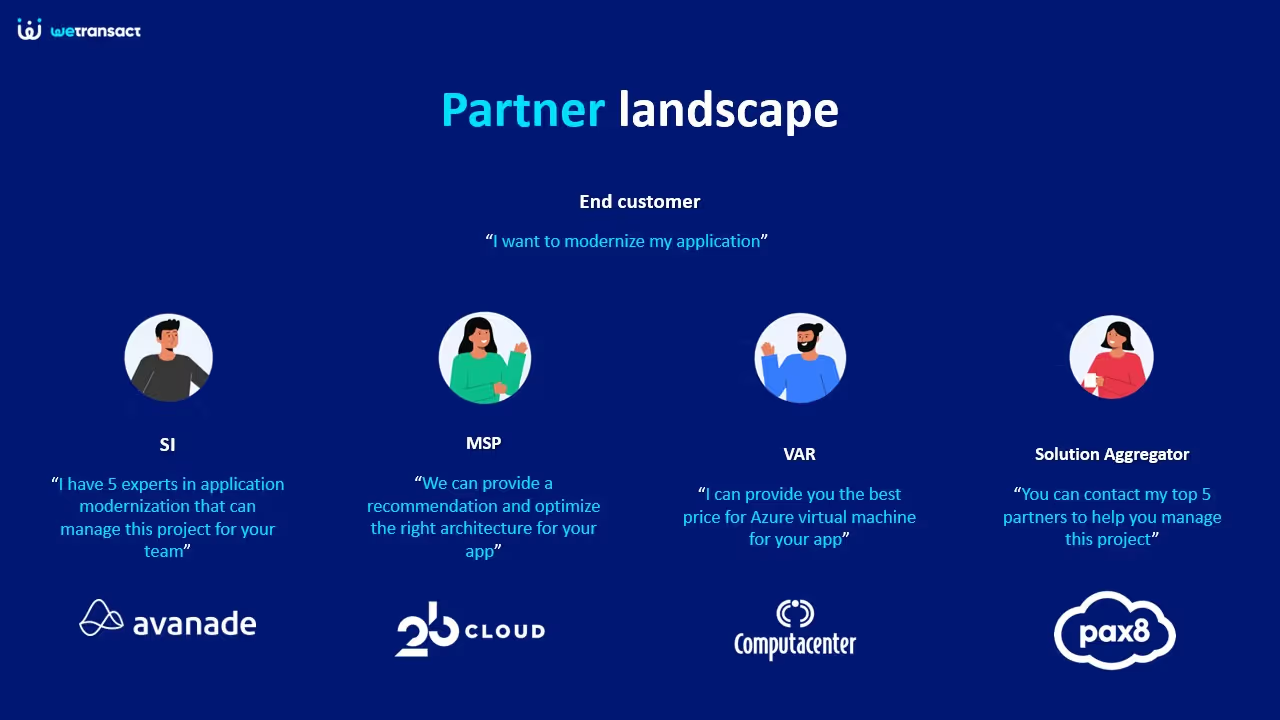
Each of these reseller types plays a distinct role in the software sales ecosystem, but the good thing about building an effective reselling program is that you can mix and match according to your go-to-market strategy.
How do resellers make money?
Resellers don’t just sell your product out of goodwill, they need clear financial incentives. To build a similarly compelling offer, it’s important to understand the different ways you can structure these incentives.
Here are some of the most common pricing and commission structures you can include in your reseller program:
- Discounted pricing: Resellers buy your product at wholesale (20–40% off retail), mark it up, and sell to customers.
- Revenue sharing: You split the revenue after a sale — often 70/30 or 80/20 in favor of the partner.
- Recurring commissions: Especially for SaaS, partners earn ongoing revenue as long as the customer subscribes. HubSpot offers 30% recurring commissions — a model that prioritizes long-term customer value.
- Performance tiers: The more they sell, the more they earn. Tiers can include margin boosts, co-marketing funds, or exclusive product access.
- Deal registration: Protects partners’ deals by giving them exclusive rights to pursue leads they bring in, reducing channel conflict.
The key? Transparency, repeatability, and alignment. Great partners invest in your program when they understand the value equation.
The role of the channel partner manager
By now, you should have a solid sense of what a channel reseller program might include, but it’s equally important to understand your role in making it successful.
With multiple partners, deals, incentives, and co-marketing activities in play, you need a strong operational backbone. As your program moves from proof-of-concept to scale, a clear owner for the channel, usually the Partner Manager, is essential to keep everything aligned and humming.
In early-stage startups, this might be you: the Founder, Head of Business Development, or someone wearing multiple hats. In larger organizations, you might already have or be planning to hire a Channel Account Manager (CAM). Regardless of title, here’s what this role really entails:
- Relationship owner: You’re the partner’s go-to point of contact. You maintain a regular cadence, deeply understand their business, advocate for their needs internally, and build the kind of trust that fuels long-term collaboration.
- Quarterback for opportunities: You coordinate internal resources and teams including your solutions engineers, support, sales team, and exec sponsors, to help partners close deals. Whether it’s a custom quote or a shared demo, you make it happen. You drive co-selling activities forward.
- Trainer and coach: As your program scales, you make sure partner teams are up-to-speed. You schedule training, deliver updates, host pipeline reviews, and coach their reps like you would your own.
- Program enforcer: You ensure program compliance — like deal registration rules and regional boundaries — and hold your own company accountable. For example, commissions paid on time, leads delivered, agreements renewed.
- Strategic planner: You work with partners on quarterly goals, co-marketing campaigns, enablement content, and tiered offers. You also evaluate when to deepen the partnership or when to sunset it if it’s no longer productive.
At the end of the day, you’re both the face of your company to the partner and the partner’s voice inside your company. Every partner needs a clear owner. As you scale, aim for one partner manager per 5–10 active partners, adjusting based on deal volume and complexity.
Tools for channel partner managers
As your partner ecosystem grows, so does the complexity. Managing hundreds of partners, aligning priorities, and ensuring deals move forward without friction is no small feat. That’s where tools like PartnerStack, Crossbeam, and WeTransact become essential. They help with:
- Partner pipeline visibility
- Lead sharing and attribution
- Commission tracking
- Shared sales assets and enablement hubs
- Ecosystem insights for better matchmaking
You can supplement these with shared Slack channels, CRM integrations, and project management tools like Notion or Asana for better internal-external coordination.
One example:
Be-Cloud, a Microsoft reseller operating across six countries, was juggling relationships with over 500 partners and 15,000 clients. Managing these connections — and finding the right software vendors to co-sell with — had become increasingly complex and time-consuming. That’s when they turned to Crossbeam and WeTransact.
By integrating Crossbeam with their CRM, Be-Cloud was able to instantly identify overlapping accounts between their existing customers and potential software partners. Instead of relying on manual outreach or cold introductions, they used real-time ecosystem data to match with partners who already had traction in their markets. WeTransact then streamlined the co-selling process — from creating bundled marketplace offers to managing partner communications — allowing Be-Cloud to accelerate time-to-market with less operational overhead.
What used to take months now takes minutes. The result? A smarter, more scalable reseller motion that helped them grow to over €60M in ARR
Final thought: It’s a system, not a side project
Great reseller programs don’t run on autopilot, they run on structure. From understanding partner types to designing incentives, managing relationships, and leveraging tools, a successful program is built with intention.
As Juan Jose Castiblanques, CRO at WeTransact, puts it:
“Partner success requires two things: proactivity and coordination. Be the glue. Don’t just build the program — own it.”
And when you do? You’ll unlock one of the most scalable, profitable growth engines in SaaS.
Ready to build your own high-performing reseller program?
Download The Playbook for Winning with Channel Reseller Partners for a deeper dive into proven strategies, real-world examples, and frameworks you can put into action today.