.png)











.jpg)





















.jpg)





%20(1).jpg)




.png)

















Designing Channel Compensation and Incentive Models That Drive Real Channel Performance



Learn how to design channel compensation and incentive models that drive real partner behavior — from rebates and SPIFFs to MDF and recognition programs.
In 1975, economist Charles Goodhart observed a pattern in economic policy that has since become a well-known principle:
“When a measure becomes a target, it ceases to be a good measure.”
Known as Goodhart’s Law, the idea explains why systems often break when organizations focus too heavily on a single metric.
For example:
- If you reward sales teams purely for volume, they may discount aggressively.
- If you reward partners only for closing deals, they may ignore services or customer success.
- If you reward pipeline creation, you may get inflated opportunities that never close.
Incentives don’t just track behavior, they change it.
That’s why designing channel compensation models requires more than simply setting payouts or rebates. It requires understanding the behaviors those incentives will drive across a partner ecosystem.
To explore how organizations can design channel compensation and incentive models that drive real channel performance, we spoke with Agnes O’Connell, VP of Marketing and Demand Generation at 360Insights. She shared insights on everything from the most common mistakes companies make to the metrics leaders should measure.
As Agnes explains:
“Strategy on its own rarely changes behavior, but incentives do. Incentives function as choice architecture. They influence attention, reduce or increase friction, and signal what truly matters inside a system.”
When incentives align with strategy, ecosystems accelerate. When they do not, organizations risk rewarding the wrong behaviors.
Let’s begin.
Why channel compensation and incentive models matter
Channel ecosystems are inherently complex. Partners often represent multiple vendors, balance competing incentives, and prioritize opportunities that best fit their business models.
This means vendors must actively shape partner behavior if they want to drive specific outcomes — whether that’s selling new solutions, entering new markets, or expanding services.
Sales incentive programs have long been used to influence channel behavior and motivate sellers to recommend one product over another. These programs create a direct connection between brands and their sales channels while rewarding the behaviors that drive revenue growth.
However, incentives only work when they are designed intentionally.
“Incentives are not simply compensation mechanics,” Agnes says. “They are one of the most powerful behavioral levers organizations have to align entire channels and ecosystems toward shared commercial outcomes. When they are misaligned, even well-crafted strategies struggle to gain traction.”
In practice, this means companies must treat incentives as a strategic design challenge, rather than a budgeting exercise.
Do’s and don’ts
One of the most common mistakes organizations make when designing channel incentives is starting from the wrong perspective.
Too often, programs are designed around internal priorities rather than partner behavior.
“The most common mistake is designing incentives around internal priorities rather than external behavior,” Agnes explains. “Many programs are constructed from an inside-out perspective, reflecting product lines, quarterly pressures, or reporting structures. But partners operate in complex environments. They manage multiple vendors, shifting customer demand, and competing incentives while balancing their own operational realities.”
The result is predictable: partners ignore the program.
When decisions become overly complex, people default to the easiest option.
“Behavioral economics tells us that when decisions become heavy or structurally complicated, people default to the path of least resistance,” Agnes says. “If incentives feel fragmented, overly complex, or disconnected from how partners actually sell and serve customers, they fade into the background. And when incentives become noise, partners revert to existing habits rather than adopt new strategic behaviors.”
Instead of starting with payouts or percentages, organizations should begin with behavior.
“Companies should start with the behavioral outcome they want to create,” Agnes explains. “Before discussing payout percentages or rebate tiers, it is critical to define the shift you are trying to engineer. Incentives are behavioral architecture. If you cannot clearly articulate the behavior you want to move, you will likely end up rewarding yesterday’s motion instead of building tomorrow’s.”
Once the behavioral goal is clear, the rest of the incentive model becomes much easier to design.
Types of Channel Incentives
A well-designed channel incentive model typically combines several types of incentives, each serving a different purpose within your ecosystem.
Rebates
Rebates reward partners for achieving specific performance milestones, such as reaching revenue thresholds or achieving growth targets.
They are typically paid quarterly or annually and help encourage sustained performance across the partner base.
Platforms like 360Insights enable companies to automate complex rebate structures, manage eligibility rules, and track performance in real time. Organizations that leverage rebate programs can achieve a 270% increase in sales year-over-year (YOY) and a 98% program participation rate.
SPIFFs (Sales Performance Incentive Funds)
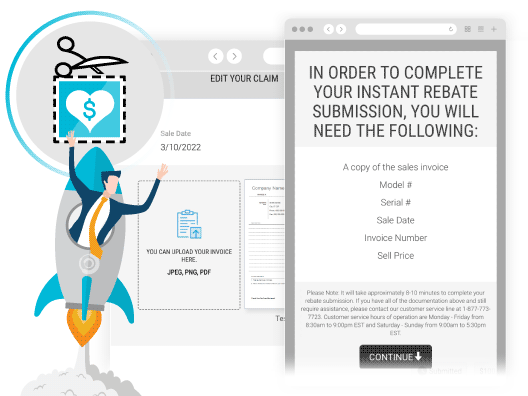
SPIFFs are short-term incentives designed to drive immediate behavior.
They’re often used to promote:
- New product launches
- Seasonal promotions
- Strategic SKUs
- Competitive displacement
SPIFFs create urgency and momentum.
“Short-term accelerators tap into present bias, which is our natural tendency to prioritize immediate rewards over future gains,” Agnes explains. “Time-bound incentives create urgency, drive immediate pipeline movement, and make strategic priorities visible in the near term.”
Platforms like 360Insights help companies deploy and manage SPIFF programs at scale while ensuring accurate validation and fast payouts. Organizations implementing SPIFFs can drive a 200% increase in sales achieved, a 24% increase in average transaction value, and a 13% increase in YOY sales for specific SKUs.
MDF (Market Development Funds)
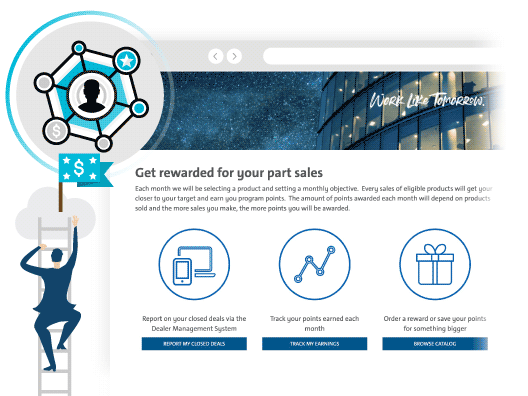
Market Development Funds help partners invest in marketing and demand-generation activities.
Examples include:
- Joint webinars
- Industry events
- Co-marketing campaigns
- Digital advertising
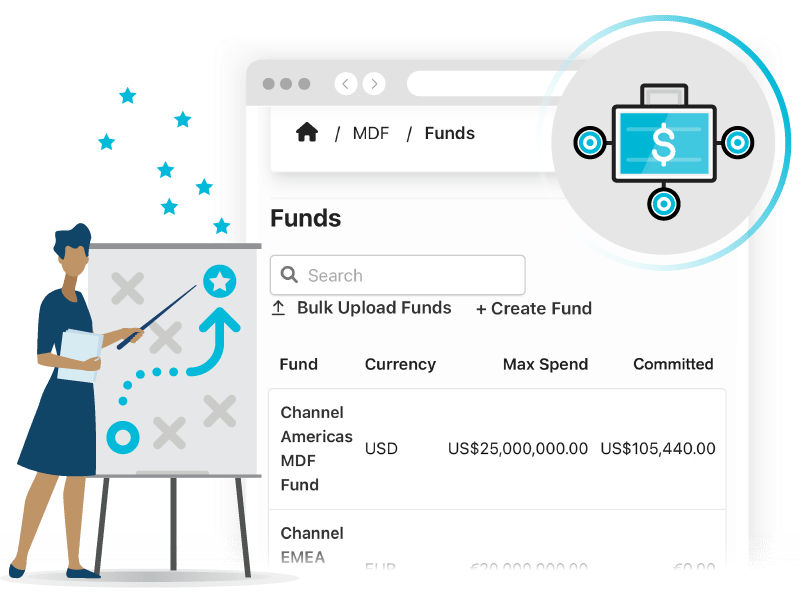
MDF programs support pipeline generation while strengthening collaboration between vendors and partners. 360Insights helps brands manage MDF and co-op funds by providing automated fund accrual, claims processing, and ROI tracking. For example:
- Forrester mentions that high-performing organizations show 23% increased MDF investment by high-performers.
- Companies using 360Insights achieve 100% claims auditing for fund disbursement, and more than 11,000 claims can be processed efficiently.
Recognition and non-financial rewards
While financial incentives are powerful, recognition also plays an important role in motivating partner behavior. Leaderboards, awards, and public recognition reinforce competitive motivation and strengthen engagement across the partner ecosystem.
Building the right incentive model
Designing an effective incentive program requires a structured process.
The 360Insights sales incentive planning framework outlines several stages organizations should follow.
(If you want the complete step-by-step process, download 360Insights’ Essential Guide to Running Successful Sales Incentives eBook here).
1. Diagnose the current state: Start by evaluating your existing incentive programs and understanding the behaviors they currently reward.
Questions to ask include:
- Are incentives aligned with strategic goals?
- Which products or solutions are receiving the most attention?
- Are partners actively engaged with the program?
Understanding the current state helps identify where incentives need to evolve.
2. Define the behavioral outcome: Once the current state is clear, organizations must define the behavior they want to encourage.
Examples include:
- Selling new SKUs
- Expanding into new customer segments
- Increasing service attachment rates
- Driving early deal registration
“I typically anchor the design process around three questions,” Agnes says. “What do we want people to do differently? Where is friction slowing adoption today? And what barriers are preventing the desired behavior from scaling? When that clarity exists upfront, the rest of the program design becomes intentional and commercially grounded rather than budget driven.”
With the program structure in place, companies can then design targeted incentives aligned to specific strategic goals.
For example:
- Selling new SKUs: Early adoption accelerators should reward first movement and visible momentum rather than cumulative volume alone. Time-bound incentives tied to product launches help create urgency and drive initial adoption.
- Driving cross-sell: Incentives should reinforce attach rate and portfolio penetration, rewarding solution selling and account expansion rather than isolated transactions.
- Entering a new ICP: Programs should recognize early engagement, pipeline creation, and first wins, compensating exploration effort and new market development rather than focusing only on closed revenue.
- Encouraging early deal registration: Multipliers or deal protection mechanisms can reinforce proactive behavior and increase perceived fairness across the partner ecosystem.
- Driving certifications and capabilities: Combining financial incentives with recognition and partner progression strengthens identity and long-term commitment within the ecosystem.
- Promoting services-led deals: Incentives should align with delivery quality and long-term customer success, not just the value of the initial transaction.
- Shifting to subscription models: Compensation metrics should emphasize lifetime value, renewals, and retention, reinforcing recurring revenue behaviors instead of one-time spikes.
3. Structure the incentive program: Next, choose the right program structure.
Common models include:
- Open-ended programs, where all participants who reach a defined target receive a reward. These programs maximize participation and motivation across the partner base.
- Closed competitions, where only the top performers receive rewards. These programs create strong competitive dynamics but may limit engagement among lower performers.
- Tiered or plateau programs, where participants unlock rewards as they reach different performance levels. This approach encourages steady progress while allowing predictable budgeting.
Each structure has different implications for motivation, budgeting, and partner engagement, so choosing the right one depends on the behaviors an organization wants to reinforce.
4. Automate program management: Many companies still manage incentives using spreadsheets and disconnected systems, creating administrative burdens and reducing visibility.
Incentive platforms like 360Insights help organizations:
- Design complex incentive structures
- Manage rebates, rewards, and MDF programs
- Validate claims automatically
- Reduce fraud and errors
- Track performance across the ecosystem
“So often, programs live in spreadsheets, claims are processed manually, and performance data sits in disconnected systems,” Agnes explains. “360Insights addresses that by orchestrating incentives as a connected performance system rather than a series of isolated payouts. Organizations can unify rebates, rewards, and fund programs in one governed environment and measure behavioral impact before revenue fully scales.”
[Insert 360Insight product snapshot]
5. Communicate and engage the channel: Even the best incentive program will fail if partners are unaware of it.
Organizations must continuously communicate promotions, product updates, and performance milestones to keep partners engaged and motivated.
6. Measure the Success of your incentive programs: Many companies evaluate incentives purely based on revenue — but revenue is a lagging indicator.
“Revenue is important, but it is a lagging signal,” Agnes says. “To understand whether a program is working, I look first at leading behavioral indicators such as earlier deal registration, faster pipeline progression, increased engagement in strategic motions, certification growth, expansion into new accounts or ICPs, and signals of ecosystem collaboration.”
These behavioral indicators often reveal whether a program is working long before revenue results appear. Additional metrics to track include:
- Partner engagement levels
- Pipeline creation
- Product adoption rates
- Certification completion
- Market expansion
By analyzing these signals, you can continuously refine your incentive strategy and improve partner performance.
Turning incentives into a growth engine
Ultimately, the goal of a channel compensation model is not simply to distribute rewards. It is to orchestrate ecosystem behavior in ways that accelerate growth.
When designed correctly, incentives create alignment between vendors, partners, and internal teams.
“Sophistication does not come from adding complexity,” Agnes says. “It comes from clarity and control. When incentives are orchestrated within a unified platform, brands gain precision into which behaviors are accelerating pipeline, where friction is slowing adoption, and how partner performance translates into measurable ROI.”
Organizations that treat incentives as strategic infrastructure, rather than administrative programs, gain a powerful advantage in their ecosystems.
Because when incentives are designed intentionally, they don’t just reward behavior. They shape it.
If you're exploring how to modernize your channel incentive strategy, booking a demo with the 360Insights team is a great place to start. Their team can show how organizations are using data-driven incentives to align partners, reduce operational friction, and turn incentive programs into a true growth engine.
Book a demo to see how 360Insights can help you design and manage high-performing channel incentive programs.
FAQ Section
What is the most common mistake companies make when designing channel incentive programs? The most common mistake is designing incentives around internal priorities — product lines, quarterly pressures, reporting structures — rather than partner behavior. When programs don't reflect how partners actually sell and serve customers, they get ignored. Effective incentive design starts with identifying the specific behavioral outcome you want to create, not the payout structure.
What types of channel incentives should I include in my program? A well-rounded channel incentive model typically combines four elements: rebates (for sustained performance milestones), SPIFFs (short-term funds to drive urgency around launches or strategic SKUs), MDF (to support partner-led marketing and demand generation), and non-financial recognition (leaderboards and awards that reinforce competitive motivation).
How do I know if my channel incentive program is actually working? Don't rely on revenue alone — it's a lagging indicator. Look first at leading behavioral signals: earlier deal registration, faster pipeline progression, certification growth, expansion into new accounts, and increased engagement in strategic motions. These reveal whether the program is working well before the revenue results show up.
How does Goodhart's Law apply to channel compensation? Goodhart's Law warns that when a measure becomes a target, it stops being a useful measure. In channel compensation, this means optimizing for a single metric — like deal volume or pipeline creation — often drives the wrong behaviors, such as aggressive discounting or inflated opportunities. Effective incentive models balance multiple behavioral signals to avoid gaming the system.
What's the difference between open-ended programs, closed competitions, and tiered incentive structures? Open-ended programs reward any partner who hits a defined target, maximizing participation. Closed competitions reward only top performers, creating strong competitive dynamics but potentially disengaging the broader base. Tiered or plateau programs let partners unlock rewards at multiple performance levels, encouraging steady progress while keeping budgeting predictable. The right choice depends on the specific behaviors you're trying to reinforce.