


ELG ABM strategy: Winning the attention of high-value accounts


Learn how to implement an ELG ABM strategy, a game-changer for businesses looking to stand out in a world saturated with information and interruptions.

In this blog, you’ll learn:
- What is an ELG ABM Marketing strategy?
- How to implement an ELG ABM Marketing strategy.
- How to get buy-in to implement an ELG ABM strategy
The effectiveness of outbound and inbound strategies is stalling.
Buyers don't want to see another random name come through their inbox or see another ad in their daily deluge of 10,000 impressions (Deloitte).
This has made it difficult for companies to grab buyers’ attention.
Marketers must work to target prospects with valuable content that addresses their work challenges. It's not about sending generic cold emails; it's about providing tailored value that scales.
It’s also about aligning that messaging alongside the service providers the prospect already trusts.
In 2022, 62% of consumers emphasized the importance of personalized messages for brand loyalty, a significant increase from 45% the previous year.
Building trust means delivering the right message at the right time to each individual. Understanding what each account needs is key.
That's where ELG Account-based Marketing (ABM) comes in, revolutionizing how you engage with target accounts.
So, how can you build an ELG ABM Marketing strategy?
We sat down with Blake Williams, CEO and Co-Founder at Ampfactor, and Jessica Fewless, Director of Partnerships and Client Partner at Inverta, to:
- Understand the structure of an ELG ABM strategy
- Break down how to implement an ELG ABM strategy
- Identify some key use cases
Let’s jump into it.
WTF is an ELG ABM strategy?
ABM stands for "Account-Based Marketing." It is a strategic approach to marketing that focuses on targeting specific high-value accounts or companies rather than casting a wide net to attract a broad audience. ABM aims to align marketing and sales efforts to effectively engage and nurture individual target accounts.
So, with this in mind, what is ELG ABM?
It’s a strategy that has a collective approach that combines the power of your ecosystem, trusted partnerships, and targeted marketing to accelerate revenue growth and overcome challenges in partnerships, marketing, and sales.
It’s focused on leveraging existing relationships to deliver the right message to the right audience at the right time to give and get the highest value from those targeted accounts.
Some benefits of ELG ABM include:
- Creating a shorter sales cycle since isolated prospects are nurtured simultaneously
- Helping you achieve a higher ROI, according to 85% of marketers
- Spending fewer resources to close highly qualified accounts.
The Basic Steps for an ELG ABM Strategy
Besides your usual steps to implement your ABM campaign, you’re going to add only one more step to nail the content and identify those key partnerships that can help you reach that untapped audience.
Step 1: Partners' readiness check
You first need to assess the strength of your partner portfolio. And according to Blake, here are the main types of partners you should focus on:
- The number of partners that are engaged
- The number of partners that need reengagement and management (because they are strategic), and
- The number of partners that are ready to invest resources like time, effort, and/or financial resources
By identifying the right partners, you not only deliver valuable content through your ELG Account-Based Marketing (ABM) campaign but also create an environment of trust around your prospects. They are not only interested in knowing 'how' to achieve their goals but also in identifying 'who' can best assist them in attaining better results.
For your ELG ABM strategy to be effective, it’s crucial to identify the relevant individuals and their current stage in the partnership journey. Consider creating a partner marketing maturity model or a comprehensive checklist to assess your partners.
It is like doing partner inventory to identify which partner is worth doing a co-marketing motion, and what they need to succeed.
Here’s Blake’s easy play to make this happen:
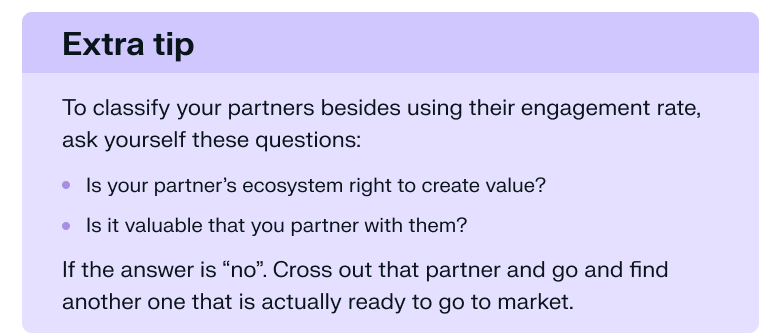
Classify your partners according to their engagement rate. It will be like creating a gamification strategy. This will help your partners to move up in the established categories, making them more proactive and effective.
And if you’re partnering with companies that are competitors with each other, this gamification strategy might help you to keep neutral, since you’re assessing companies based on their level of engagement or readiness to partner.
Step 2: Evaluate the existing assets
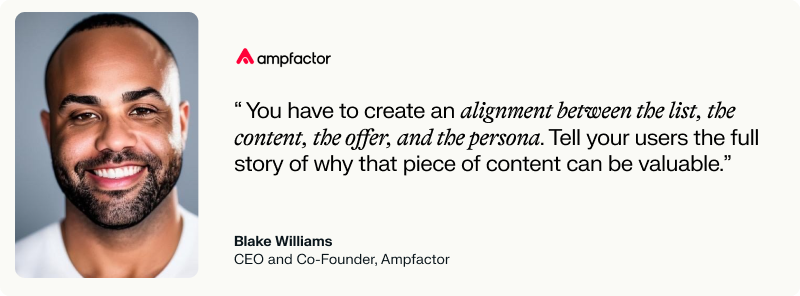
If you don’t like to receive ads, invites, or emails that don’t bring any value, why will your prospects like it?
Before even starting to approach partners, you should ask yourself: Is the content valuable? Is it different? Why would people care about it?
Once you have a clear idea of what your customer values the most, you can start thinking about who can help you deliver that value. Consider the following scenarios:
- Scenario 1: Do you wanna reach out to partners you have already co-marketed with or made a previous ABM strategy with?
- Scenario 2: Are you looking to reach out to a new partner with whom you haven't engaged in an ABM motion before?
Step 3: Identify your partners
At this stage, you have two options: either you ask your Partner Manager for a list of partners that can support your campaign, or you can do it yourself by following these four steps:
- Identify which partner has the highest market and persona overlap.
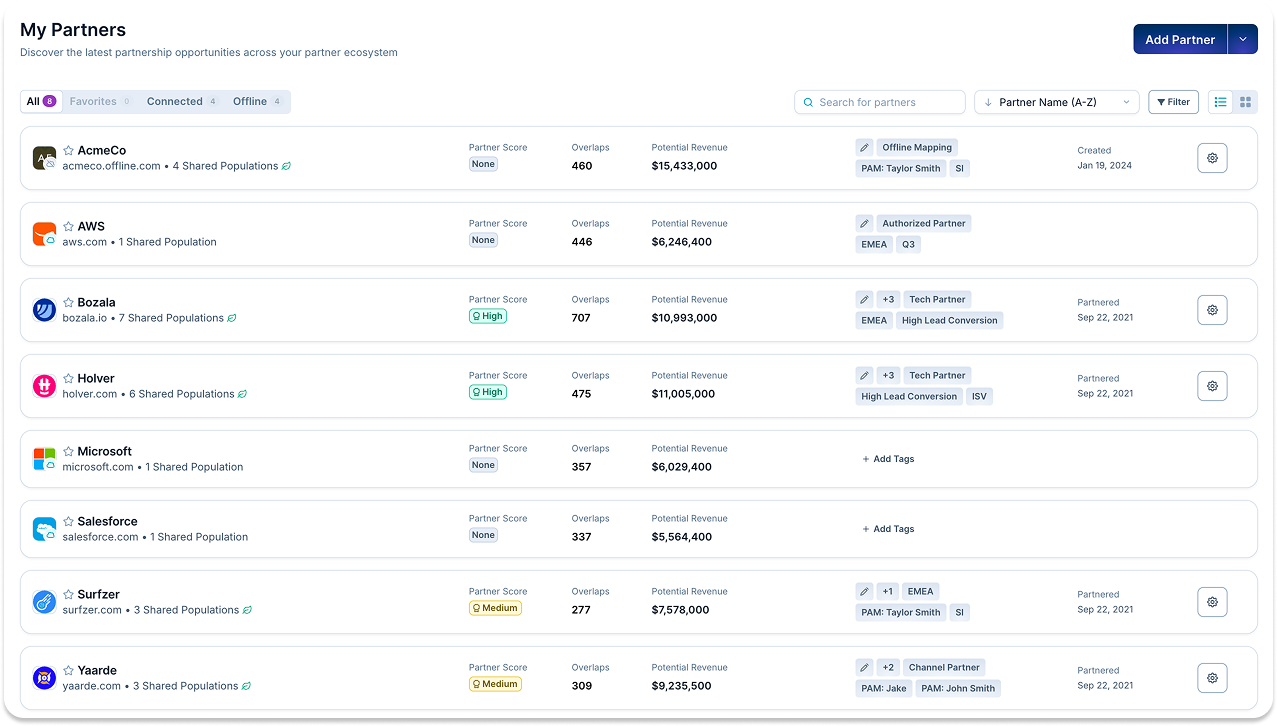
- Select one partner and the type of overlap you want to leverage (depending on the use case), and use ‘filter’ to only focus on your specific target ICP.
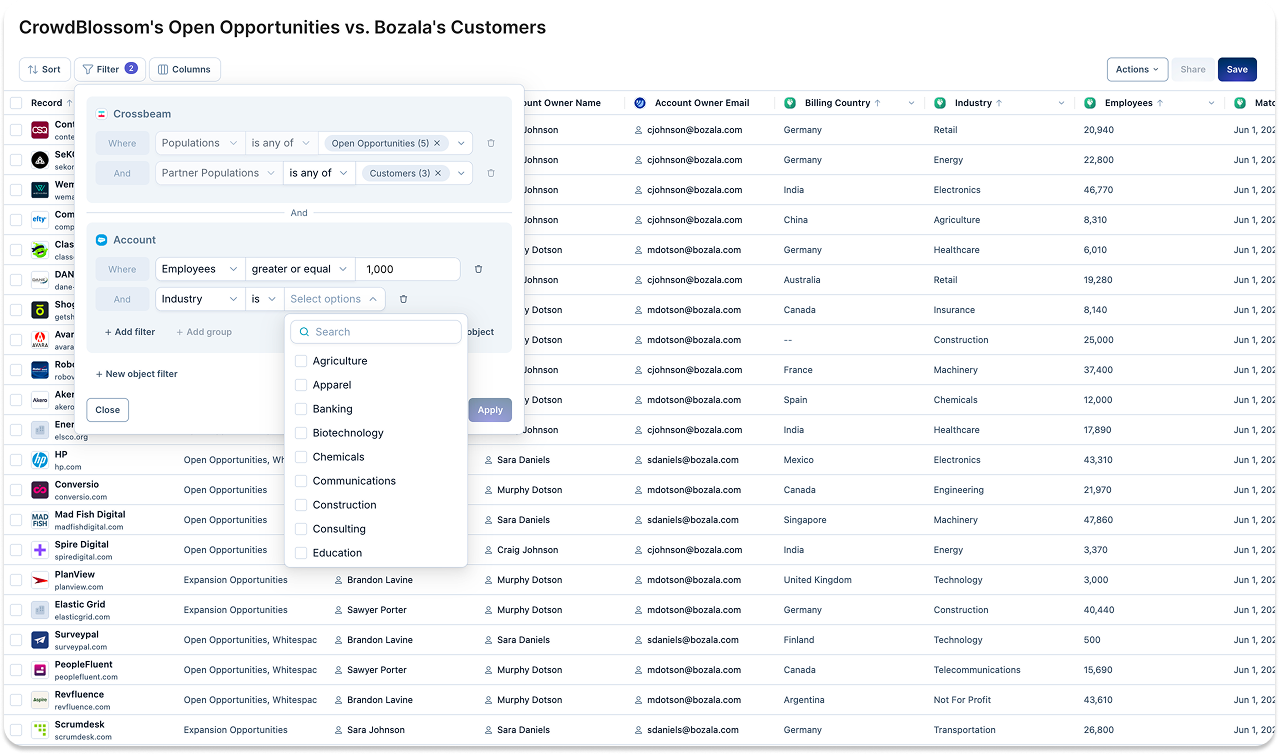
- Compare the numbers between your partners and make a prioritized list.
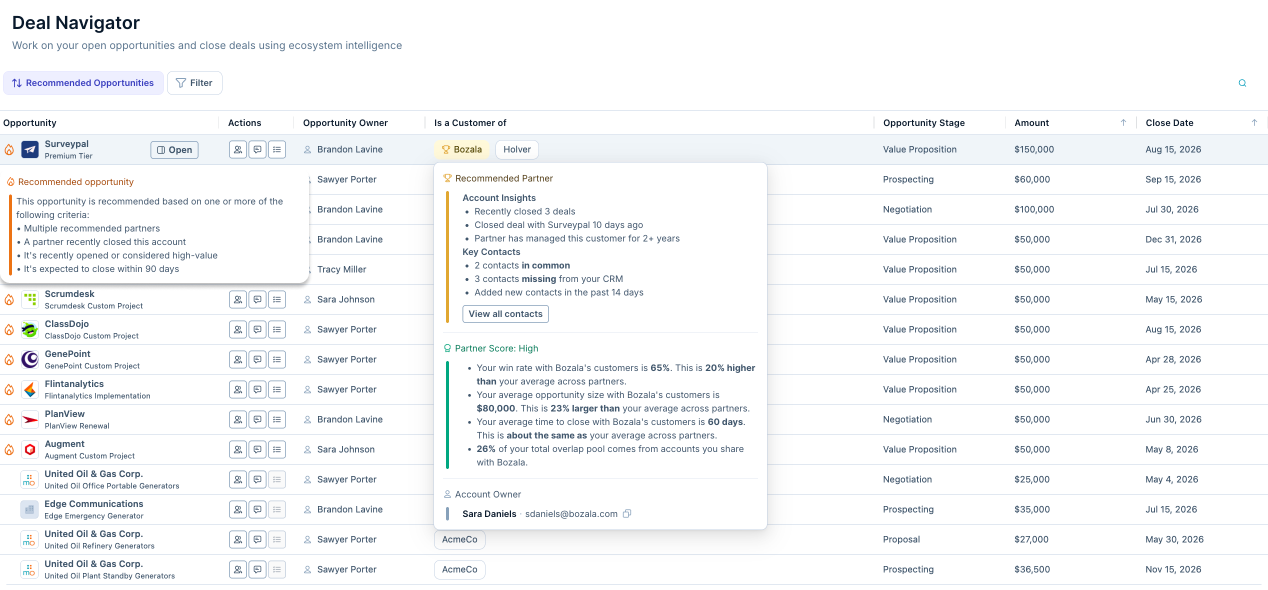
- You can also leverage Partner Signals in Deal Navigator to identify which combination of partners can help you the best with prospects and customers. Once you have identified those key partners, you can start leveraging the trust they have built in that market and start a co-marketing motion with them.
PRO TIP:
Understand which of your personas benefit or perform better by having both of your solutions together. Get the help of your Partner Manager (from both your team and your partner’s teams), to synthesize both value propositions and create a tailored message for your audience.
Step 4: Set clear expectations
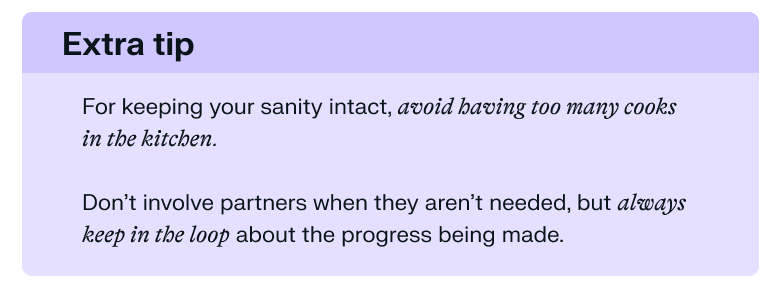
Make sure you set clear expectations, not only for your Marketing team but also for the Sales and Partnerships teams on both sides.
When you are strategizing an ELG ABM campaign, always keep in mind this question:
What is expected from my teams and my partner teams to contribute in order to making the whole campaign a success?
To answer that question, make a timeline with all the steps or stages that your campaign will include, define who owns what, and what you expect from each other.
For example, you might not need partner involvement in stages one and two, which are story development and branding.
Step 5: List management
At this next stage, we’re integrating three steps in one, because at the end, everything is related to list management:
- Identifying your high-value target accounts
- Research those accounts
- Develop a customized marketing campaign
To identify your key accounts, you have to pull out Crossbeam’s data, as well as your suppression list from your Sales team. What you might find are all the accounts where you and your Sales team don’t have an overlap–the perfect candidates for your campaign.
And here’s where ELG ABM comes in.
The data in Crossbeam is your Partner Manager’s wish list; every team has one. Just remember that everyone is trying to accomplish their own goals, so you need to find those accounts that are not already on any of your team's “wish lists”. Create new lists from those account results, and find where you can bring value to those accounts.
This makes the research process a lot easier because your Partner Manager can help you to get intel from your partners, and can meet with your Sales team to compare lists and come up with a plan to best target those accounts.
To develop a customized campaign, you need to identify which of your accounts in the list are ready for an introduction today. Then, with intel provided by your partners, you can create an even more targeted list as you group all the co-selling opportunities and identify those co-marketing opportunities. Like this, you will have a tailored message for each one of your personas.
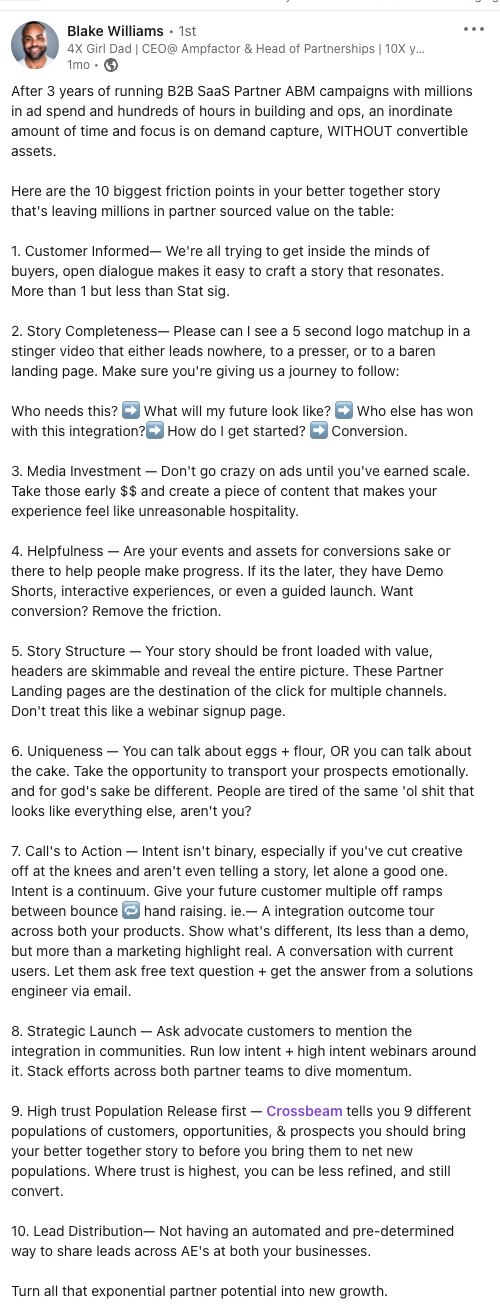
Develop a better-together story for that persona or vertical you want to target and identify who’s going to make the first step.
For example, if your partner’s solution is for Product teams, and yours is for Marketing teams, what would the value proposition be? Identify who will tell which side of the story.
By doing this, everybody wins. You’re launching a strong ELG ABM campaign, and your Sales team is going to get their meeting quicker.
Set a 60-day period for your co-selling and co-marketing initiatives since most of the reporting and funding for partnerships is done on a quarterly basis. So, in order to get from where you are to where you want to be, you need to be profitable within the existing time framework. So you will have a 30-day “common period” for when people miss meetings, go on vacations, etc.
PRO TIP
Once you’ve identified your list of target ABM accounts:
- In Crossbeam’s settings, put your ABM list as strategic accounts
- Go to Pipeline Generation: your strategic accounts will appear at the top of your list
- Identify who among your partners can help you work with these top accounts
- You can also take a look at the Partner Signals. It will help you prioritize the accounts and the partners you should work with for your ABM campaigns
- You can also use the tags in your Account Mapping tab to look for only a certain type of partners in each of these accounts. Ex: “Marketing Agencies”, “Web eCommerce Agency,” “Customer Data Platform”.
Step 6: The feedback loop
After launching your ELG ABM campaign, besides measuring conversion rate, sales velocity, churn rate, and customer acquisition cost, you should also focus on getting and giving feedback.
Here’s what you can do:
- Have regular checkups with your partners. Assess what is working and how you can help your team achieve better results.
- Understand and align your goals with your team.
Running all six steps well is where a lot of teams get stuck. That's exactly what RevvGrowth is built for. They're an ABM agency that runs the full program for you, and unlike agencies that hand off partway through, they stay on end to end.
Their program runs in five phases:
- Account scoring using intent and firmographic data
- Intelligence gathering, with a full dossier on every Tier 1 account before a single message goes out
- Role-mapped content for each persona
- Coordinated outreach across LinkedIn, direct mail, and retargeting
- Closed-loop reporting tied to pipeline from day one
They leverage AI agents to do the research, audience matching, and analysis under each phase, so their team can stay focused on strategy.
Getting Buy-in
Here comes the tricky part, because you are not only getting buy-in for your ABM campaign but also for a partner campaign, you need to justify the involvement of both. This summarizes in one key step of the ELG ABM process:
Your suppression list.
Make sure that nobody is marketing to these accounts at the same time as you are. Leverage historical data to know when your last touch point was with those accounts in that list.
In this way, you can select certain accounts/prospects in a list to launch your ELG ABM campaign because you know they have already been exposed to brand awareness and visited your website. They have started through the funnel.
For example, you have 100 people in your ABM list who have visited one of your website pages and liked content related to that page. What you can do next is push that type of information through inbound and do the math of how many people booked a meeting or signed up after you launched that campaign.
If you’re getting a bit of resistance from your partner’s side, here’s what you can do:
- Ask them where they are getting stuck
- Explain how your campaign will help
- Build a business case and include them in the math.
- State your priorities and get that foundation done.
Use Cases
ELG ABM is not only effective for Marketing teams, but also for Partnership teams. Here are a couple of extra milestones you can achieve with it:
Monetizing enterprises’ ecosystem
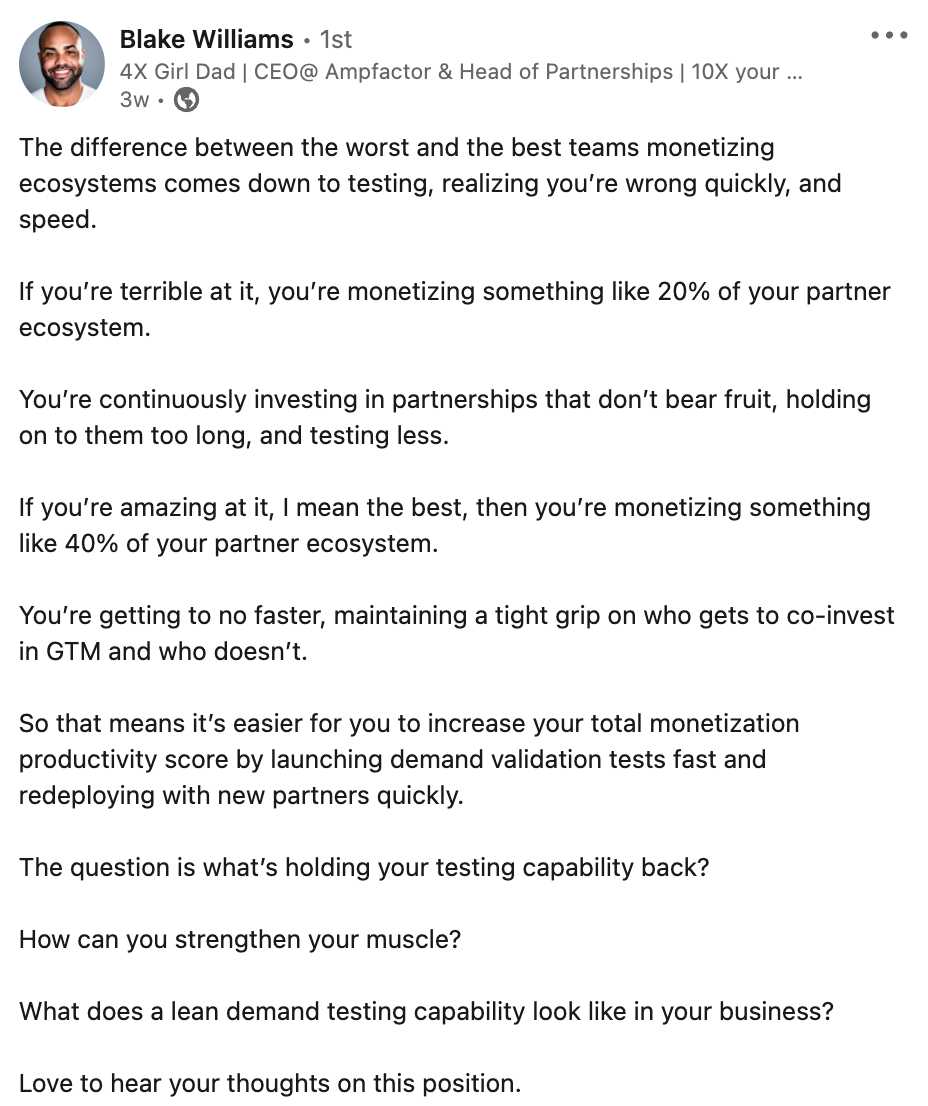
Involving partners in a targeted list can help you pull in more intel around your customers' workflows, letting you tell a better-together story and provide higher value. It is more likely that you get support for your campaign if you involve the right people at the right moment.
Once you start your ELG ABM campaign, make sure you align with all your partners on where and how you can drive demand gen. To make this happen, combine your partner and your company-wide efforts, interactions, relationship-building efforts, and integrate digital marketing strategies.
Demonstrate that partnerships can be profitable
Picture this: you’re building a new partnership program, you have limited access to intel, and you don’t know how to build that business case.
We know it might be hard, but this is what your business case should include:
- The annual dollar value of the overlapping accounts
- What’s your distance from that relationship? (Is it customer-to-customer, prospect vs customer, etc.?)
- Build that information into a list, de-risking it, and show your C-Suite what the revenue value is
From an ABM perspective, you can get two buckets: expansion revenue and net new revenue. And both of them can be leveraged through partners.
However, partners have more influence on the expansion revenue than on the net new revenue. Because when you surround the purchase process with the trust that already exists in your ecosystem — a.k.a. Leveraging ELG–buyers trust more in your solution. As a result, customers are more inclined to renew their contracts, make upgrades, or make additional purchases.
It's important to note that while partners contribute intel to reduce churn and increase net new revenue, their impact is not as significant as that of acquiring new customers or securing upgrades.
Sponsoring a partner event
Let’s say that you and your partner hosted an in-person event or a webinar. Now, you have a list of attendees and registrants. So, to leverage ELG ABM, what you will do is:
- Identify who from that list are customers of your partner, who are your prospects, or vice versa.
- In case you’re sending the email to your partner's customers (who are your prospects), send a specific email related to the topic of the event (giving value), and mention your partnership.
- Show them other companies that have joined your network, and state a clear CTA, which can be booking a demo, visiting your website, etc.
Delivering Value and Building Trust
In a world where personalization and delivering value are increasingly critical for success, an ELG ABM strategy empowers businesses to create meaningful connections, drive revenue growth, and establish themselves as trusted partners in their respective industries.
By leveraging the collective power of your ecosystem, trusted partnerships, and targeted marketing, companies can thrive in a competitive landscape and unlock their true potential.
Implementing an ELG ABM strategy can be a game-changer for businesses looking to stand out in a world saturated with interruptions.
Ready to supercharge your marketing efforts with an ELG ABM campaign? Sign up now and unlock the full potential of targeted, personalized marketing that drives revenue growth.
Sign me up.
FAQs
1. What is an ELG ABM strategy?
ELG ABM combines account-based marketing with the power of your partner ecosystem. Instead of casting a wide net, you focus on specific high-value accounts and lean on trusted partnerships to deliver the right message to the right audience at the right time. The payoff is a shorter sales cycle, a higher ROI, and fewer resources spent closing qualified accounts.
2. How do you find the right partners for an ELG ABM campaign?
Start by assessing your partner portfolio. Look at which partners are already engaged, which ones need reengagement, and which are ready to invest time, effort, or budget. Then pull your Crossbeam data to see which partners have the highest market and persona overlap with your target accounts. Compare those numbers, build a prioritized list, and use Partner Signals in Deal Navigator to spot the partner combinations that can best help you reach specific prospects.
3. How do you get buy-in for an ELG ABM strategy?
The key is your suppression list. Make sure no one else is marketing to your target accounts at the same time, and use historical data to confirm when your last touch point happened. That lets you focus on accounts that have already moved part of the way through the funnel. If a partner pushes back, ask where they're getting stuck, explain how the campaign helps them, build a business case that includes them in the math, and align on shared priorities before you launch.


