.png)
















.jpg)


























.jpg)







%20(1).jpg)






.png)



























Find the best PRM. We'll cover everything you ever wanted to know about Partner Relationship Management tools aka "PRMs." Featuring overviews of Salesforce PRM, Allbound, PartnerStack, and more.

Even if you don’t use a PRM today, chances are you’ll encounter one.
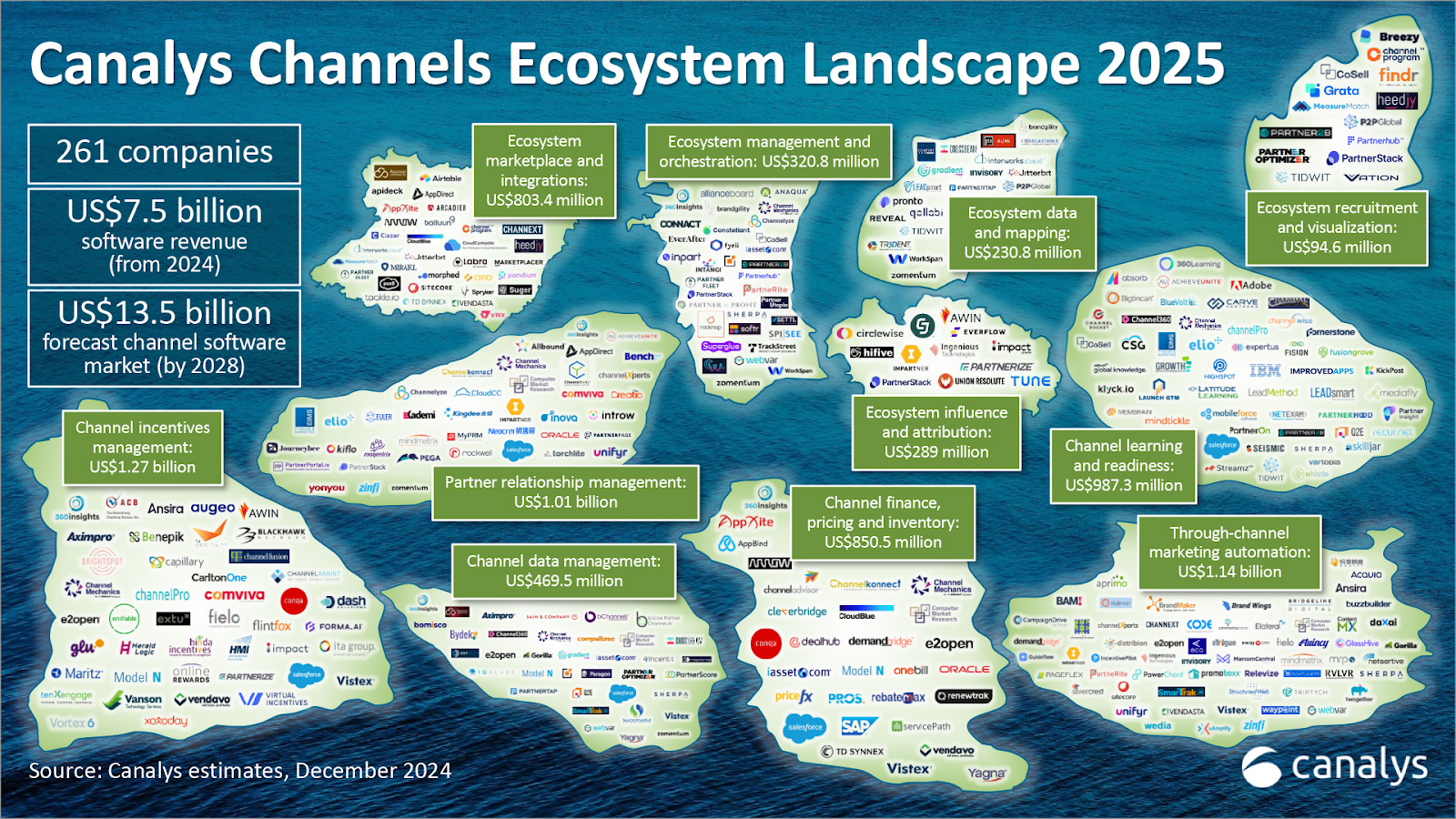
According to Canalys’ Channels Ecosystem Landscape 2025, partner-delivered IT was projected to account for nearly 70% of total global IT revenue in 2025. Meanwhile, Canalys maps 261 ecosystem technology vendors generating $7.46B in revenue in 2024, with continued rapid growth expected.
Partnerships are no longer informal. They’re operationalized, systematized, and increasingly powered by technology.
PRMs are one foundational layer of that stack, but they’re not the only layer.
Let’s break down:
- What a PRM actually does
- When you need one
- How it fits alongside Ecosystem Revenue platforms like Crossbeam
- The top PRMs in the market
What is a PRM?
Partner Relationship Management (PRM) tools help channel sales managers and channel marketers automate and centralize their partner management processes within a single platform. Think of PRM as a gated portal dedicated to serving your channel partners.
This is not to be confused with a Customer Relationship Management (CRM) tool — although CRM providers sometimes offer PRMs, and many PRMs integrate with CRMs.
PRM tools allow partner managers to remove redundant steps from their workflows and optimize — or even automate — essential tasks like onboarding, training, and lead registration. In turn, they can accomplish more in less time, keeping partners productive and engaged. And engaged partners lead to a stronger ecosystem.
Common features for PRM tools
While every partner program is unique, most PRMs include core functionality such as:
- Automating partner onboarding
- Providing partners with a central management portal that’s easy to set up and manage
- Sharing educational and sales enablement resources
- Simplifying lead and deal registration
- Enabling fast affiliate commission payments
- Forecasting channel sales and analyzing partner performance
- Preventing sales and channel conflict by ensuring leads aren’t assigned to multiple partners
A bird's-eye view of the PRM software space
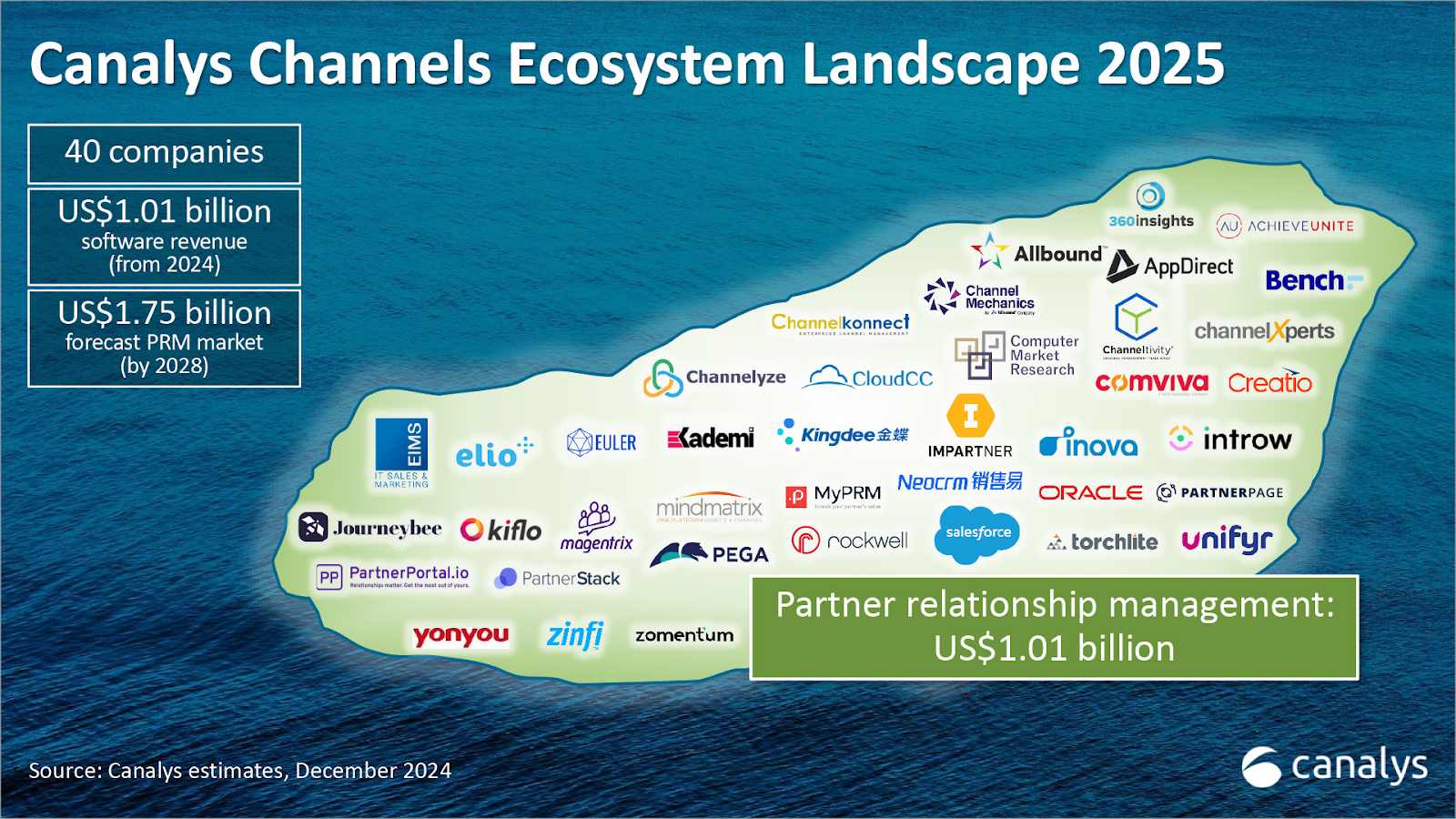
In its 2025 Channels Ecosystem Landscape report, Omdia noted that the PRM category includes 40 companies generating $1.01 billion in revenue, projected to grow to $1.75 billion by 2028.
That means that among the 11 software categories that make up the channel ecosystem landscape, PRMs account for 13.46% of the total market value — making them the third-largest category, behind channel incentives management and through-channel marketing automation.
“There are increasing demands on channel leaders to find, recruit, onboard, develop, incentivize, co-sell, co-market, co-innovate, measure, manage, and report on partner value at scale. Automation of partner-related workflows, deeper integrations, and data-driven decision-making create measurable competitive advantages (through partnerships) and are quickly becoming table stakes in the industry,” write Jay McBain and Noah Dantes in the Channels Ecosystem Landscape 2025.
With so many tools in an already crowded space, the challenge becomes choosing the right PRM solution for your needs. There’s no one-size-fits-all answer. While most partner programs follow similar best practices, every company has unique workflows, requirements, and constraints.
Crossbeam and PRMs: Different layers of your partner stack
If you’re evaluating a PRM — or already have one — you might be wondering: Where does Crossbeam fit? The answer is simple: Crossbeam is not a PRM, and it’s not trying to be. A PRM helps you manage your partner program. Crossbeam powers your Ecosystem Intelligence. They solve different problems and work best together.
Is Crossbeam a PRM?
No. A PRM manages the operational side of your partner program — onboarding, training, deal registration, co-marketing, commissions, and more. It's the system of record for your partner relationships.
Crossbeam is something different. It's an Ecosystem Intelligence platform that allows you to securely compare your CRM data with your partners' CRM data to identify customer and prospect lists overlap. It answers questions like: Which of our prospects are already customers of this partner? Which partner has the strongest presence in our top target accounts?
What’s the difference?
Think of it this way:
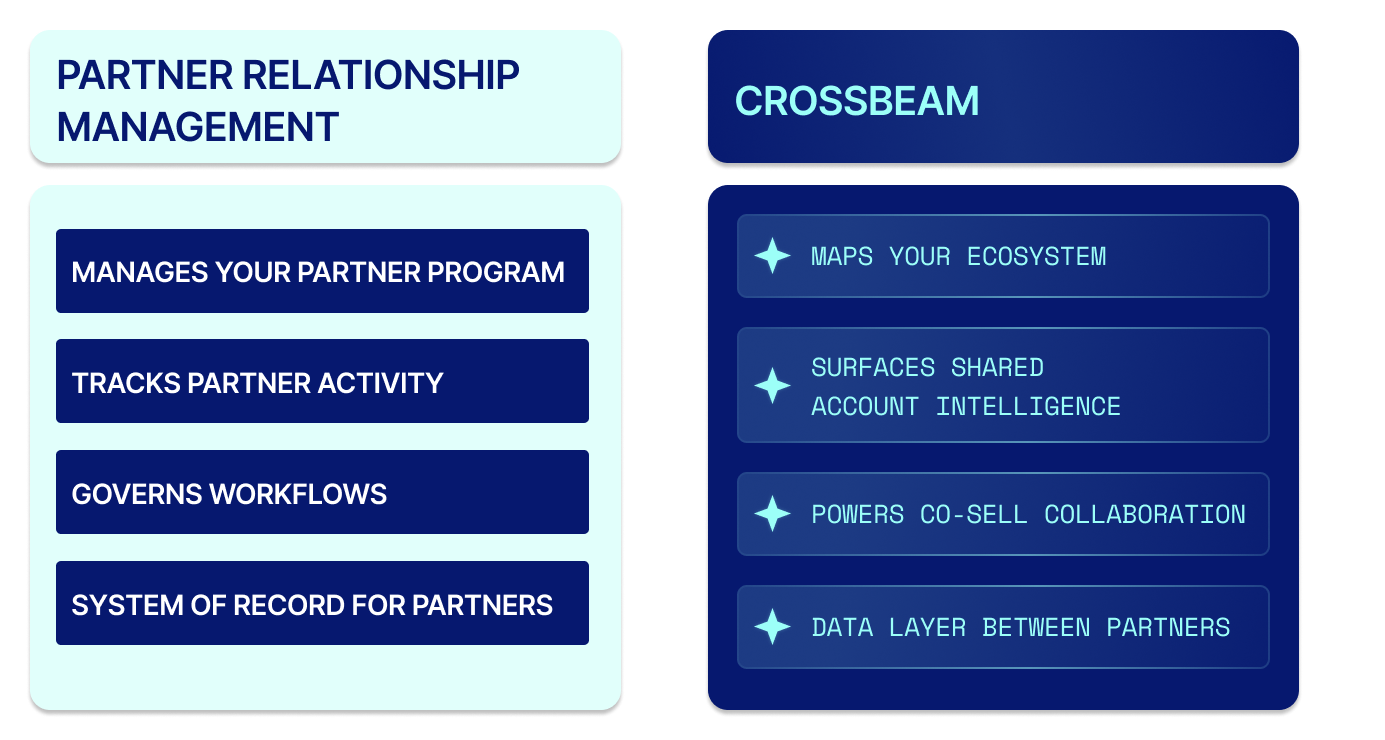
Both platforms use partner data — but in very different ways. A PRM shows what partners are doing inside your program. Crossbeam shows where partners intersect with your revenue.
If you already have a PRM, why would you need Crossbeam?
A PRM tells you what's happening inside your partner program. Crossbeam tells you what's happening in the market across your shared ecosystem.
Consider this scenario: you have 80 technology partners listed in your PRM. Some are highly engaged — logging in, submitting deals, and completing training. Others are dormant. Your PRM can show you who's active. But it can't tell you which of those 80 partners are connected to your highest-value accounts, or which ones have pipeline in the same companies you're targeting this quarter.
That's the gap Crossbeam fills. By securely mapping account overlap between you and your partners, Crossbeam helps answer a question that PRMs weren't designed to address:
Where does real revenue opportunity exist across this ecosystem?
In practice, this changes how you operate:
- Partner prioritization: Instead of prioritizing partners based solely on activity metrics, you can focus on those with the strongest customer overlap — a far stronger signal of co-sell potential.
- Inbound deal qualification: When a partner submits a deal in your PRM, you can cross-reference it against overlap data to assess fit and likelihood to close before allocating resources.
- AE enablement: Account executives can see which partners already have relationships within a target account, enabling warmer introductions and more strategic co-sell conversations.
- Partner program health: Over time, overlap data reveals whether your partner mix aligns with your ICP — a strategic insight that activity metrics alone cannot provide.
None of this replaces your PRM. It adds a layer of market intelligence that makes PRM data more meaningful.
How Crossbeam integrates with leading PRMs
Crossbeam is designed to work alongside the tools you already use, not replace them. It connects directly with CRM systems like Salesforce and HubSpot as its data foundation and integrates with leading PRMs so Ecosystem Intelligence flows into existing workflows.
For example:
- Teams using PartnerStack can surface Crossbeam overlap data alongside referral and affiliate partner activity, identifying which transactional partners also represent co-sell opportunities worth investing in.
- Teams using Impartner can leverage Crossbeam account mapping to inform partner tiering and enrich the partner journey with pipeline alignment signals.
- Teams using Introw or PartnerPortal.io — which skew toward more collaborative, relationship-driven partner models — can use overlap data to prioritize joint effort before engagement begins.
In each case, the integration pattern is consistent: Crossbeam surfaces where opportunity exists. The PRM is where that opportunity gets executed — through deal registration, co-marketing coordination, or partner engagement workflows.
The top PRMs
Salesforce Partner Relationship Management
Best for: Enterprise organizations with complex channel structures and internal Salesforce expertise.
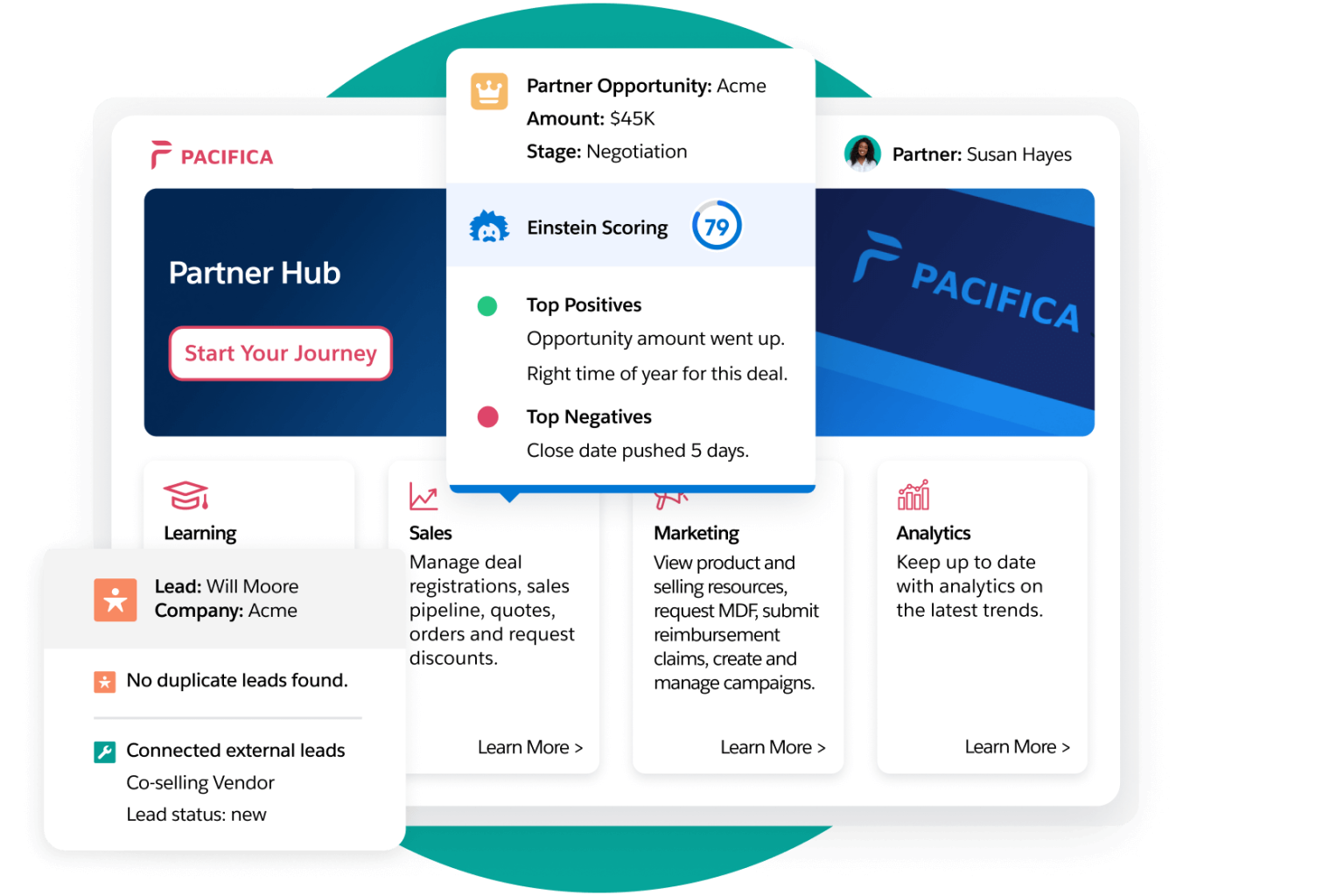
Salesforce PRM (built on Experience Cloud and Sales Cloud) is designed for companies that want their partner portal deeply embedded within their CRM infrastructure. Because it sits natively inside Salesforce, partner workflows, deal registration, and reporting connect directly to customer data and pipeline.
Strengths:
- Native CRM integration
- Enterprise-grade customization
- Advanced reporting and dashboards
- Global scalability
According to Salesforce, companies using Sales Cloud PRM have reported:
- Up to a 46% increase in partner engagement
- Around a 33% increase in deal registrations
- Faster partner onboarding cycles
PartnerStack
Best for: SaaS companies running affiliate, referral, and reseller programs at scale.
PartnerStack focuses heavily on automation, particularly for high-volume partner acquisition and payouts. It is commonly used in SaaS ecosystems where referral, influencer, and reseller motions overlap.
Strengths:
- Automated commission payouts
- Marketplace distribution
- Referral and affiliate tracking
- SaaS-native UX
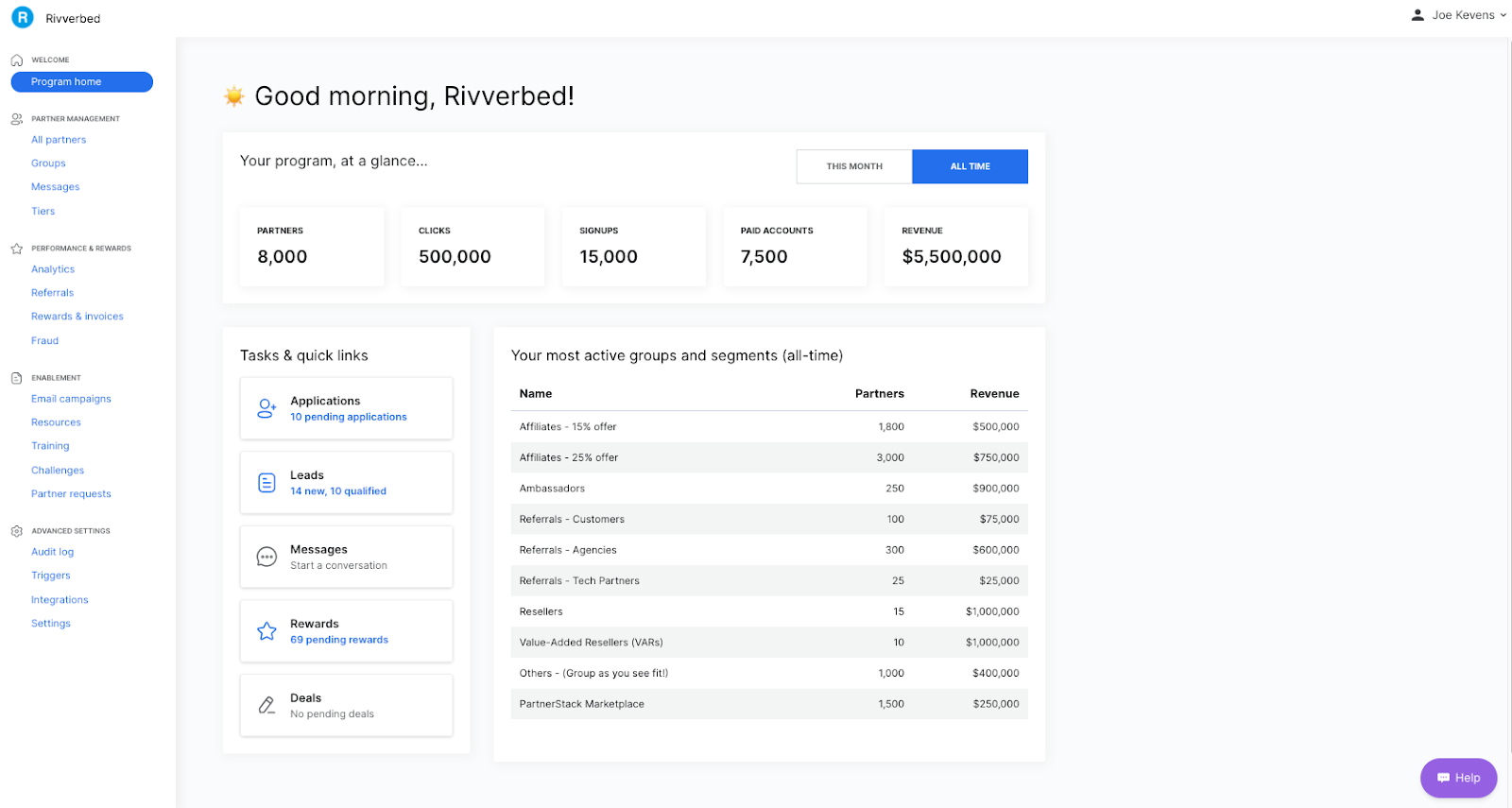
According to PartnerStack, customers have seen:
- 109% growth in revenue
- $707M+ in revenue driven by partners
- 135% year-over-year growth in partner acquisition
PartnerStack is particularly strong for companies running performance-based partner programs where scale and automation are critical.
Channelscaler
Best for: Mid-market to enterprise companies seeking structured partner automation with AI-enhanced workflows.
Channelscaler is a modern PRM platform formed from the merger of Channel Mechanics and Allbound. It combines traditional partner portal functionality with partner program automation, incentives management, and AI-powered workflow tools designed to streamline partner operations.
Strengths:
- Customizable partner portals with role-based access
- Automated deal registration and lead distribution
- Incentive, rebate, and MDF management
- Centralized content and enablement resources
- Real-time dashboards and performance reporting
- AI-powered tools for deal intake and document validation
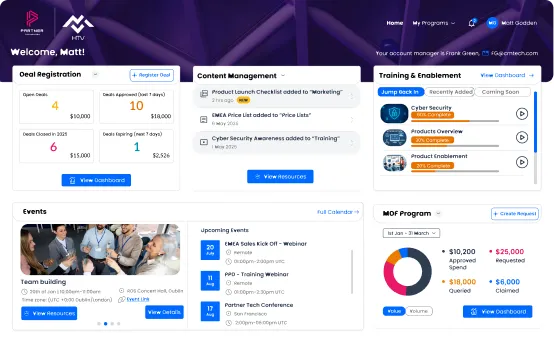
According to Channelscaler, customers have experienced:
- Up to a 60x increase in partner interactions
- 10x growth in content usage while reducing resource requirements.
Channelscaler is often selected by organizations modernizing legacy channel processes while maintaining governance and automation across complex partner ecosystems.
Impartner
Best for: Mid-market to enterprise channel programs requiring operational rigor.
Impartner emphasizes partner lifecycle management — from recruitment and onboarding to tiering and deal registration. It is known for structured workflows and fast implementation.
Strengths:
- Automated partner journeys
- Deal registration and lead routing
- Built-in business intelligence
- CRM integrations (including Salesforce)
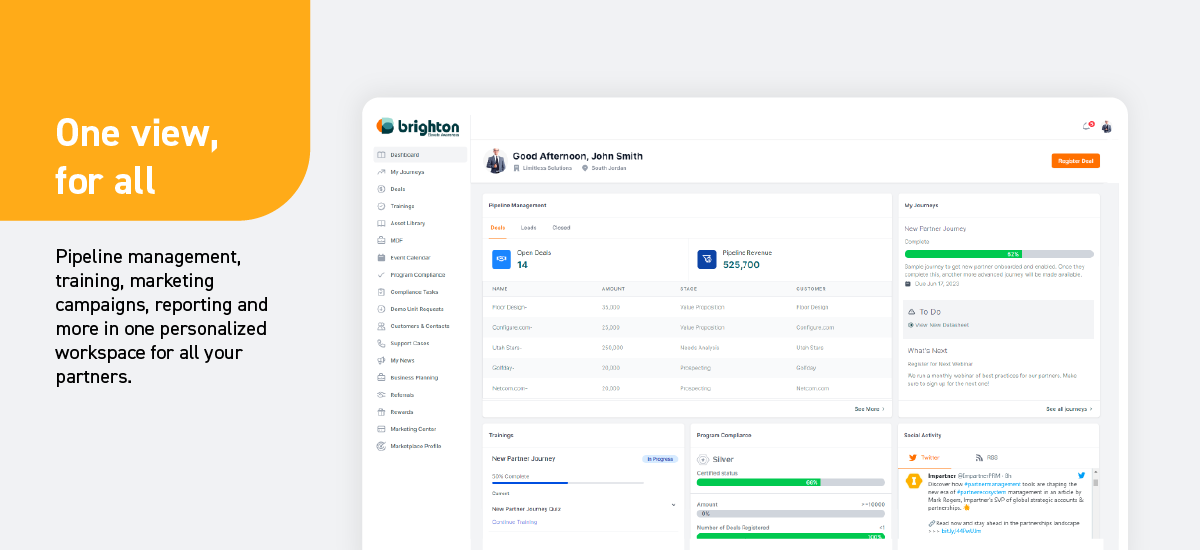
According to Impartner, customers have:
- Reduced cost per lead by 75%
- Achieved 300% YoY ecosystem growth
- Doubled channel revenue in 2 years
Impartner is often chosen by companies formalizing or modernizing an existing channel program.
Workspan
Best for: Enterprise alliance and cloud co-sell ecosystems.
WorkSpan positions itself more as an ecosystem orchestration platform than a traditional PRM. It enables joint business planning, shared pipeline management, and collaborative QBR workflows between enterprises and strategic partners.
Strengths:
- Joint business planning
- Shared opportunity tracking
- Executive alignment dashboards
- Enterprise co-sell enablement
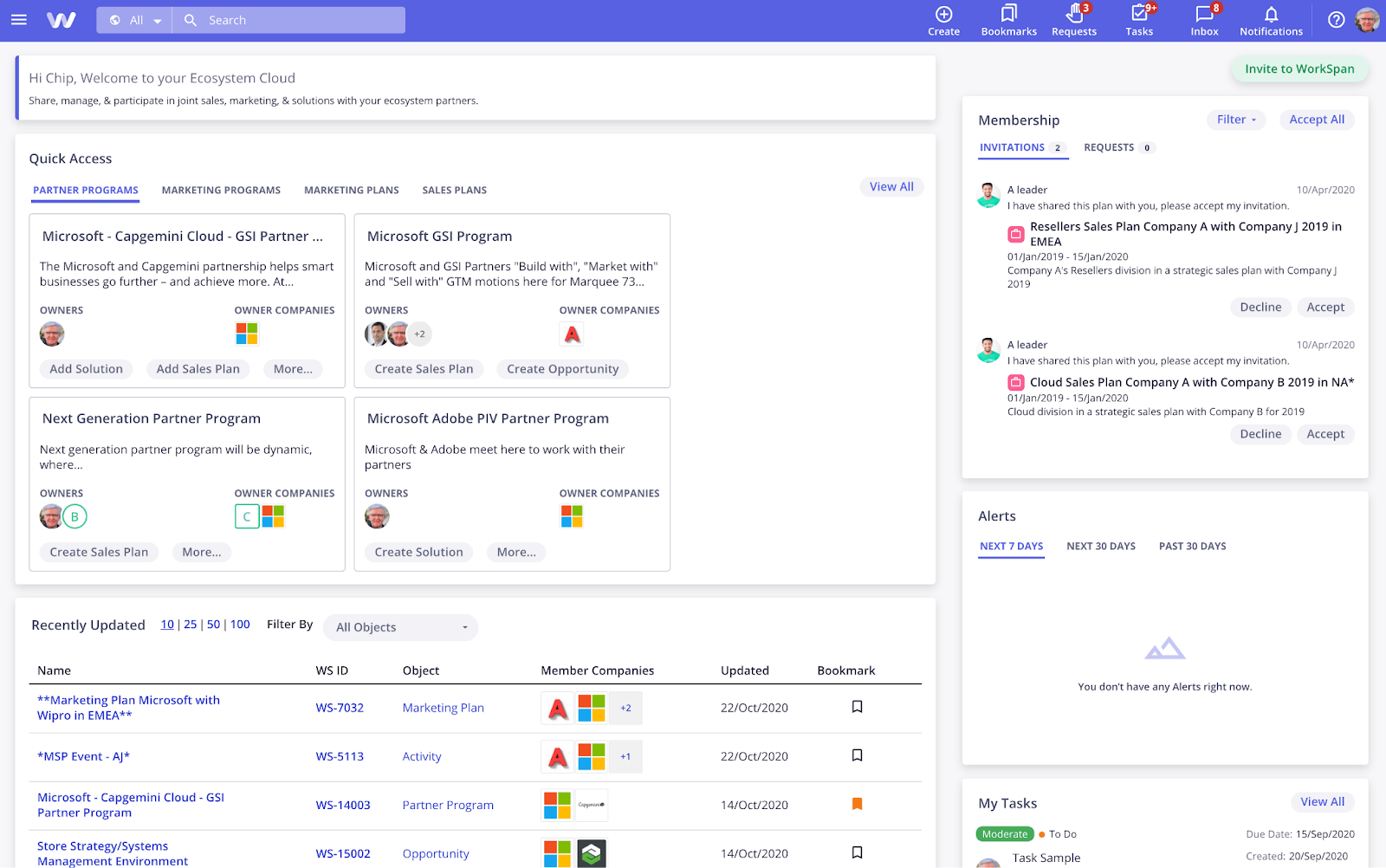
According to WorkSpan, customers have:
- Saved 40% in costs through WorkSpan Marketplace migration
- Expanded their market presence in key verticals
- Seen a 119% increase in partner referrals
WorkSpan is frequently used in large cloud and enterprise alliance environments.
Introw
Best for: Startups, mid-market & Enterprise SaaS and hardware companies seeking a PRM built on top of their CRM.
Founded in 2023, Introw is a next-generation PRM platform designed to help SaaS and hardware B2B companies scale partner programs without heavy implementation or complex infrastructure. It positions itself as the leading partner portal built on top of your CRM, and the first PRM with a native Claude Connector.
Strengths:
- Direct integrations with HubSpot and Salesforce
- Takes minutes to implement, no-code
- CRM-native referral and deal registration workflows
- AI-powered support agent and learning management system (LMS)
- Off-portal engagement via smart nudges through email and Slack
- First PRM platform with a native Claude AI integration
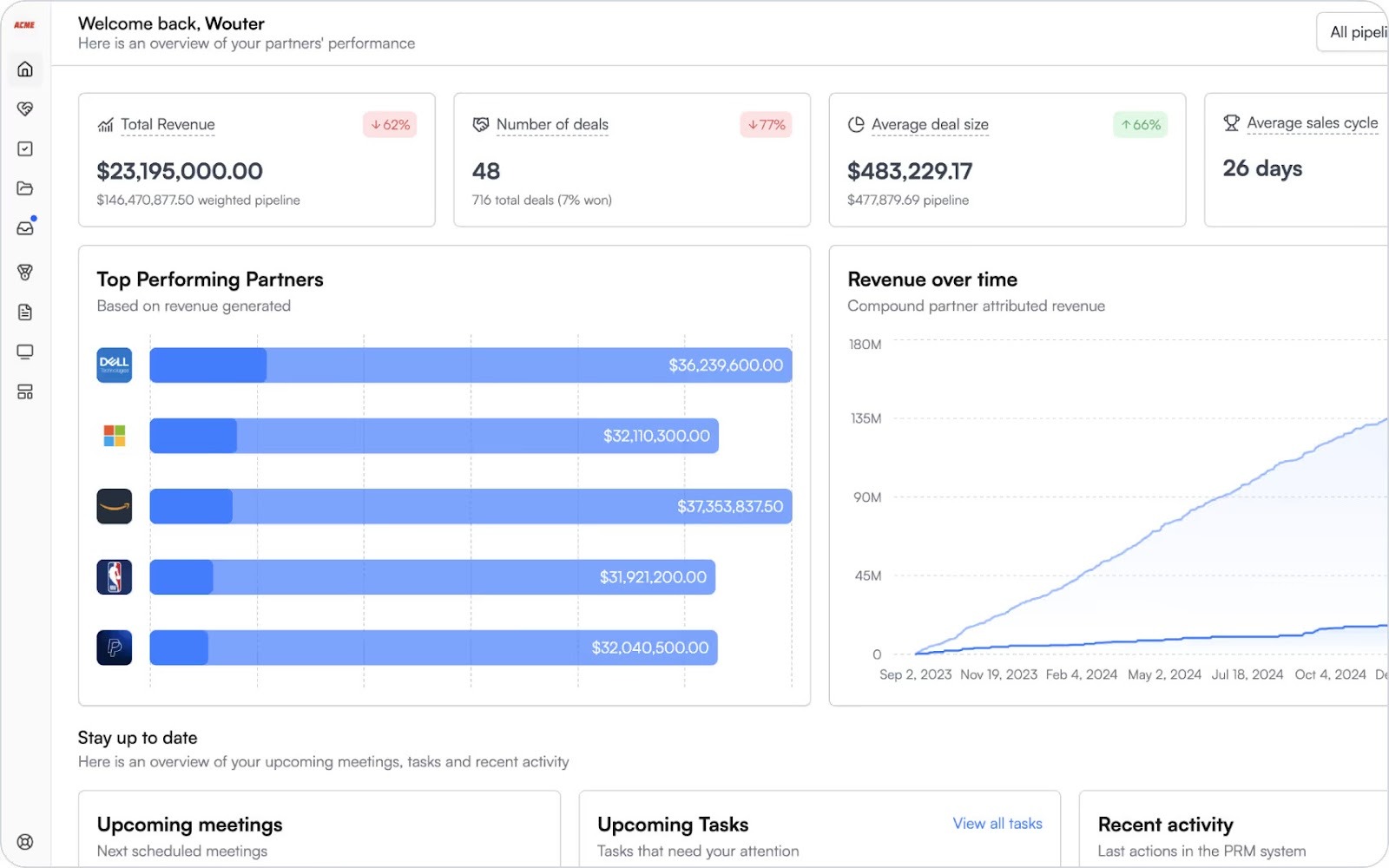
Since implementing Introw, customers report:
- +60% more partner-influenced/sourced revenue
- +75% faster partner onboarding
- +75% increase in partner activity
Introw enables teams to manage partner leads, referrals, and deal registrations directly within their CRM, reducing context switching and manual administrative work. With integrations across tools like Claude, Zapier, Slack, Power BI, and Crossbeam, the platform fits seamlessly into modern SaaS and hardware tech stacks.
PartnerPortal.io
Best for: Small to mid-sized companies seeking a scalable, self-serve PRM with built-in commission tracking.
PartnerPortal.io is a multi-tenant PRM platform designed to help companies launch and scale partner programs quickly without heavy technical implementation. It emphasizes a streamlined partner portal experience combined with automation for deal tracking, commissions, and performance visibility.
Strengths:
- Customizable, white-labeled partner portal
- Deal registration and referral tracking
- Commission and payout management
- Revenue and close-rate reporting
- Fast onboarding-to-launch timeline
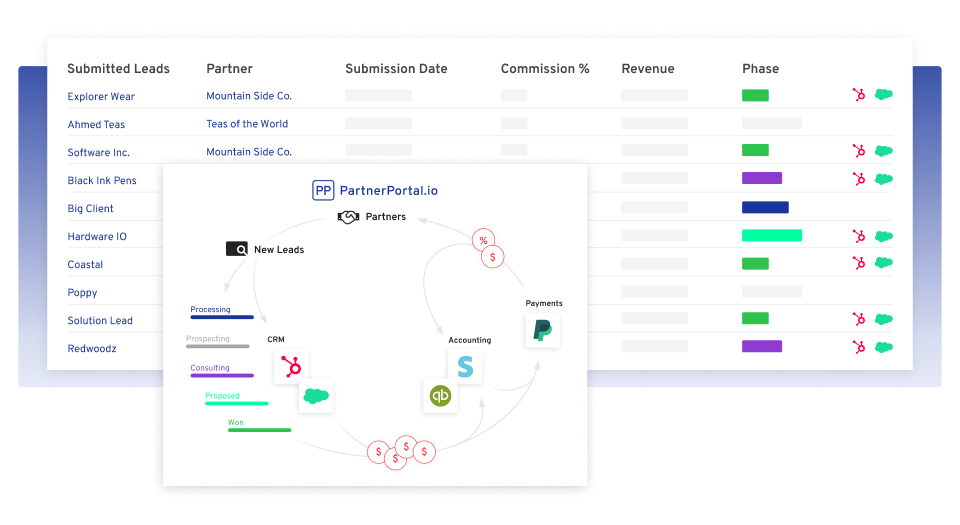
Since implementing PartnerPortal, customers report:
- A 71% increase in partner-sourced revenue
- Closed several high-value deals
- Significant workload reduction
PartnerPortal.io integrates with Crossbeam, Salesforce, HubSpot, PayPal, Stripe, and QuickBooks, allowing companies to connect partner workflows directly to CRM and payment systems.
ZINFI
Best for: Mid-market to enterprise organizations seeking a modular, enterprise-grade PRM with integrated channel marketing automation.
ZINFI offers a Unified Channel Management (UCM) platform that combines PRM functionality with through-channel marketing automation (TCMA). Its modular architecture allows companies to deploy only the components they need — from onboarding and deal registration to MDF management and co-branded campaign execution.
Strengths:
- Modular PRM and TCMA platform
- Automated partner onboarding and certification
- Deal registration and lead distribution
- MDF and incentive program management
- Built-in through-channel marketing automation
- Global support and multi-language capabilities
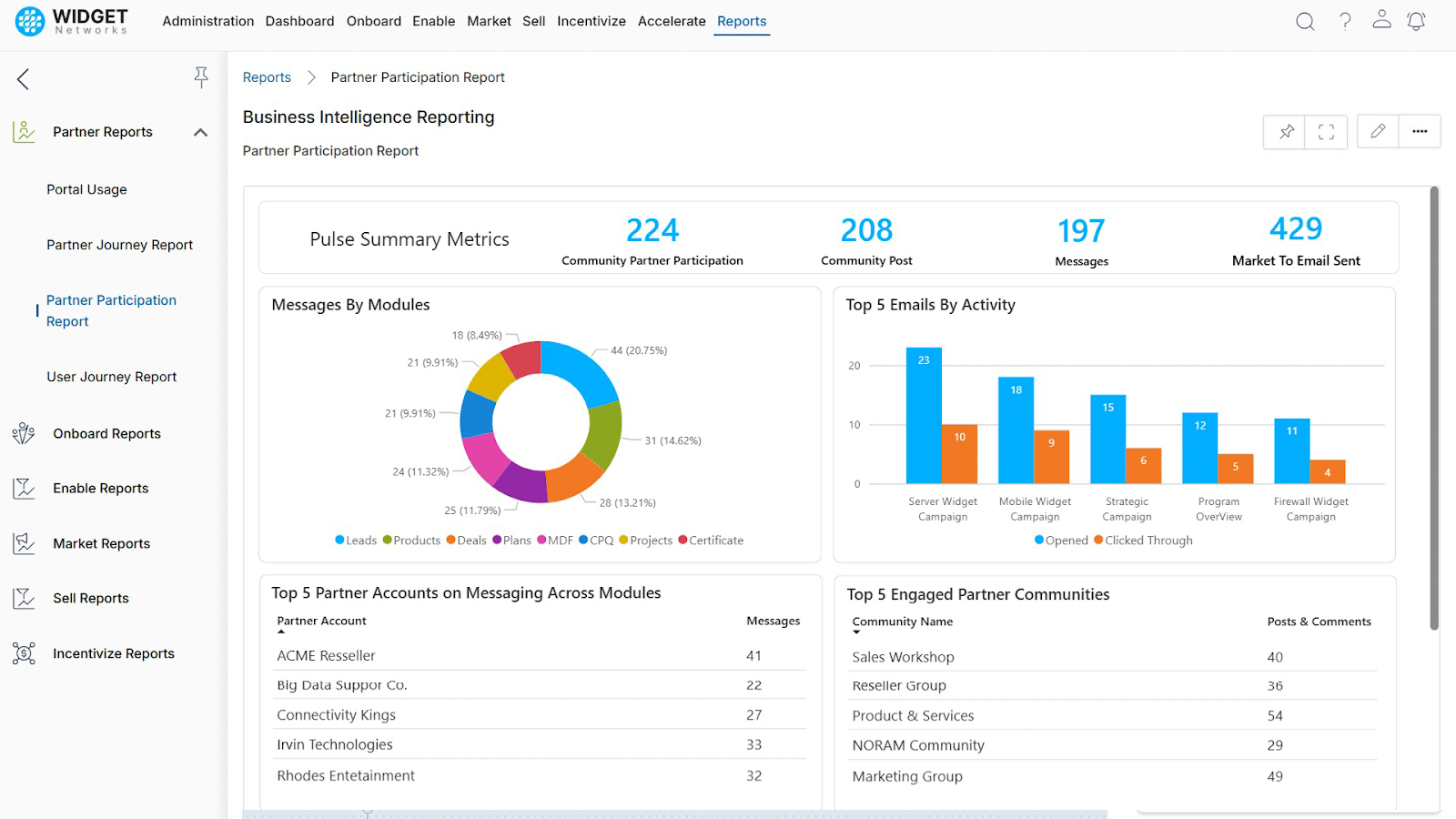
Since implementing ZINFI, customers have:
- Transformed partner sales processes with improved CRM integration.
- Executed effective co-branded campaigns and marketing activities that support engagement and deal flow.
- Launched automated email campaigns quickly via ZINFI’s portal.
ZINFI is particularly known for its integrated marketing automation layer, enabling vendors to scale co-branded campaigns across partner networks.
LeadMethod
Best for: Small to mid-size manufacturers and brands selling through distributors who want improved lead conversion and channel visibility.
LeadMethod is a channel sales enablement and PRM platform designed to help companies engage distributors more effectively and convert channel leads into measurable revenue. The platform emphasizes distributor execution, accountability, and visibility into lead progression across regions and partners.
Strengths:
- Lead distribution and tracking across distributor networks
- Real-time dashboards for pipeline and regional performance
- Sales activity visibility at the rep and distributor level
- ROI and marketing channel performance tracking
- Integrations with CRM, marketing automation, and ERP systems
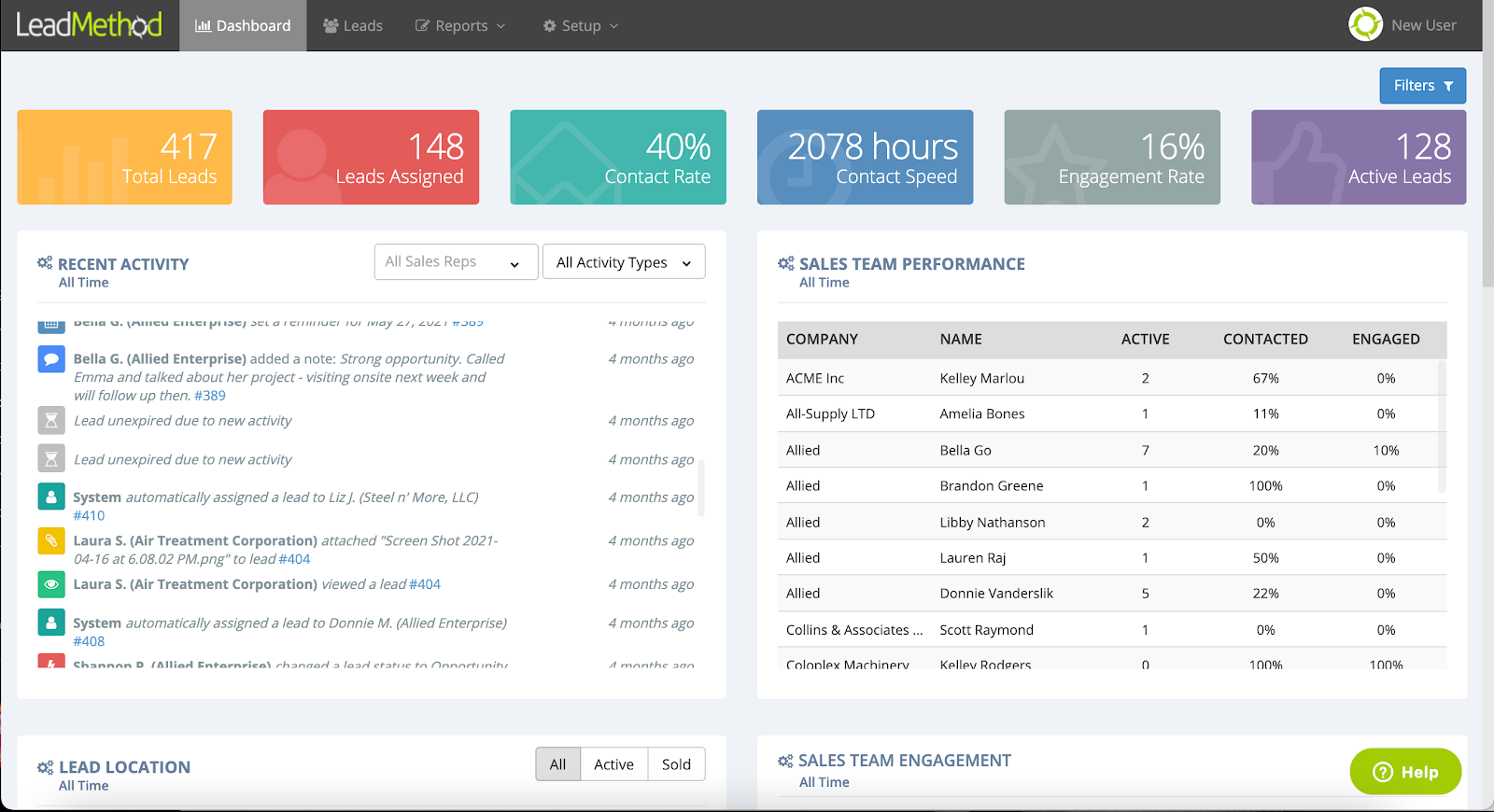
According to LeadMethod, customers have:
- Improved distributor responsiveness
- Increased visibility into sales performance
- Driven revenue growth in the 10–20% range after implementing structured lead management workflows.
Magentrix
Best for: Mid-market organizations seeking highly customizable partner portals built on Salesforce.
Magentrix provides PRM and customer portal solutions designed to centralize collaboration with partners, customers, and internal teams. Built natively on Salesforce, Magentrix allows companies to create branded, secure portals integrated directly with CRM data and workflows.
Strengths:
- Salesforce-native architecture
- Customizable partner and customer portals
- Deal registration and opportunity management
- Content libraries and sales enablement tools
- Role-based access and permission controls
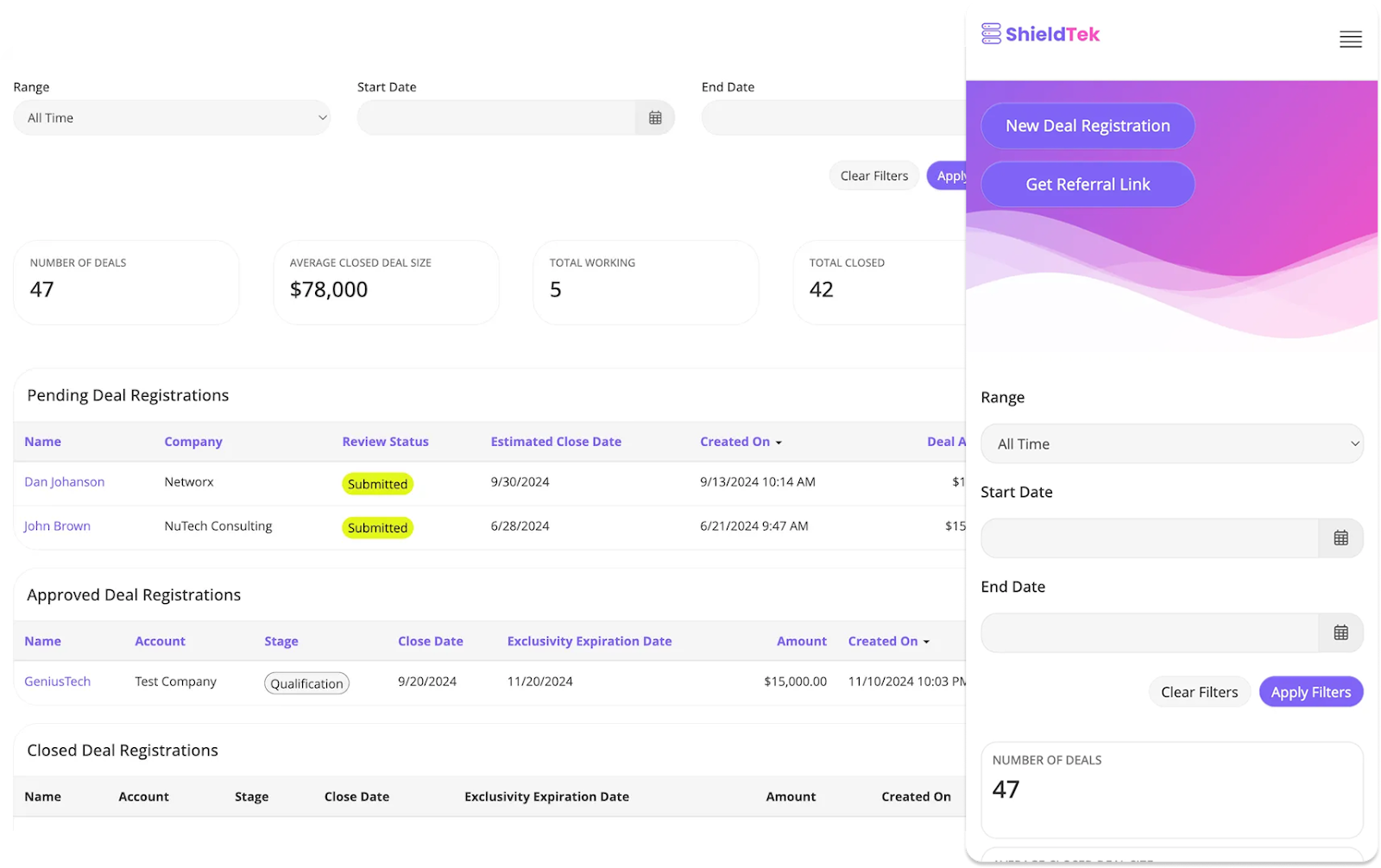
According to Magentrix, customers have:
- Enabled self-registration, resource access, and proactive partner engagement through a unified portal experience.
- Improved partner transparency and program scalability once the system is in place, helping support more partners with fewer manual processes.
Kiflo
Best for: Small to mid-sized SaaS companies seeking an easy-to-launch, automation-friendly PRM.
Kiflo PRM is designed to help companies scale affiliate, referral, and reseller partnerships without adding operational complexity. The platform emphasizes simplicity, usability, and fast implementation — making it particularly appealing for growing teams formalizing their first structured partner program.
Strengths:
- Affiliate, referral, and reseller program support
- Automated deal registration and lead tracking
- Commission and rewards management (including Stripe integration)
- CRM sync with HubSpot and Salesforce
- Integrations with 3,000+ apps via Zapier
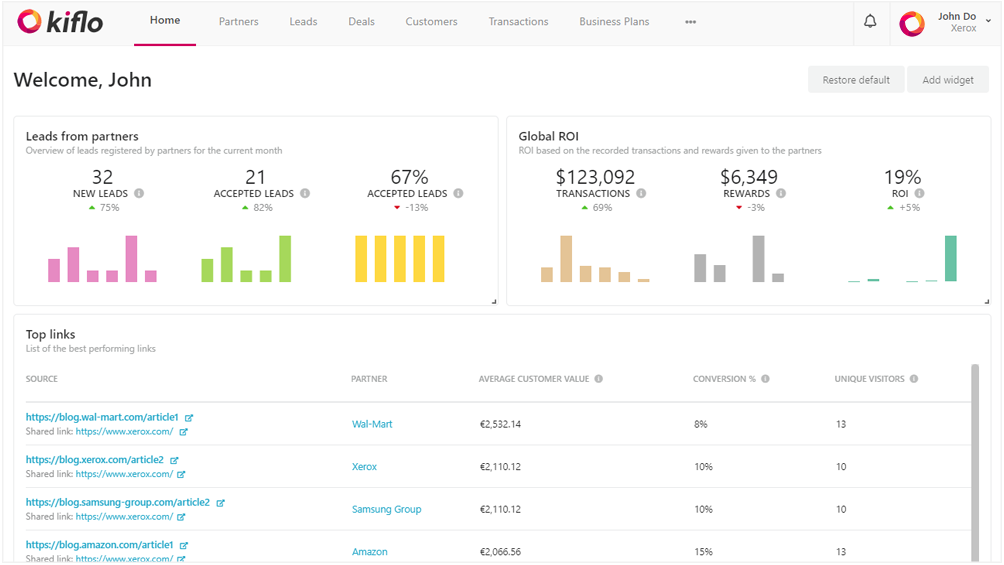
Customer stories indicate that organizations using Kiflo have:
- Doubled indirect sales revenue in the first year
- Increased the number of partners managed per employee
- Improved partner adoption and engagement
The platform focuses on reducing manual administration and improving partner visibility into pipeline and earnings.
Channeltivity
Best for: Small to enterprise organizations seeking a user-friendly, quick-to-deploy PRM with strong CRM integrations.
Channeltivity is a PRM platform built to help companies launch and scale structured channel programs without heavy IT overhead. The platform emphasizes ease of use, fast implementation, and strong CRM integration.
Strengths:
- Customizable partner portal with intuitive UX
- Deal registration and lead distribution
- Channel conflict management
- Training and resource libraries
- Built-in reporting and performance dashboards
- Dedicated Salesforce and HubSpot editions
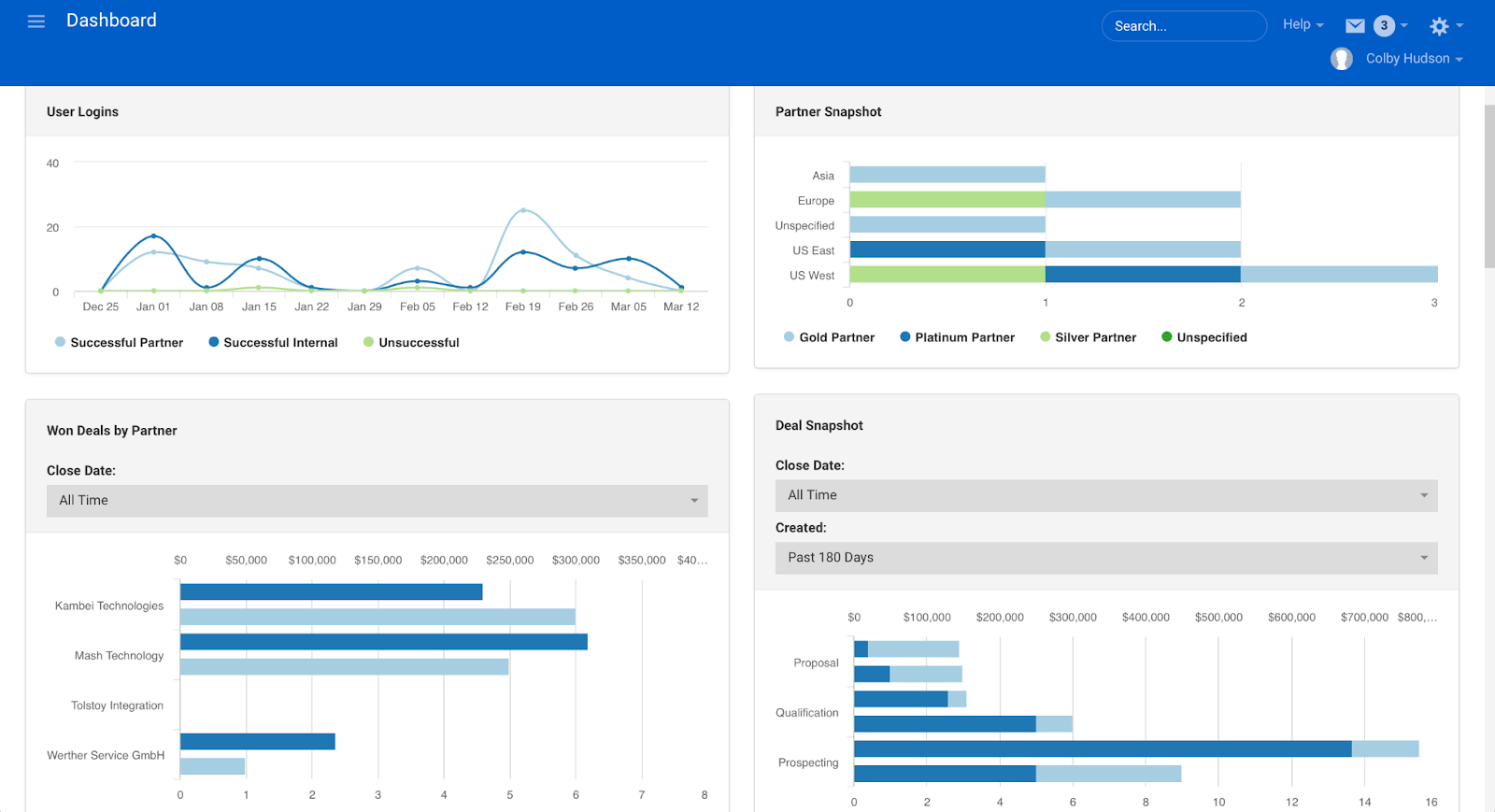
According to Channeltivity, customers have seen:
- Faster partner onboarding and improved engagement
- Reduced lead conflict with clearer deal visibility
- Centralized workflows replacing manual email and spreadsheet processes.
- Streamlined MDF management and strong portal adoption rates
So, do you need a PRM?
It depends on your stage. You likely need a PRM if:
- You have more than a handful of active partners
- You manage structured deal registration
- You run formal onboarding and enablement programs
- You track partner performance and commissions
But as ecosystems grow more complex, activity metrics alone aren’t enough.
The most effective partner teams don’t just track engagement; they track overlap, opportunity, and revenue alignment.
If you’re evaluating a PRM, the real question isn’t: “Which tool should I choose?”
It’s: “What does my complete partner stack need to drive measurable revenue?”
A PRM gives you structure. Ecosystem Intelligence gives you visibility. Together, they turn partnerships from a managed program into a predictable growth engine.
If you're exploring how to add Ecosystem Intelligence to your partner motion — alongside your PRM — see how Crossbeam securely layers on top of your existing CRM and partner workflows to uncover shared accounts, prioritize the right partners, and activate real co-sell opportunities.
Book a call with our team to learn how Crossbeam works with your PRM and start turning partner overlap into pipeline.
Because managing partners is step one, winning together in the market is step two.


